
Review · COLOMBIA CHOCOLATE TOURS
Chocolate tour near the Medellín
The best part of this cocoa farm visit near Medellín is that chocolate is only the starting point. You follow the bean through picking, peeling, fermenting, drying, roasting, grinding, and molding, while meeting the family that grows it. I like the hands-on work and the chance to taste fruit straight from the farm. The one catch is the long road from the city, including a steep, narrow final stretch.
I also like the small-scale feel. The farm is a working family property, not a polished chocolate museum, and guides such as Sara can translate while explaining rural Colombian life. Bring water, insect repellent, long pants, and shoes you can get dusty in. Lunch is not included, so plan around that.
Key points at a glance
- Pick cacao from the trees: Walk to the cocoa grove and see the different cacao types grown on the farm.
- Make your own chocolate: Help turn cocoa paste into molded chocolates you can take home.
- Meet a farming family: Learn about cacao, coffee, avocado, yuca, fruit, and flowers from the people who grow them.
- Taste beyond chocolate bars: Try hot chocolate, cocoa nibs, cocoa paste, and fresh farm fruit.
- Travel in comfort: Pickup and drop-off are available in El Poblado and Laureles, with an air-conditioned vehicle.
- Expect a country road: The six-hour outing includes transport, and the final approach can be steep and narrow.
From Medellín streets to Barbosa farmland
This is a half-day escape from Medellín, with pickup in either El Poblado or Laureles, including the Laureles-Estadio area. The destination is Barbosa, in Antioquia, where the city gives way to small farms, fruit trees, and broad views across the Colombian countryside.
The total outing lasts about six hours. The farm portion takes roughly three and a half hours, so the rest of the time is used for driving. That matters when you compare this with a short city chocolate workshop. You are not simply sitting at a table making sweets. You are traveling to see where the raw material grows.
Pickup and drop-off are included, and the vehicle is air-conditioned. That is useful in the warm countryside, especially after walking outdoors. Private and small-group options are available, but the tour needs at least two passengers to operate.
The final approach may require patience. Sara, one of the guides, was praised for handling a very steep and narrow road to the cacao estate. If winding rural roads make you uneasy, this is worth knowing before you book. The route is part of the setting, but it is not a smooth resort transfer.
More Chocolate Tours in Colombia:
- Cartagena: Boutique Rum and Chocolate Tasting at Lunático
★ 4.9 · 121 reviews - Coffee & Chocolate Private Tour in Medellin: Genuine Experience
★ 5.0 · 100 reviews - Chocolate tour near Medellin
★ 5.0 · 90 reviews
Meeting the family behind the cocoa
At the farm, the focus shifts from transport to people. You meet the family who works the property and learn how cacao fits into daily life. Efrem, Alicia, and Sandra are among the hosts connected with the farm, and the welcome includes drinks and fruit.
This personal contact is a major reason to choose the experience. You are not only shown a production line. You see a family farm where cocoa grows beside coffee, avocado, yuca, other fruits, and flowers. That broader view helps explain how rural households use different crops rather than relying on one product alone.
The visit also gives you a look at traditional farm routines. You may see how the family tends the property, handles fresh produce, and prepares cocoa with equipment and methods suited to a small operation. The setting is warm and informal, so expect conversation, interpretation, and practical demonstrations rather than a tightly timed museum presentation.
English and Spanish are offered. A bilingual guide can help you communicate with the hosts and explain Colombian customs and rural life. Sara received especially strong praise for sharing information about Medellín, Colombia, and the people who live outside the city, while also assisting during the activities.
Picking cacao in the grove
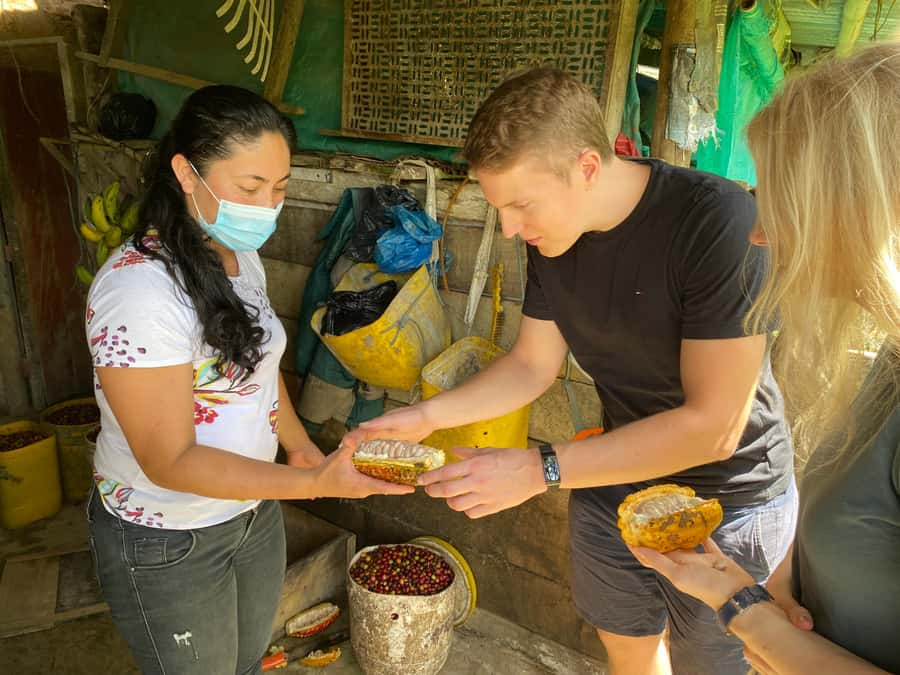
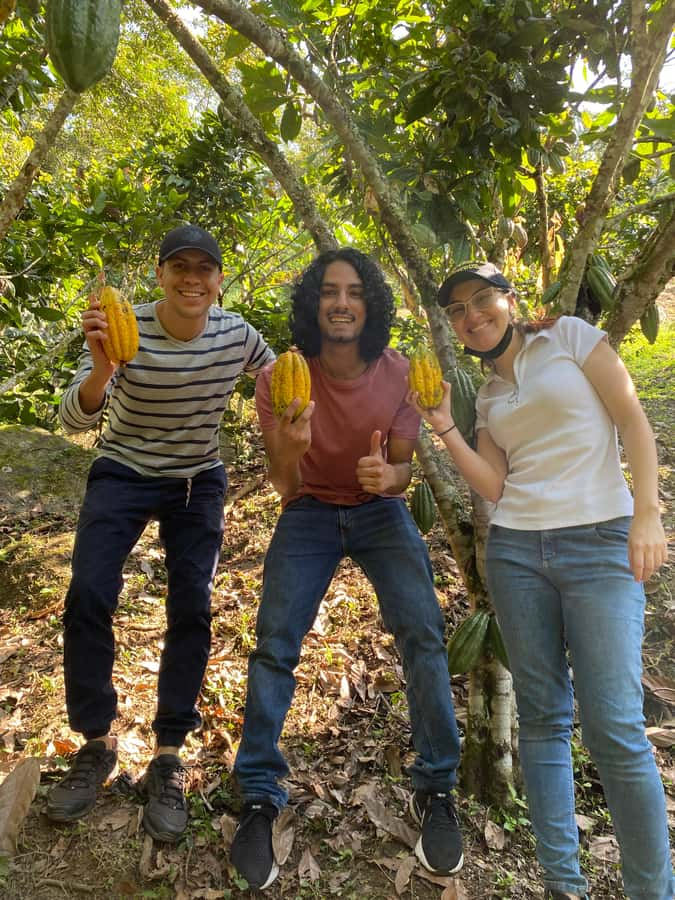
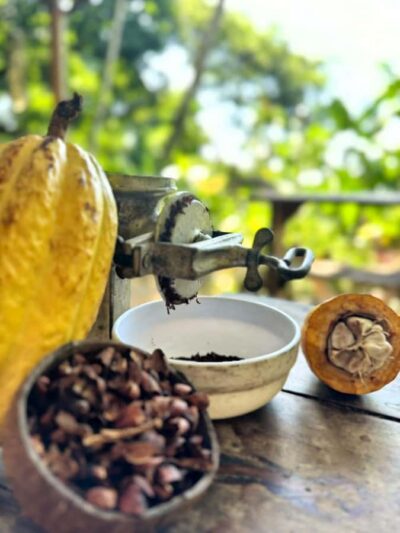
One of the most memorable parts is the walk to the cacao trees. You can see ripe pods on the branches and, depending on conditions, pick some yourself. The farm grows three cacao species, giving you a useful reminder that cocoa is not one uniform crop.
This is also where comfortable clothing matters. The walk includes some climbing, and the ground is a farm surface rather than a paved path. Wear sturdy walking shoes, long pants, and a long-sleeved shirt. A hat, sunscreen, water, and insect repellent are sensible additions.
The fruit itself may surprise you. A cocoa pod is not a chocolate bar waiting to be unwrapped. Inside are seeds surrounded by pale pulp, and the familiar chocolate taste develops only after several steps. Seeing the fruit on the tree makes the later tasting more meaningful.
Fresh farm fruit may also be available during the visit. The exact selection depends on what is growing, but the experience includes fruit tasting and the chance to sample produce from the property. That is a nice bonus for anyone who wants more than a narrow cocoa lesson.
Following the bean through seven stages
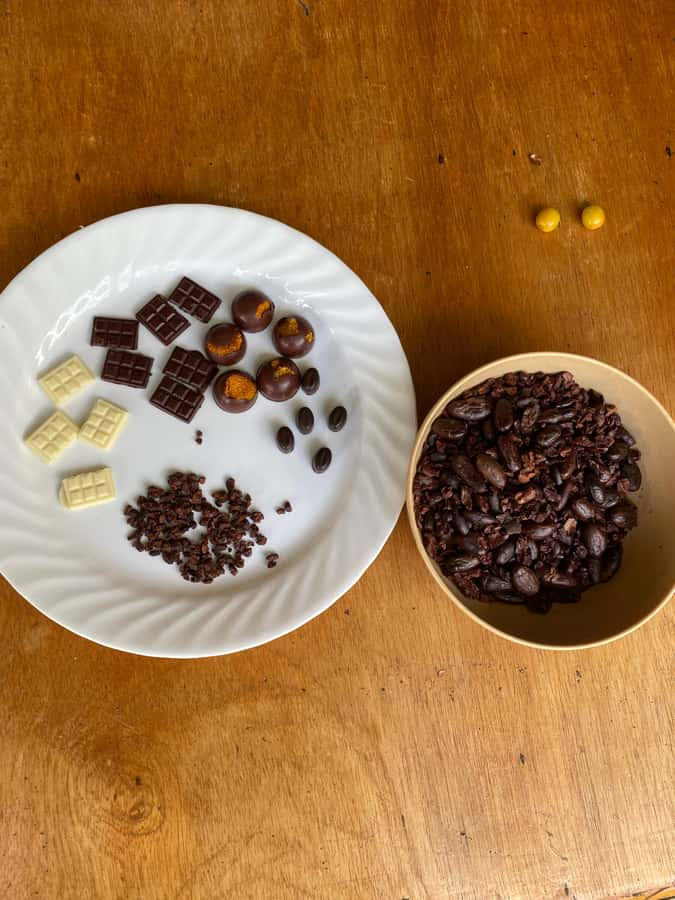
After picking, you learn how the cocoa becomes a chocolate product. The process includes:
- Picking the ripe pod
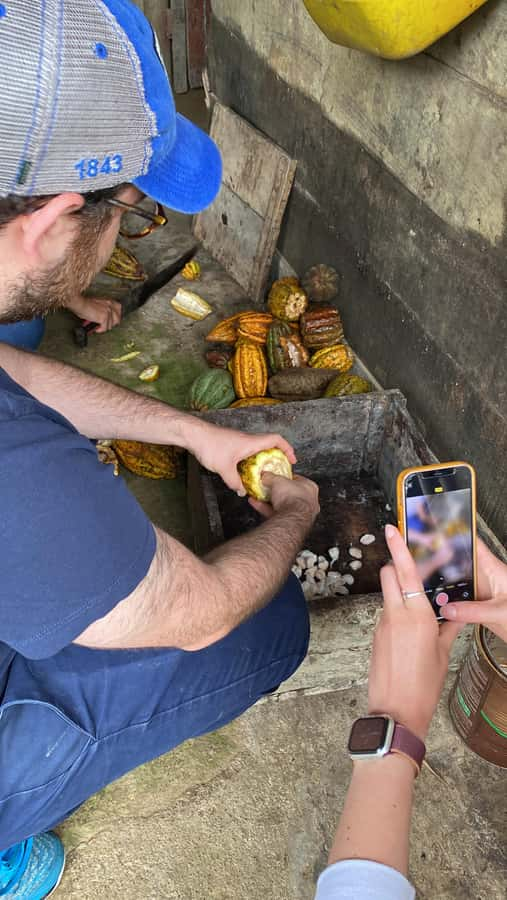
- Peeling it open
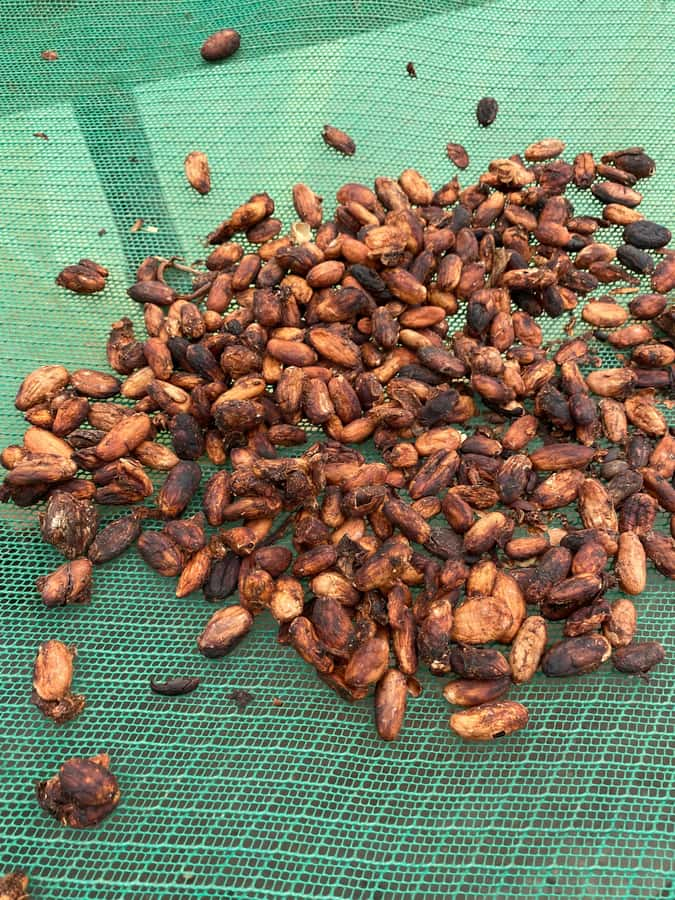
- Fermenting the beans
- Drying them
- Roasting them
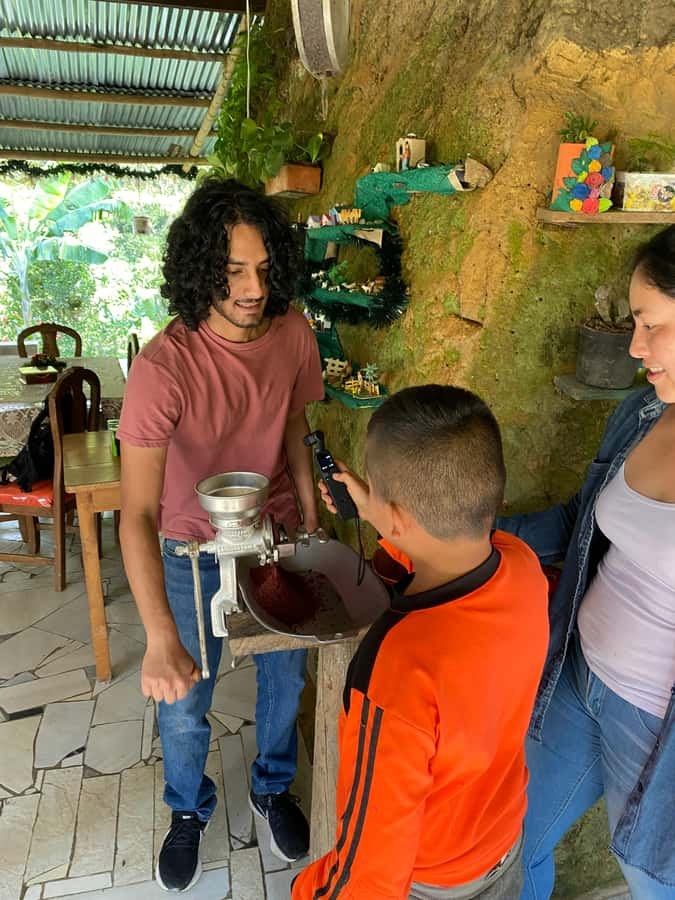
- Grinding them into cocoa paste
- Molding the finished chocolate
The order matters. Fresh cacao does not taste like the chocolate you buy in a shop, and the stages after harvesting create the flavor and texture you recognize. Fermenting and drying prepare the beans, roasting develops their taste, and grinding turns them into a usable paste.
The lesson is practical because you can watch and take part. You are not limited to a talk about farming. You handle parts of the process and see how much work is hidden inside a small piece of chocolate.
The farm setting gives this process context. Commercial chocolate often arrives as a finished product with a polished wrapper. Here, you can connect the bar to a tree, a family, a harvest, and many hours of careful preparation. I find that connection more useful than a simple tasting flight.
Same city, a different tasting:
- Cacao Experience Tour
★ 4.8 · 66 reviews - Trekking History and Indigenous Heritage in Minca + Cacao & Coffee + Waterfall
★ 4.9 · 63 reviews - Minca: Full-Day Coffee and Cocoa Tour from Santa Marta
★ 4.5 · 61 reviews - Cacao and Coffee Tour
★ 4.5 · 24 reviews
Making chocolate with your own hands
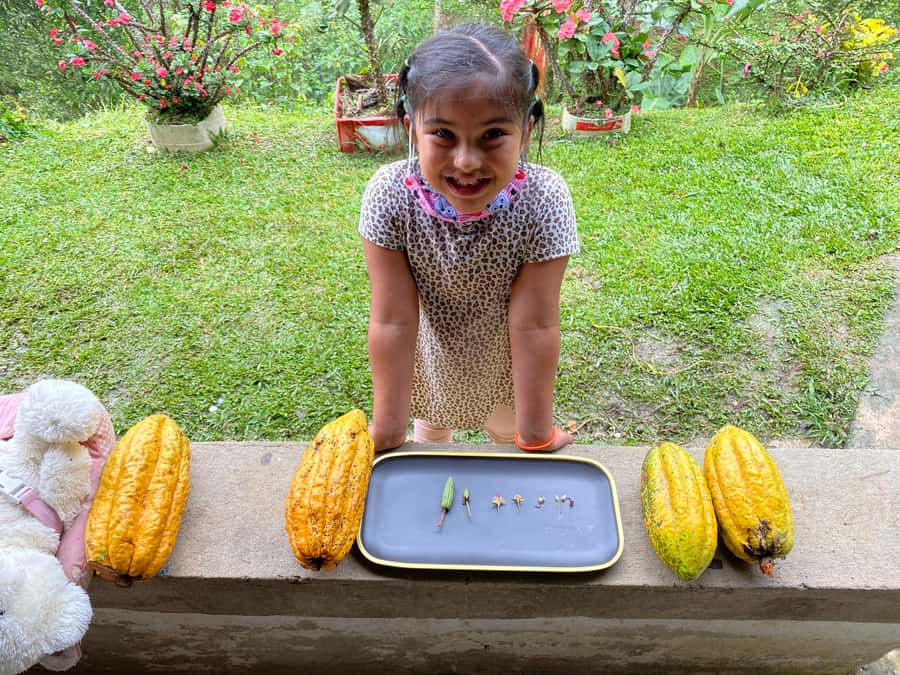
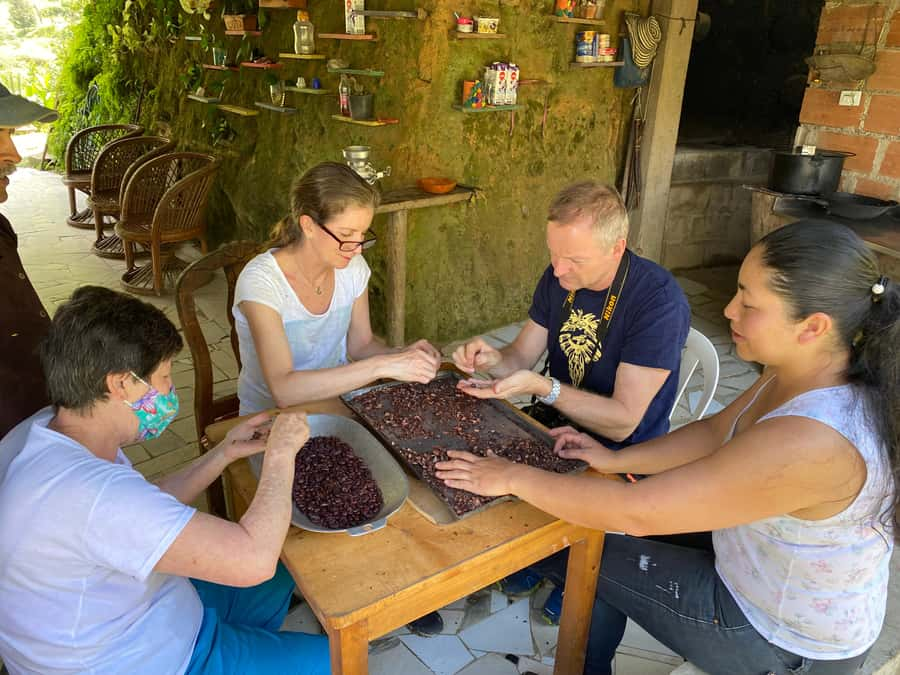
The hands-on workshop is the heart of the visit. Once the cocoa has been prepared into paste, you help mold chocolate yourself. The finished pieces can be taken home, giving you a small souvenir that you made during the trip.
Do not expect a professional confectionery class with elaborate decorations or a long menu of recipes. The appeal is simpler. You take part in the basic transformation from farm product to chocolate, using the same material you have just seen being prepared.
This makes the outing a good choice for curious adults, couples, families with older children, and anyone who likes food experiences with a strong sense of place. Children under five are not accepted, and the farm setting may not suit anyone who needs step-free access.
People with food allergies should also avoid this activity. Cocoa products are central to nearly every stage, and the experience is not listed as suitable for those with food allergies.
Tasting cocoa in several forms
The tasting goes beyond a standard sweet chocolate sample. You may try hot chocolate, cocoa nibs, cocoa paste, and different varieties of chocolate. Each form shows a different point in the production process.
Cocoa nibs are especially useful for understanding the bean before it becomes smooth and sweet. Cocoa paste has a stronger, more direct flavor. Hot chocolate gives you a familiar preparation, while the molded pieces connect the lesson to the final product.
Fresh fruit is part of the tasting as well. Depending on the farm harvest, you might sample fruit picked from the trees. The mix keeps the visit from becoming too repetitive and reflects the variety of products grown on the property.
You can buy cocoa products to take home. This is helpful if you want a practical souvenir, though the tour already includes chocolate that you make yourself. I would treat the shopping as an optional extra rather than the main reason to book.
What the $126 price really covers
At $126 per person, this is not the cheapest way to spend half a day near Medellín. The price includes pickup and drop-off, an air-conditioned vehicle, a bilingual guide, the farm visit, tastings, fresh fruit, and the chocolate-making activity.
The value depends on what you want from a day trip. If you only want to taste chocolate, the cost is high compared with a short workshop in the city. If you want transport into the countryside, personal contact with a farming family, interpretation, hands-on work, and a small-group setting, the price is easier to justify.
The drive is part of the cost as well. You do not need to arrange a separate taxi, bus, or private driver to reach Barbosa. Pickup is available in El Poblado and Laureles, and you can ask about another lodging location if yours is outside the listed areas.
Lunch is not included. Bring a snack, and confirm your plans for a meal before setting out. Water is recommended, and the practical packing advice is simple: hat, sunscreen, insect repellent, long pants, a long-sleeved shirt, comfortable clothes, and walking shoes.
Who will enjoy this farm visit most
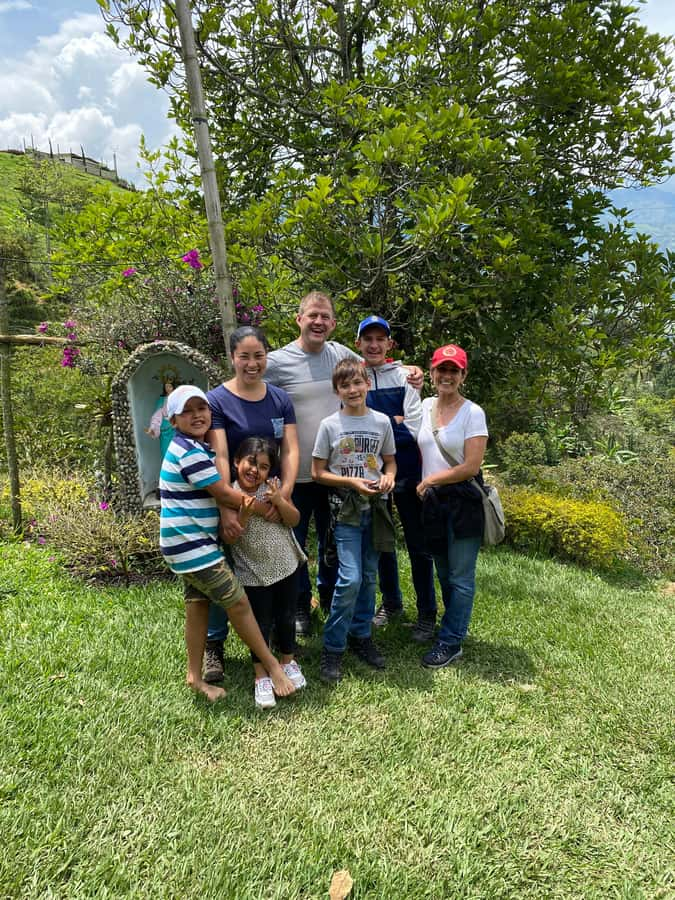
I would choose this experience if you want to understand how food is made and meet the people behind it. It suits visitors who prefer a family farm to a commercial attraction, and the small-group format gives the day a more personal feel.
It is also a good fit if you want to see a different side of Antioquia without committing to a full-day excursion. You get countryside views, farm activity, and local conversation while still returning to Medellín the same day.
You may want to skip it if your main goal is a quick, polished chocolate tasting. The farm road takes time, the visit includes walking and some climbing, and the experience is shaped by the rhythm of a working property.
It is not suitable for children under five, wheelchair users, or people with back problems. High heels, short skirts, sleeveless shirts, smoking, alcohol, and drugs are not allowed. The rules are practical rather than fussy, since the property is a rural worksite.
How to prepare for the six-hour outing
Wear closed, comfortable walking shoes. Long pants help with plants, insects, and uneven ground, while a long-sleeved shirt offers extra protection from the sun and mosquitoes.
Bring a hat, sunscreen, water, snacks, and insect repellent. A camera is worthwhile for the cocoa trees, farm views, fruit, and the chocolate-making steps. You may also want a small bag for the chocolate you take home.
Keep your schedule flexible on the day. Rural roads and a family-run visit do not have the same feel as a city attraction operating on a strict timetable. The farm activity lasts about three and a half hours, while the full experience runs about six hours including transport.
Free cancellation is available up to 24 hours before the start time, and you can reserve now and pay later. Those terms are useful if your Medellín plans may change, but they do not remove the need to check the start time and pickup details before booking.
Should you book this cocoa tour?
Book it if you want a personal farm visit, not just a chocolate sample. The strongest features are the family welcome, the chance to pick cacao, the clear bean-to-bar process, and the opportunity to make chocolate for yourself. Sara’s role as guide, driver, and interpreter can be especially helpful when the hosts speak Spanish.
Think twice if you dislike winding roads, outdoor walking, or food experiences that take several hours. Also budget for lunch, since it is not included.
For most visitors who want an easy way to see rural Antioquia from Medellín, I think the experience offers good value. You leave with more than a sweet treat: you understand the crop, meet the people who grow it, and carry home chocolate connected to the place where it began.
FAQ
How long does the cocoa farm tour last?
The full experience lasts about six hours. The guided farm visit and tasting portion take approximately three and a half hours, with the remaining time used for transportation from Medellín and back.
Where does pickup take place?
Pickup and drop-off are available in El Poblado and Laureles, including the Laureles-Estadio area. If your lodging is elsewhere, you can contact the provider to ask about the location.
Is transportation included?
Yes. Pickup and drop-off are included, along with an air-conditioned vehicle.
What languages are available?
The tour is offered in English and Spanish, with a bilingual live guide.
Is lunch included?
No. Lunch is not included. It is recommended that you bring water and snacks and plan separately for a meal.
What will I taste on the tour?
You can taste different chocolate varieties, hot chocolate, cocoa nibs, cocoa paste, and fruit from the farm.
Can I make chocolate myself?
Yes. The experience includes hands-on chocolate making. You help with the cocoa process and mold chocolate that you can take home.
Who should not book this experience?
The tour is not suitable for children under five, wheelchair users, people with back problems, or people with food allergies. It also requires comfortable walking and clothing suitable for a farm environment.
Newest chocolate tours around Colombia
- Waterfalls, Animal Reserve and Chocolate: Mango Passage★ 5.0 · 2 reviews
- Cocoa Tour – San Rafael Antioquia from Medellín★ 5.0 · 2 reviews
- Medellín: Chocolate Tour & Exfoliation in beautiful river★ 5.0 · 3 reviews
- Cartagena: The Legendary Colombian Rum and Chocolate Tasting★ 5.0 · 8 reviews
- Cartagena: Express Rum and Chocolate Tasting Experience★ 5.0 · 10 reviews
- Bean to Bar: Cocoa and Chocolate Workshop★ 5.0 · 5 reviews
- Bogotá: Candelaria Tour with Cacao and Coffee Workshop★ 5.0 · 3 reviews
- Minca: Hidden Waterfall + Coffee and Cocoa Workshop★ 4.9 · 6 reviews
Colombia Chocolate Tours, compared.
Boutique Rum and Chocolate Tasting at Lunático
Read our review →
Coffee & Chocolate Private Tour in Medellin: Genuine Experience
Read our review →
Trekking History and Indigenous Heritage in Minca + Cacao & Coffee + Waterfall
Read our review →
Minca: Full-Day Coffee and Cocoa Tour from Santa Marta
Read our review →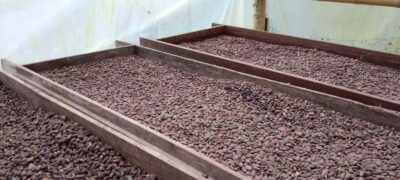
Browse the lists this tour appears in