
Review · GHENT CHOCOLATE TOURS
Discover authentic Ghent with historian & taste the best chocolate
Ghent reveals itself especially well on foot, and this tour links its grandest sights with the stories that explain them. Historian and teacher Wim takes you from Sint-Baafsplein through the old center to Graslei and Korenlei, using buildings, statues, and odd details to explain how the city grew rich, rebelled, worshiped, and occasionally got into trouble. The chocolate stop is a pleasant bonus, not the main event.
I like the small group limit of 15, which should make it easier to hear and ask questions. I also like the way the walk connects four sides of Ghent’s past: economic, political, cultural, and religious life. The main drawback is simple: if you want two hours of chocolate tasting, this is not that tour. The chocolate portion is brief, and some people would prefer more time with the chocolatier.
Key points to know before you book
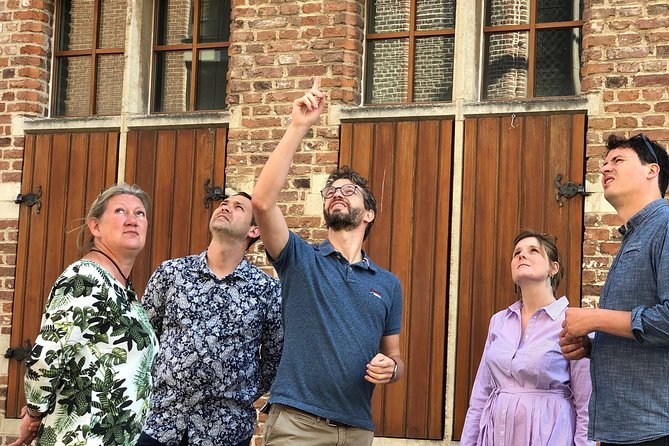
- Historian guide Wim: Expect a guide who teaches Ghent through stories, local details, and the purpose behind its buildings.
- A useful two-hour route: The walk begins at Sint-Baafsplein and ends near Saint Michael’s Bridge, covering the main old-center sights without a long detour.
- Chocolate is a short interlude: You receive a taste of Belgian chocolate during the walk, but the tour is mainly about Ghent’s past.
- Several centuries in one compact center: The route includes St. Bavo’s Cathedral, the Town Hall, Gravensteen, the old meat hall, and the Graslei and Korenlei.
- Good value for a first look: At $42.05 per person, the price makes the most sense if you want context before exploring Ghent on your own.
- Easy booking terms: You can cancel for a full refund up to 24 hours before the start time.
Starting at Sint-Baafsplein, where Ghent’s story comes together
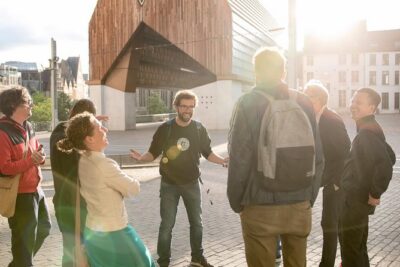
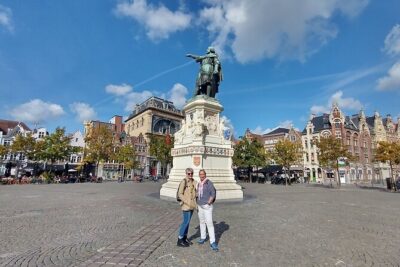
Meet Wim in front of the white statue in the middle of Sint-Baafsplein. This is a practical starting point, since the square puts several major pieces of Ghent in view at once.
The opening 20 minutes provide the framework for the rest of the walk. Instead of treating the city as a collection of pretty façades, Wim explains how money, government, faith, and culture shaped this particular spot. That approach is useful because Ghent can feel visually overwhelming at first. You see a cathedral, a bell tower, old houses, and public buildings, but you may not yet know how they fit together.
I especially like this beginning for first-time visitors. It gives you a way to read the city for the rest of your stay. You are not just hearing dates. You are learning why Ghent became important and why its citizens developed such a strong sense of independence.
More Chocolate Tours in Ghent:
- Ghent: Belgian Chocolate Walking Tour with Tastings
★ 4.9 · 259 reviews - Brussels: Bruges & Ghent Tour w/ Cruise & Chocolate Tasting
★ 4.2 · 144 reviews - Ghent: Famous Belgian Chocolate Walking Tour with Tastings
★ 5.0 · 131 reviews
St. Bavo’s Cathedral and the art inside Ghent’s religious center
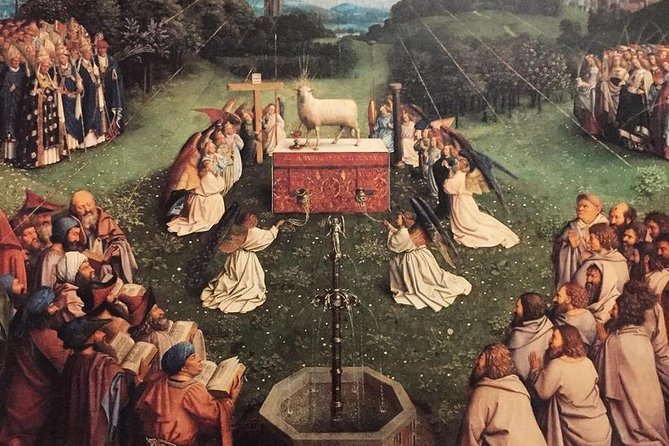
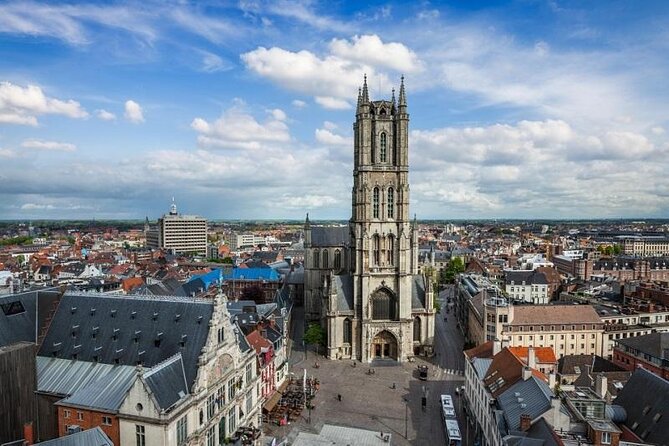
The tour then moves around St. Bavo’s Cathedral for about 10 minutes. The focus is on the building’s development and its artistic treasures.
The stop is outside rather than a full interior visit, so you should not book this walk expecting extended time with the cathedral’s art. Still, the building’s long construction story helps explain the layers you see in central Ghent. Churches here were not raised in one clean burst. They changed as money, taste, and religious needs changed.
This is also where the cultural and religious strands of the tour meet. The cathedral is not presented as an isolated monument. It belongs to the wider story of Ghent, where powerful institutions and wealthy citizens put their mark on the city.
The Van Eyck brothers at Maaseikplein
At Maaseikplein, the tour pauses for about five minutes to consider the image of the Van Eyck brothers. The question is playful but worthwhile: does the image really resemble them?
This short stop shows one of the walk’s strengths. Wim does not limit the tour to the standard list of famous buildings. He also uses art, public images, and small visual details to make Ghent’s past feel more personal. The Van Eycks connect the city to its artistic reputation, while the question about their appearance keeps the moment light.
You will not spend long here, but it breaks up the architectural information and gives you a quick cultural story.
Geeraard de Duivelsteen and the city’s darker characters
Near the Scheldt, the route reaches Geeraard de Duivelsteen, commonly called the Castle of Gerald the Devil. The stop takes about five minutes and brings together two types of villains: Vikings and Geeraard De Duivel.
The name alone gives this place a memorable edge. Wim uses the castle and the river setting to tell a story about threats, legends, and the people Ghent chose to remember. This is the kind of stop that works well on a walking tour because the setting does much of the work. You can look at the old structure while hearing how its reputation developed.
Do not expect a long castle visit here. The time is devoted to the exterior and the story attached to it.
Same city, a different tasting:
- A Taste of Ghent: Beer & Chocolate with storytelling by a local
★ 5.0 · 77 reviews - Ghent: Guided City Tour with Chocolate Tastings
★ 4.8 · 36 reviews - Charlie’s Private Chocolate Tour (Ghent)
★ 5.0 · 34 reviews - Chocolate history workshop Ghent
★ 5.0 · 34 reviews
Hoogpoort and the practical beauty of old buildings
At Hoogpoort, you spend around five minutes thinking about buildings dating to the 13th century. This is a compact stop, but it gives you a chance to look more closely at the ordinary fabric of the old center.
Ghent’s appeal is not only its major monuments. Much of the pleasure comes from standing in a street and noticing how old the surrounding buildings are. With Wim’s help, you can reflect on what has survived and how the city’s streets preserve earlier patterns.
This part of the walk may appeal most to people who like architecture but do not want a lecture detached from the street. The information stays tied to what you can see.
Ghent Town Hall and the story of the noose bearers
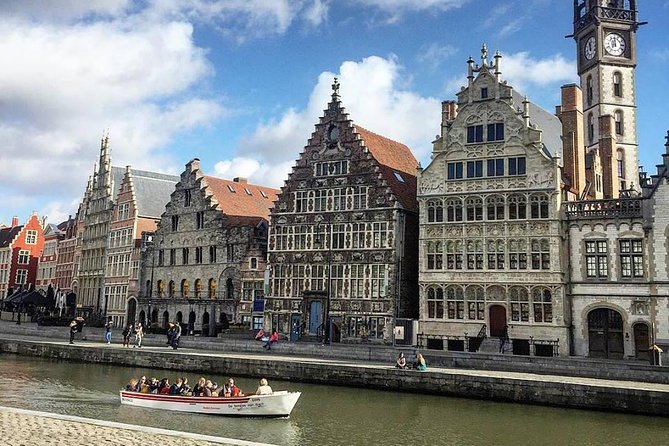
The Town Hall receives about 10 minutes, enough time to discuss its construction across several centuries and the political conflict tied to Emperor Charles V.
According to the city’s famous story, Ghent rebelled against Charles V, one of its most famous sons. The result helped give the people of Ghent their nickname, noose bearers. That detail gives the Town Hall stop a human spark. You are not just looking at a formal civic building. You are hearing about a city willing to challenge authority, even when the authority came from one of its own most powerful figures.
The Town Hall is also a good example of how Ghent developed in stages. Its architecture reflects different periods rather than one unified design. Wim’s explanation helps you notice that change instead of seeing only a large, impressive façade.
Stadshal, the modern building locals argue about
The Stadshal is described as Ghent’s most contested building, and the tour asks if you know its nickname. This five-minute stop shifts the mood from medieval history to a more recent architectural debate.
That contrast is useful. Ghent is not frozen in the past, even though much of the center looks medieval. Modern additions can provoke strong reactions, and the Stadshal gives you a chance to think about how a historic city decides what belongs in its central spaces.
The stop is brief, so you will not get a long architectural critique. Instead, expect a quick story and a reminder that locals do not all see the city in the same way.
Korenmarkt, 800 years of houses and hidden inscriptions
At Korenmarkt, Wim points out houses with around 800 years of history and draws attention to a mysterious inscription on some of them.
This is one of the places where the tour’s pace works in your favor. Five minutes is enough to notice details you might otherwise pass without stopping, while the walk keeps moving through the old center. Korenmarkt also helps you understand the commercial side of Ghent. The square’s buildings are not just scenic backdrops. They are evidence of a city shaped by trade and public life.
Look up as you walk. The value here comes from having someone direct your eye toward details that are easy to miss.
Het Groot Vleeshuis and medieval food control
The stop at Het Groot Vleeshuis lasts about five minutes and answers a practical question: how could a city guarantee meat quality before refrigeration?
The solution was to bring butchers together in one building. That simple fact makes the old meat hall more than an attractive medieval structure. It shows how city government and trade worked together to protect standards, manage commerce, and control food sales.
This is one of the most useful kinds of historical information because it connects a building to daily life. You get a glimpse of how people bought food, how authorities supervised business, and why certain trades were concentrated in specific places.
Gravensteen, the count’s message in stone
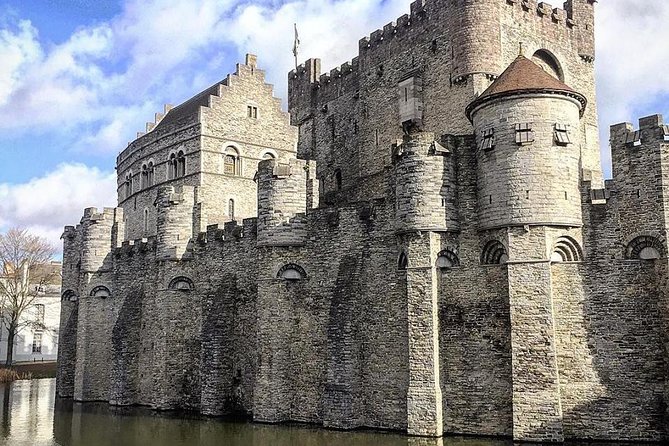
Gravensteen, the Castle of the Counts, is one of the route’s major sights. The stop lasts about five minutes and explains why the Count of Flanders built a castle that looked like a fist raised toward Ghent’s inhabitants.
That image is a good shorthand for the political tension between rulers and the city. The castle was not merely a residence or a decorative monument. It sent a message about power.
The tour does not include a full visit inside Gravensteen, so plan a separate castle admission if you want to explore its rooms and exhibits. On this walk, you get the outside story and the setting. For many people, that is a satisfying introduction, especially if they are using the tour to decide where to spend more time later.
St. Veerleplein and an unusual search for sea creatures
At St. Veerleplein, the group searches for Neptune, seahorses, and strange dolphins. This five-minute stop brings in decorative sculpture and the imagery connected with the water.
It is a lighter moment after the political story of Gravensteen. The details also prepare you for the next part of the route, where the canals and old harbor take center stage. Wim’s habit of turning the city into a visual search makes the walk feel less like a classroom and more like an attentive stroll.
You do not need specialist art knowledge. The point is to look, notice, and connect the images with Ghent’s relationship to its waterways.
Graslei and Korenlei, the grand finish by the water
The walk ends at Saint Michael’s Bridge after a stop at Graslei and Korenlei. This old harbor is often the visual high point of the route, and it is easy to see why. The waterfront brings together merchant houses, water, bridges, and centuries of work and leisure.
Wim explains that skippers worked here for centuries and sought entertainment nearby. That detail keeps the scene grounded. Graslei and Korenlei are beautiful today, but they were also working places, tied to trade and the movement of goods.
Ending at Saint Michael’s Bridge is practical. You finish with one of Ghent’s best views and are well placed to continue exploring on your own. This is the moment to slow down, take photographs, and revisit the connections Wim made earlier between commerce, politics, and architecture.
How much chocolate you actually get
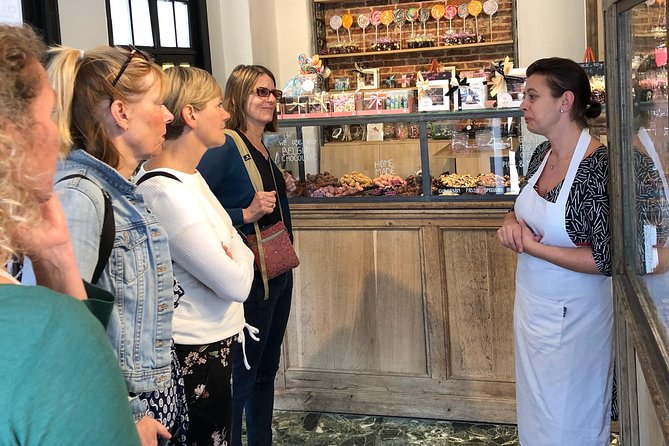
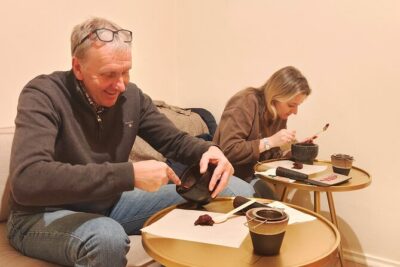
The title puts chocolate near the front, but the tour is mainly a history walk. You receive a chocolate tasting or short chocolate stop during the route, with the visit to the chocolatier described as brief.
That is not a flaw if you see the chocolate as a small refreshment between historical stops. Belgian chocolate adds a local food note and keeps the two-hour walk from feeling too formal. It also gives you a taste of a major Belgian specialty without turning the tour into a shopping trip.
If chocolate is your main goal, choose a dedicated tasting experience instead. If you want city history with a small sweet pause, this balance should suit you. The strongest part of the tour is the explanation of Ghent, not the amount of chocolate.
Is $42.05 a fair price for two hours?
At $42.05 per person, this is not the cheapest way to stroll through Ghent. You can walk past most of these sights without paying an admission fee. The value comes from having Wim explain what you are seeing, connect the locations, and add details that are easy to miss on your own.
The price is easier to justify if Ghent is your first stop in Belgium or if you have only a short time in the city. A well-paced introduction can save you from wandering without context. It is also useful for people who prefer history explained in person rather than through a guidebook.
The value is weaker if you already know central Ghent well, want extensive time inside the cathedral or Gravensteen, or expect a substantial chocolate tasting. You are paying for a guided overview, not entrance tickets to each attraction.
Pace, group size, and who will enjoy it most
The full route lasts about two hours and includes many short stops. That keeps the walk moving, but it also means you will not linger long at each site. I would choose this tour early in a Ghent visit, then return to the places that catch your interest.
The group can have up to 15 people. That is small enough for a more personal walk than a large city tour, while still being affordable compared with a private guide. The tour is offered in English, and confirmation is provided when you book.
Most people can participate, and service animals are allowed. The meeting point is near public transportation. Be precise at the start: meet in front of the white statue in the middle of Sint-Baafsplein, then finish at Saint Michael’s Bridge.
The tour has received a 4.8 rating, with 97 percent of participants recommending it. The strongest praise centers on Wim’s preparation, his passion for Ghent, his clear storytelling, and the steady pace. One practical warning is worth keeping in mind: communication about the meeting point matters, so arrive early and check your booking messages.
My recommendation for this Ghent walking tour
Book it if you want a compact, well-organized introduction to Ghent led by Wim, a historian and teacher who focuses on how the city works, not just how it looks. You will see the essential old-center sights, hear memorable stories about Charles V and the noose bearers, and finish beside the city’s most attractive waterfront.
Skip it if your priority is a long chocolate tasting or extended interior visits. For everyone else, the tour offers a useful balance: two hours of city history, a small chocolate break, a group capped at 15, and a route that gives you a strong sense of Ghent before you explore further on your own.
FAQ
How long does the Ghent walking tour last?
The tour lasts approximately two hours.
Where does the tour start?
It starts at Sint-Baafsplein in Ghent. Meet in front of the white statue in the middle of the square.
Where does the tour finish?
The tour ends at Saint Michael’s Bridge on Sint-Michielshelling.
Is the tour offered in English?
Yes. English is the listed language for the tour.
Who leads the tour?
The guide is Wim, a historian and teacher who has lived in Ghent for many years.
How much does the tour cost?
The listed price is $42.05 per person.
Is chocolate tasting included?
Yes. The tour includes a chocolate tasting or short chocolate stop, but chocolate is a small part of the two-hour history walk.
What places does the route include?
The route includes Sint-Baafsplein, St. Bavo’s Cathedral, Maaseikplein, Geeraard de Duivelsteen, Hoogpoort, Ghent Town Hall, Stadshal, Korenmarkt, Het Groot Vleeshuis, Gravensteen, St. Veerleplein, Graslei, and Korenlei.
How many people can join the tour?
The group has a maximum of 15 participants.
Can I cancel for a full refund?
Yes. You can cancel at least 24 hours before the start time for a full refund. Changes or cancellations made less than 24 hours before the start time are not accepted for a refund.
Newest chocolate tours around Ghent
- Private Chocolate Experience in Ghent★ 5.0 · 31 reviews
- Chocolate and Jenever (Belgian Gin)Tasting in Ghent★ 5.0 · 2 reviews
- Charlie’s Private Chocolate Tour (Ghent)★ 5.0 · 34 reviews
- Ghent Chocolate Tasting and Sightseeing Tour★ 5.0 · 21 reviews
- Chocolate history workshop Ghent★ 5.0 · 34 reviews
- Private Chocolate Tasting Experience in Ghent★ 4.6 · 7 reviews
- Ghent: Guided City Tour with Chocolate Tastings★ 4.8 · 36 reviews
- Ghent: Belgian Chocolate Making Workshop with Beer Tasting★ 4.3 · 15 reviews
Ghent Chocolate Tours, compared.

Bruges & Ghent Tour w/ Cruise & Chocolate Tasting
Read our review →
A Taste of Ghent: Beer & Chocolate with storytelling by a local
Read our review →

Browse the lists this tour appears in