
Review · CHOCOLATE MAKING WORKSHOPS
Make Your Own Chocolate with Oaxacan Tradition Private Class
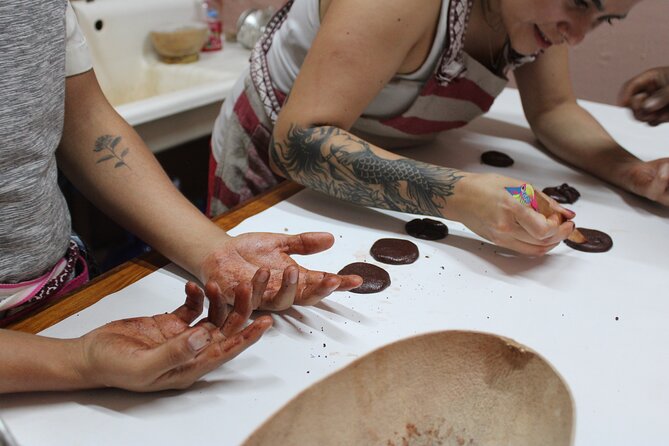
The best part of this Oaxaca City class is that you do not simply taste chocolate. You roast cacao on a clay comal from San Marcos Tlapazola, peel the beans by hand, grind them, and take home the chocolate made with your own hands. It is a small, hands-on lesson in Oaxacan food culture, not a quick tasting with a souvenir at the end.
I like the close attention you get in a group capped at four, and I like the freedom to choose your sugar level and add regional ingredients. Guides such as Fernanda, Diego, Lupita, and Ruth have worked with families, couples, friends, and solo visitors, with patience that suits both curious adults and children.
The one catch is time. The advertised length is about two and a half hours, but the full session can stretch to roughly three hours once tasting, grinding, drink-making, and conversation are included. If you want a quick activity between major sights, this may feel long. If you want to understand how chocolate reaches the Oaxacan table, the extra time earns its keep.
What makes this chocolate class worth your time
- Roast cacao on a clay comal: The comal comes from San Marcos Tlapazola in Oaxaca’s Central Valleys, giving the process a direct link to local craft and cooking.
- Taste before you make: You learn to notice the qualities of different cacao seeds and compare cacao with commercial chocolate and more deliberate, ingredient-focused chocolate.
- Build your own blend: You decide the sugar level and mix in ingredients from the region, so your finished chocolate is not a fixed recipe.
- Use traditional kitchen tools: Hand peeling and grinding with a traditional grinder make the process physical, slow, and memorable.
- Keep your own chocolate: You leave with the chocolate you made, rather than only a recipe or a sample.
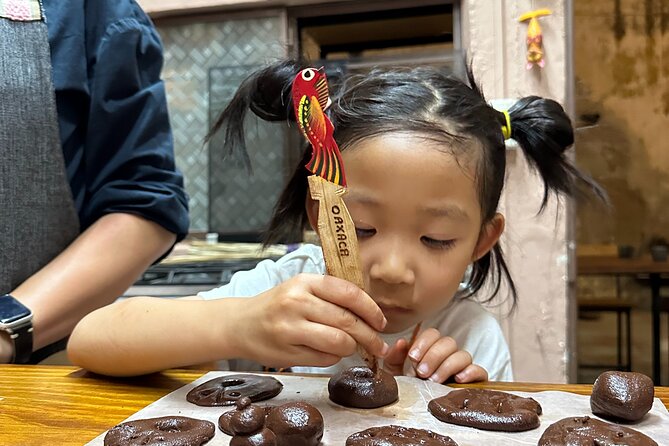
- A true small-group class: With no more than four participants, the instructor can adjust the pace for a four-year-old, a pair of friends, or a solo visitor with prior chocolate experience.
Starting at 5 de Mayo 210 in central Oaxaca
The class begins at 5 de Mayo 210 on the Ruta Independencia in central Oaxaca, at the Centro address listed as Oaxaca de Juárez. You return to this same meeting point when the activity ends, so you do not need to arrange a separate ride across the city.
That central location is useful if you are building the class into a walking day. It is near public transportation, and the small group size means you are not being moved through a large workshop in stages. The setting is part of the appeal: the work feels closer to a traditional kitchen than to a polished factory demonstration.
You should arrive ready to use your hands. This is not a sit-back presentation. You will handle cacao, work with heat during roasting, peel beans, grind the mixture, and prepare a drink. The supplied details do not specify clothing requirements or whether the work area is fully accessible, so ask the operator if you have mobility or other access concerns.
The class is offered in English. Service animals are allowed. Confirmation is provided when you book, and the activity is private for a maximum of four people, though the exact makeup of your small group depends on your reservation.
More Chocolate Making Workshops in Mexico
- Bean to Bar Chocolate Workshop in Puerto Vallarta
★ 5.0 · 381 reviews - Chocolate Workshop
★ 5.0 · 92 reviews - Cozumel: Chocolate Workshop at The Mayan Cacao Company
★ 4.8 · 41 reviews
First, learn what cacao is actually telling you
The opening lesson places the rest of the activity in context. You begin with cacao from Oaxaca and look at the organoleptic qualities of each seed. In plain terms, you are learning to pay attention to what you smell, taste, and feel rather than treating every bean as the same.
This section also draws a useful line between cacao, commercial chocolate, and what the class describes as conscious chocolate. That distinction matters because many people arrive knowing chocolate mainly as a sweet bar. Here, you see the ingredient before sugar and processing take over.
I like this start because it gives purpose to the tasting that follows. You are not just sampling for pleasure. You are learning why different beans and methods can produce different results. One session included comparisons between washed and fermented beans, several ground powders, and cacao with different production styles.
If you already know a fair amount about chocolate, you should still find room to learn. One participant with prior experience said the class offered more detail and even turned the grinding portion into a small workout. The lesson can work for beginners without talking down to people who have already visited cacao farms or chocolate shops.
Roasting cacao on a San Marcos Tlapazola comal
Next comes the heat. You roast the cacao on a clay comal from San Marcos Tlapazola, a community in Oaxaca’s Central Valleys. This is a small but meaningful detail. The comal is not just a generic cooking surface. It connects the class to a local tradition of clay kitchenware and to the wider foodways of Oaxaca.
Roasting changes the cacao’s smell and taste, and it makes the process feel more like cooking than product assembly. You watch the beans transform before you work them further. The instructor explains what is happening as you roast, so the step has both a practical and cultural purpose.
This is also one of the points where you should pay attention to the pace. A clay comal and hand processing do not offer the speed of a modern machine. That is exactly why the activity works, but it also explains why the session may run longer than the posted two and a half hours.
The class is suitable for families, but children need normal supervision around a hot cooking surface. The experience has worked well with children aged 8, 9, 11, 12, and 13, and even a four-year-old enjoyed taking part with a parent. The instructor can explain the ideas in a way that keeps young participants involved, but adults remain responsible for helping children around the heat and tools.
Peeling cacao by hand and hearing its local story
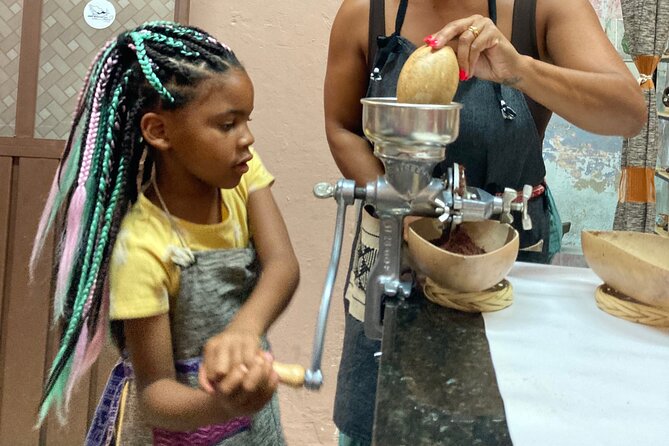
Once the beans are roasted, you peel them by hand. This is simple work, but it slows you down enough to notice the ingredient. You are not handed a prepared bowl and asked to stir. You take part in the small steps that are usually hidden from the person buying a finished chocolate drink.
The peeling also carries a cultural story. While you work, the instructor shares part of the history and role of cacao in the community. The supplied details do not give a full historical timeline, so you should think of this as a focused food lesson rather than a formal museum lecture.
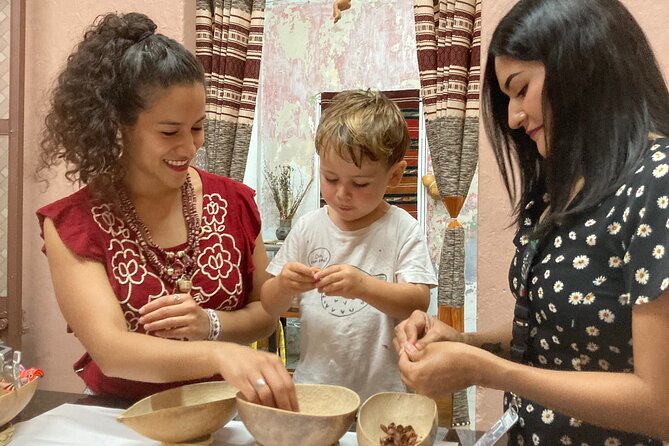
That balance is one reason the class has broad appeal. A couple can treat it as a relaxed shared activity. A family can give children a task they can see and understand. A solo visitor can ask questions and set the pace more easily than in a large group.
The handwork has a practical payoff, too. It makes your final drink feel earned. By this point, you have seen the seed, tasted varieties, roasted the cacao, and removed the outer covering. The class keeps the chain of steps visible.
Same city, a different tasting:
- Finca 18 Puerto Vallarta Tequila Tour + Chocolate Pairing
★ 5.0 · 393 reviews - Chocolate Tour in Vallarta
★ 5.0 · 226 reviews - Chocolate & Margarita Workshop
★ 5.0 · 207 reviews - Chocolate and truffles workshop
★ 5.0 · 157 reviews
Grinding and choosing your own chocolate blend
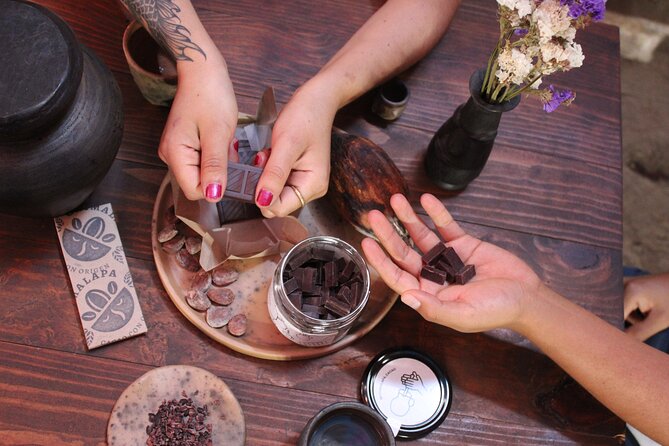
After peeling, you turn the cacao into chocolate in an artisanal way. You choose the percentage of sugar, then combine the chocolate with different ingredients from the region. This is where the class becomes personal. Two people can follow the same process and leave with noticeably different blends.
You should be ready for some effort. Grinding by hand takes time, and one participant compared it to a workout. That is not a flaw, but it is worth knowing if you prefer demonstrations to physical activities. The payoff is control over the final flavor and the satisfaction of making something rather than simply watching it happen.
The finished mixture becomes your own chocolate. You take the remainder with you, making it a useful souvenir rather than a decorative purchase. One class produced a custom blend of chocolate and chile, a good example of how the regional ingredients can push the result beyond plain sweet cocoa.
Shopping is also part of the experience in a modest way. You may have a chance to buy additional products, but the main value is the chocolate you make during class. Do not book this expecting a large market tour or a full meal. The listed sample food is a cocoa toast, and the central food item is the drink you prepare yourself.
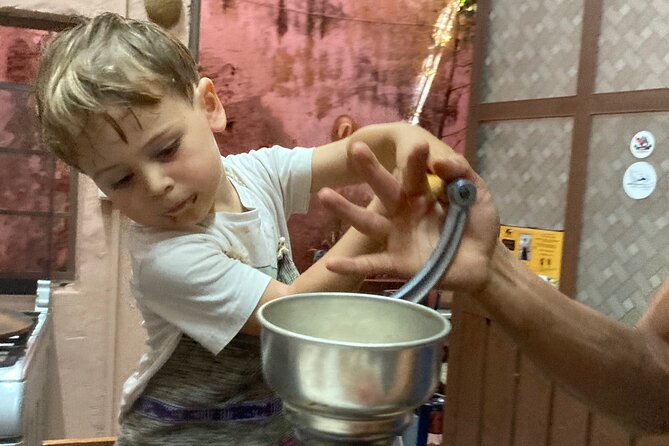
Making the traditional drink with a grinder
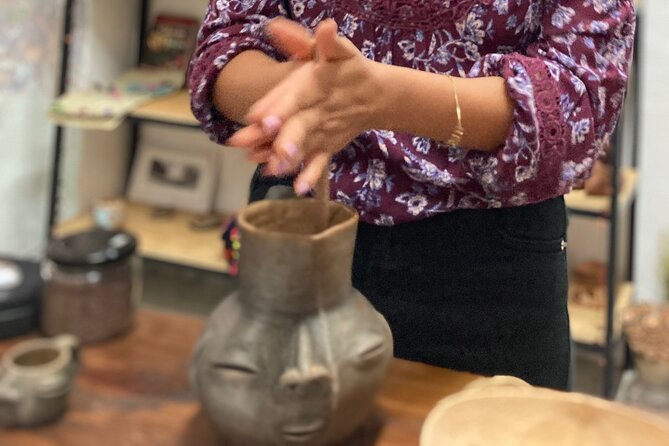
The final preparation uses a grinder, a traditional kitchen utensil that helps incorporate and blend the chocolate. This step shows how the ground chocolate becomes a drink rather than ending as a dry mixture.
You will learn how to prepare the drink and then taste it with the cocoa-based toast. The pairing gives the class a clear finish: you have studied cacao, changed it with heat, peeled and ground it, selected the sweetness, and now taste the result in a familiar Oaxacan form.
The drink is a strong reason to allow extra time. One couple estimated about an hour for the class, another hour for tasting, and another hour for making the chocolate drink. That breakdown may not match every session, but it shows why you should keep your next appointment flexible.
The final cup is not identical to a restaurant hot chocolate made by someone else. You have chosen the sugar and ingredients, so the result reflects your decisions. That makes the drink useful as a lesson in flavor, not just a sweet ending.
Why the small group changes the experience
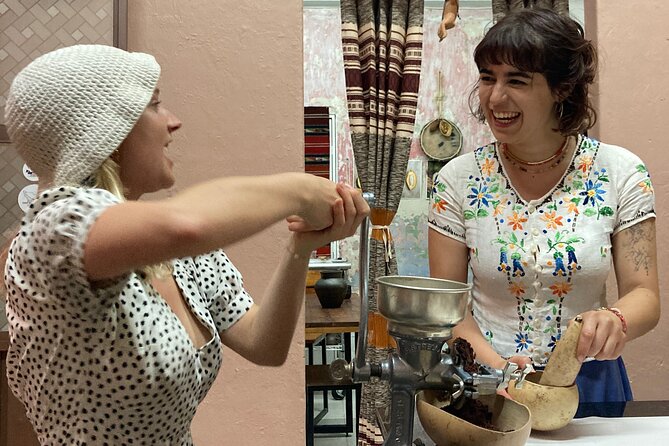
A maximum of four participants is a major advantage here. You can ask why a bean tastes different, request help with grinding, or adjust the pace without waiting for a large group to catch up.
The format also helps mixed-age families. A child may need a simpler explanation or a little extra patience, while adults may want more detail about cacao production. Instructors named in the experience include Fernanda, Diego, Lupita, and Ruth, and the class has been described as patient, friendly, and attentive across several kinds of groups.
A private, small setting does mean the price deserves a close look. At $98.57 per person, this is not a bargain snack stop. For that amount, you are paying for roughly two and a half hours of instruction, tasting, ingredients, hands-on work, a prepared drink, and the chocolate you make. With two to four people, the personal attention makes the cost easier to justify, especially if food culture is a main reason for your Oaxaca visit.
For a solo visitor, the price is harder to assess because the per-person cost remains the same. I would book it if you care about process and cultural context. I would skip it if you only want a cheap cup of hot chocolate.
Who should book, and who should pass
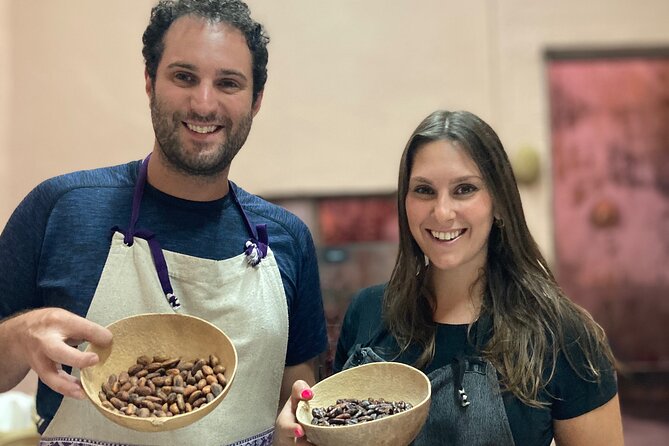
I would recommend this class to anyone who wants a food activity with real participation. It suits couples looking for a shared project, families with children who can follow instructions, friends who enjoy tasting and experimenting, and solo visitors who want an English-language lesson in a very small group.
It is also a good fit if you have already sampled Oaxacan chocolate and want to understand the work behind it. The class covers tasting, roasting, peeling, grinding, blending, and drinking, so it gives you a fuller picture than a shop visit.
You may want to pass if you have limited time, dislike repetitive handwork, or expect a large meal. The duration can reach three hours, and the physical grinding is part of the point. The cocoa toast is a small closing bite, not a substitute for lunch.
The activity receives a 5.0 rating from 45 reviews, with 100 percent recommending it. More useful than the number is the pattern: the strongest praise centers on the educational content, the hands-on work, the finished drink, the friendly instruction, and the way children are included. Those are exactly the areas that should guide your decision.
Book at least a day ahead if your schedule is tight. The activity is often reserved about 16 days before the date, and the group limit is only four. Free cancellation is available if you cancel at least 24 hours before the start time. Inside that window, the cost is not refunded and changes are not accepted.
My call: book it for the process, not just the chocolate
Book this class if you want to slow down and understand how cacao becomes a drink in Oaxaca. You will roast on local clay, work by hand, choose your sweetness, use a traditional grinder, and leave with a personal batch of chocolate.
I would especially choose it for a family or a small group of friends. Children can take ownership of the finished product, while adults get a useful lesson in cacao and local food practice. The only real caution is the price and the time. At nearly $100 per person, it needs to be a highlight, not a filler between other plans.
If that sounds like your kind of afternoon, Chimalapa Cacao offers a thoughtful, practical way to meet Oaxacan chocolate at its source and make something you can actually take home.
FAQ
Where does the chocolate-making class begin?
It begins at 5 de Mayo 210, on Ruta Independencia in Centro, Oaxaca de Juárez, Oaxaca, Mexico.
Where does the activity end?
The class ends back at the original meeting point.
How long does the experience last?
The listed duration is approximately two hours and 30 minutes. You should allow closer to three hours, since the tasting, grinding, and drink preparation can take additional time.
How much does the class cost?
The price is $98.57 per person.
How many people can join?
The activity has a maximum of four participants.
Is the experience offered in English?
Yes. The class is offered in English.
What will I make during the class?
You will roast and peel cacao, grind it into chocolate, choose the sugar level, add regional ingredients, and prepare a chocolate drink.
Can I keep the chocolate I make?
Yes. You take your own handmade chocolate with you after the class.
Is a service animal allowed?
Yes. Service animals are allowed.
What is the cancellation policy?
You can cancel for a full refund up to 24 hours before the experience begins. Cancellations or changes made less than 24 hours before the start time are not accepted and are not refunded.
Newest chocolate tours around Mexico
- Art Workshops and Chocolate Shops Tour in Oaxaca★ 5.0 · 4 reviews
- Magic Teotihuacan and Chocolate★ 5.0 · 4 reviews
- Cacao Chronicles: A Mexican Chocolate Tasting★ 5.0 · 14 reviews
- Bean to Beverage: Roast and grind cacao into chocolate★ 5.0 · 7 reviews
- Oaxaca: Chocolate and Ancestral Drinks Tour★ 4.5 · 13 reviews
- Chocolate Tasting & mayan Presentation★ 4.5 · 20 reviews
- Cozumel: Chocolate Workshop at The Mayan Cacao Company★ 4.8 · 41 reviews
- Private Tour Uxmal Ruins and Chocolate Museum plus Cenote★ 5.0 · 43 reviews
Chocolate Making Workshops, compared.
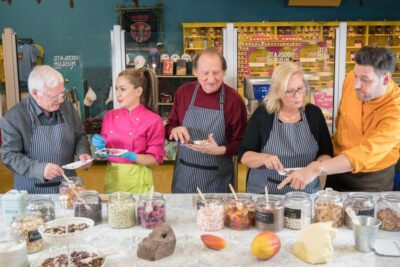
Chocolate Workshop in Chocolate Museum w/ Tasting
Read our review →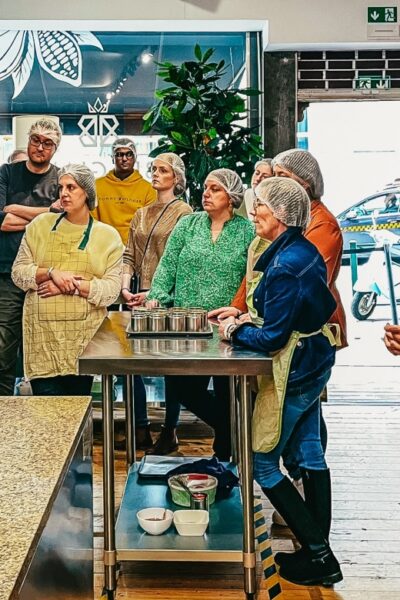
Belgian Chocolate Making Workshop with Tastings
Read our review →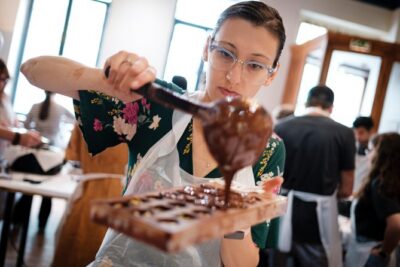
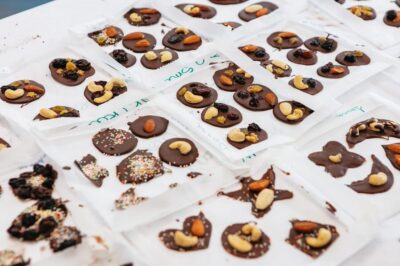
Belgian Praline and Mendiants Chocolate Workshop
Read our review →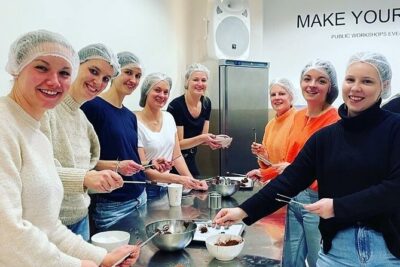
1.5h Belgian Chocolate Workshop in Brussels (bean to bar)
Read our review →
45-minute Chocolate Making Workshop at Choco-Story
Read our review →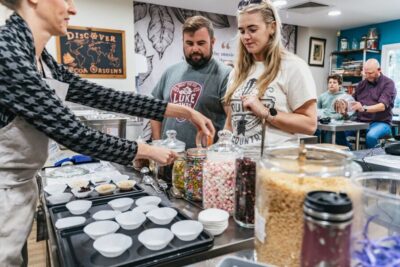
Chocolate Bar Making Workshop at York Cocoa Works
Read our review →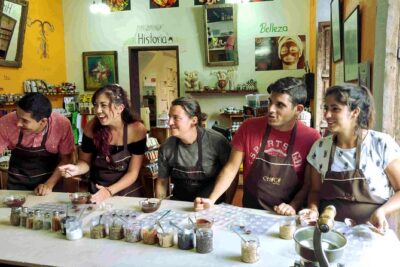
Bean to Bar Chocolate Workshop in Puerto Vallarta
Read our review →Browse the lists this tour appears in