
Review · CHOCOLATE TASTINGS
Passy-Grigny: Chocolate and Champagne Tasting Tour
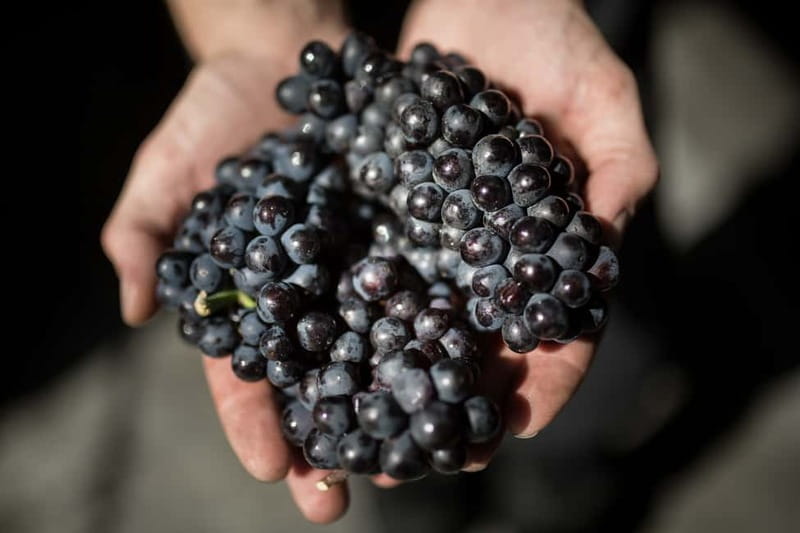
Champagne and chocolate make a fine pair, but the real draw here is seeing how a village Champagne house works. At Champagne Dom Caudron, your 75-minute English tour moves from the early Passy-Grigny press to today’s modern vat house, with the Meunier grape at the center of the story. I like the clear production focus, and I like the final tasting, where three Champagnes meet three chocolates. The one catch is location: Passy-Grigny is not easy to reach by public transport.
This is a compact, good-value outing at $32 per person. Guides such as Clémentine, Fanny, and Katja have earned praise for their warmth, humor, and clear explanations. Families can make it work too, since juice is available for children, but check the meeting point and transport before you book.
Key points to know before booking
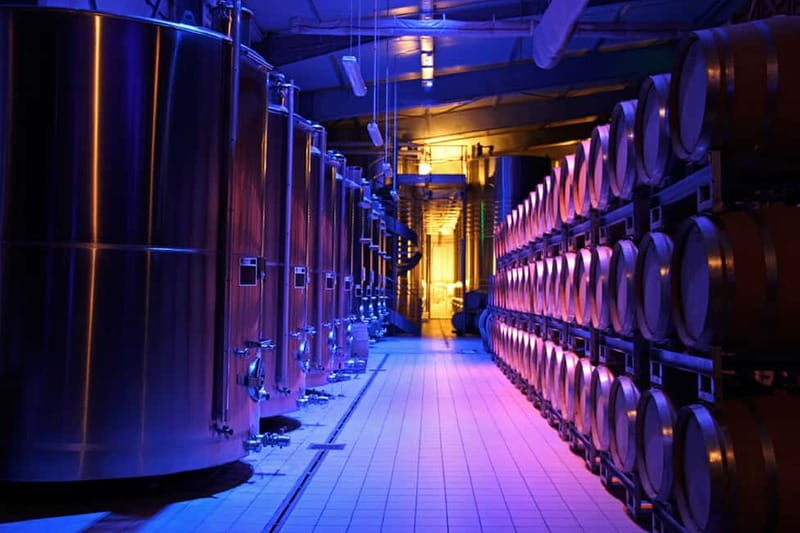
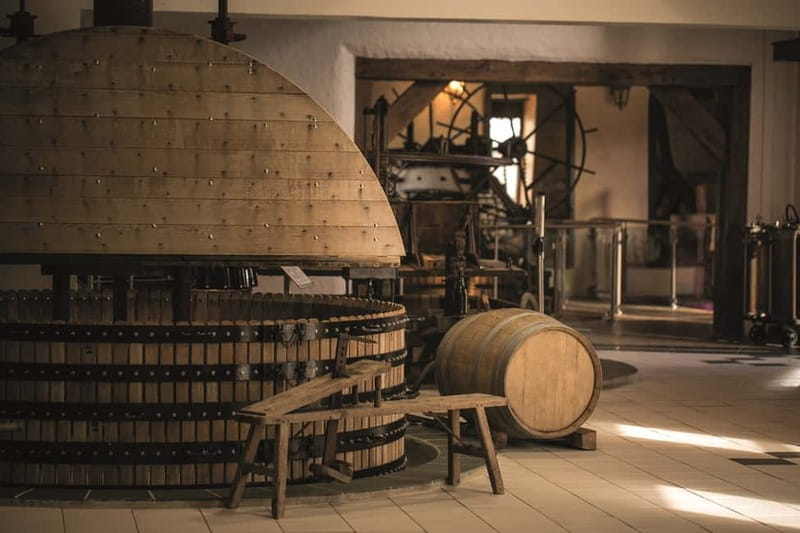
- See a working Champagne operation: The tour covers the first press used by the Passy-Grigny growers and the modern vat house used today.
- Learn about the Meunier grape: The story begins in 1929, when priest Aimé Caudron brought the village winemakers together around a shared project.
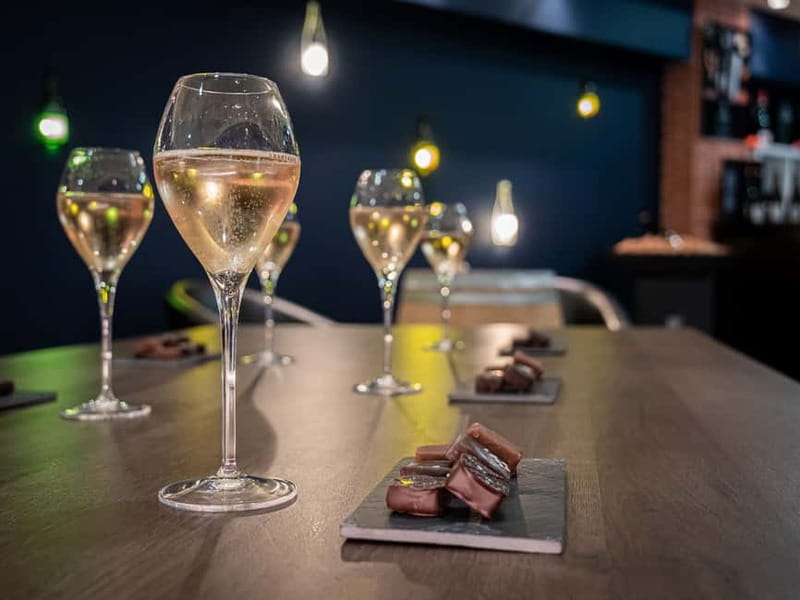
- Taste three Champagne and chocolate pairings: The tasting is not just three glasses and a snack. Each Champagne is matched with a chocolate.
- English tours are available: Live guiding is offered in English or French, with guides known for friendly, easy-to-follow explanations.
- Allow 90 minutes: The guided portion lasts about 75 minutes, followed by the tasting.
- Plan a car or paid ride: Public transport is limited, and one visitor specifically found the site difficult to reach.
A small Champagne house with a village story
Passy-Grigny sits in the Marne Valley, a quieter part of the Champagne region away from the grand names in Reims and Épernay. That setting matters. You are not simply entering a polished tasting room built around a famous label. You are visiting a Champagne house tied closely to one village and its growers.
The story reaches back to 1929. Aimé Caudron, a priest from the village, brought local winemakers together with a bold idea. The house that grew from that effort became associated with Meunier, one of the three principal grape varieties used in Champagne.
The tour uses this local background as an entry point, but it does not linger only on old stories. Its main purpose is to explain production. That makes it a good choice if you want to understand what happens between the vineyard and the bottle, rather than spend most of your time on aristocratic families, grand cellars, or brand legends.
I appreciate that balance. You get a sense of place, then move quickly into the practical work of making Champagne. If you have already toured a large house in Reims, this experience gives you a different angle. If this is your first Champagne visit, it provides a useful foundation without demanding much of your day.
More Chocolate Tastings in France
- Paris French Sweets Tasting Tour with Pastries and Chocolates
★ 4.5 · 947 reviews - Paris Chocolate, Macaron & Pastry Food Tour: 10 Gourmet Tastings
★ 5.0 · 339 reviews - Paris: Discover Brussels and Bruges & Optional Chocolate Tasting
★ 4.5 · 219 reviews
From the first press to the modern vat house
The 75-minute guided visit takes you behind the scenes. You begin with the early equipment and the story of the village growers, then move toward the current production spaces.
The first press is an important detail. It helps connect the house to its beginnings, when local production depended on the resources and cooperation of the growers in Passy-Grigny. You can better understand how a small community built a Champagne operation together.
The modern vat house then shifts the focus to present-day production. This is where the tour gains its practical value. You see that Champagne is not just about elegant bottles and celebratory rituals. It is also about pressing, fermentation, storage, bottling, and careful control at every stage.
The exact production areas you see can depend on the day’s operation, but the route is designed to show the process rather than merely describe it. A short film is also part of the presentation. One useful point to keep in mind is that the film may feel less current than the rest of the visit, but it still helps explain the harvest and production sequence.
Your guide is the key to making all this understandable. Clémentine has been praised for her friendly manner, while Fanny and Katja have also made strong impressions during the tasting and explanations. The important thing is not memorizing every technical term. It is leaving with a clearer idea of why Champagne production takes time and why the final bottle costs more than an ordinary sparkling wine.
The Meunier connection in Passy-Grigny
Meunier receives special attention here, and that gives the visit a local identity. Many first-time visitors know Chardonnay and Pinot Noir, but may know less about Meunier. The house’s origin story helps explain why this grape matters so much in the Marne Valley.
Aimé Caudron’s 1929 initiative brought the village growers together, creating the foundation for the Champagne house associated with Passy-Grigny. That is a useful reminder that Champagne is not only a product of famous city cellars. It is also the work of farming communities and small grower groups.
You will not get a full academic lesson in grape science during a 90-minute visit. Instead, you get enough context to understand the house’s place in the region. For many people, that is the right level. The tour is informative without becoming a classroom.
If your main interest is the full history of Champagne from medieval times to the present, a larger house in Reims may offer more historical material. If you want to see how a village-linked producer explains its own work, Dom Caudron is a better fit.
Three Champagnes and three chocolates
The final tasting is the most distinctive part of the experience. You taste three different Champagnes, each paired with three chocolates.
This pairing gives the tasting a little structure. Instead of sipping three glasses in isolation, you can compare how the Champagne changes when matched with chocolate. The contrast makes the tasting approachable, even if you do not usually analyze wine.
The chocolate is not an afterthought. It is a central reason this outing appeals to people who have already seen a standard Champagne tasting. Several of the pairings have been described as especially enjoyable, with the chocolate quality receiving as much attention as the wine.
The tasting also gives your guide time to answer questions. You can ask about the bottles, the production method, or the flavors you are noticing. The tone is friendly rather than formal, so you do not need prior wine knowledge.
Families can take part, with juice offered to children. That does not turn the outing into a children’s attraction, but it does make the visit easier for parents. One family found that the mix of production information, chocolate, and a bottle-opening demonstration kept younger visitors interested. A sabering demonstration was even included for two boys on one occasion, though you should treat that as a possible extra rather than a guaranteed part of every tour.
Do not expect a long tasting session. The entire activity lasts 90 minutes, and the guided portion is about 75 minutes. If you want a slow afternoon of several producers and many pours, you will need additional visits. If you want one focused stop, the timing works well.
More Wine and Chocolate Tours in France
- Libourne: Winery Tour with Wine and Chocolate Tasting
★ 4.9 · 74 reviews - tasting workshop of 6 to 8 wines with charcuterie chocolate cheese
★ 5.0 · 48 reviews - 2h immersive tasting in Beaujolais – Wine and Chocolate Accord
★ 5.0 · 5 reviews
Why the $32 price makes sense
At $32, this is not the cheapest way to taste Champagne, but it offers more than a simple pour. Your fee covers the guided visit, the production explanation, the Champagne tasting, and the chocolate pairing.
I see the value in the combination. A basic tasting might give you three samples and little context. Here, the tour explains what you are tasting and ties it to a real production site. That makes the price reasonable for a short, organized activity.
The value is also stronger if you have already spent time in Reims or Épernay and want something different. One visitor considered it a welcome break from the major Champagne houses, while another found it more personal than larger tours. That does not mean it replaces a grand cellar visit. It simply serves a different purpose.
The main limitation is duration. One-hour-plus experiences can feel brief if you expect a full winery day. One person felt the tour could have lasted longer and included more information. I would book it for a concentrated introduction, not as your only Champagne activity if you want extensive tasting or a long cellar walk.
Getting to 10 Rue Jean York
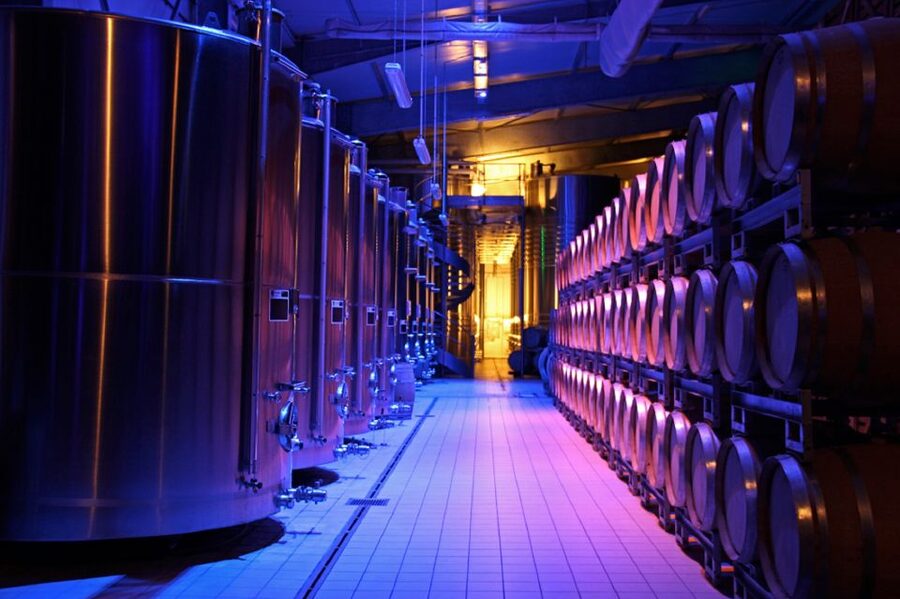
The meeting point is at Champagne Dom Caudron, 10 Rue Jean York, though you should confirm the exact starting option when booking. The drop-off is also at the same address.
This is the practical issue to solve first. Passy-Grigny is not as easy to reach as Reims or Épernay, and public transport is not a dependable option according to the information provided. You may need a rental car or a paid ride such as Uber or Bolt.
I would not build a tight schedule around this visit unless your transport is already arranged. Give yourself time to find the village and arrive at the correct meeting point. Once you are there, the activity itself is straightforward.
The location can also work in your favor. You are seeing more of the Marne Valley rather than staying only in the two main Champagne cities. If you have a car, consider pairing the visit with a wider drive through the area. Keep your driver plan in mind, since the tasting includes three Champagnes.
Who will enjoy this tour most?
This is a strong match for you if you want:
- A clear introduction to how Champagne is made
- A village-based experience away from the largest brands
- A tasting with a food pairing
- An English-language guide
- A short activity that fits into a wider day
- A family-friendly visit with juice for children
It is also a good choice for people who feel unsure about wine tastings. The chocolate gives you an easy starting point, and the guide explains the process in ordinary language.
You may prefer another experience if your priority is a long cellar walk, a major historic Champagne label, or a large selection of wines. This visit focuses on production at Dom Caudron and the story of Passy-Grigny. It is not designed as a grand tour of the whole region.
The experience is wheelchair accessible, which is useful to know when comparing options. As always, confirm the practical arrangements for your chosen time and meeting point before setting out.
How to fit it into a Champagne trip
The tour works well as a morning or afternoon stop. Its 90-minute length leaves room for another activity, a meal, or a drive through the Marne Valley.
If you are staying in Reims, allow extra time for the journey and do not assume the address is a quick city transfer. If you are staying near Épernay, the same advice applies. The tour can be a welcome change from the better-known houses, but only if you treat transport as part of the plan.
I would choose this for a day when you want one main tasting and some local scenery. You can pay closer attention to the guide, enjoy the three pairings, and still have time for other plans. If you are trying to visit several producers in one day, be careful. Three Champagne tastings can add up quickly, and the roads between villages take longer than the map may suggest.
Should you book Champagne Dom Caudron?
Book this tour if you want a reasonably priced, well-explained introduction to Champagne with a memorable chocolate pairing. The strongest features are the friendly English-speaking guides, the look at both old and modern production, and the chance to learn about Meunier in the village where the house began.
Skip it if you want a grand historic cellar, a long technical tour, or easy public transport from Reims or Épernay. For everyone else, especially couples, families, and first-time Champagne visitors with a car, this is a smart 90-minute stop. Just plan the ride to Passy-Grigny before you reserve.
FAQ
How long does the Champagne Dom Caudron tour last?
The activity lasts 90 minutes. The guided tour itself takes about 75 minutes, followed by the Champagne and chocolate tasting.
Is the tour available in English?
Yes. Live tours are offered in English or French.
How many Champagnes and chocolates are included?
You taste three different Champagnes paired with three chocolates.
Where does the tour meet?
The meeting point is at Champagne Dom Caudron, 10 Rue Jean York, Passy-Grigny. The exact starting arrangement may depend on the option you book.
Is the experience suitable for children?
Yes. Children can attend, and juice may be offered instead of Champagne. The tour includes production information, chocolate, and may include a bottle-opening demonstration.
Is the site easy to reach without a car?
Public transport is limited. You should plan to drive or use a paid ride such as Uber or Bolt, and confirm the meeting details before traveling.
Newest chocolate tours around France
- Bordeaux: Chocolate and Pastry Food Tasting Tour★ 4.9 · 40 reviews
- 2h immersive tasting in Beaujolais – Wine and Chocolate Accord★ 5.0 · 5 reviews
- Paris Marché d’Aligre Walking Tour with Chocolate and Cheese Tasting★ 3.5 · 24 reviews
- Paris Chocolate and Pastry Private Tour With Secret Food Tours★ 5.0 · 44 reviews
- tasting workshop of 6 to 8 wines with charcuterie chocolate cheese★ 5.0 · 48 reviews
- Paris : 45 min Chocolate Workshop at Choco-Story Paris★ 4.0 · 51 reviews
- Paris: Choux Pastry and Chocolate Éclair Making Class★ 4.9 · 50 reviews
- Paris: Pure Chocolate Walking Tour★ 4.7 · 52 reviews
Chocolate Tastings, compared.
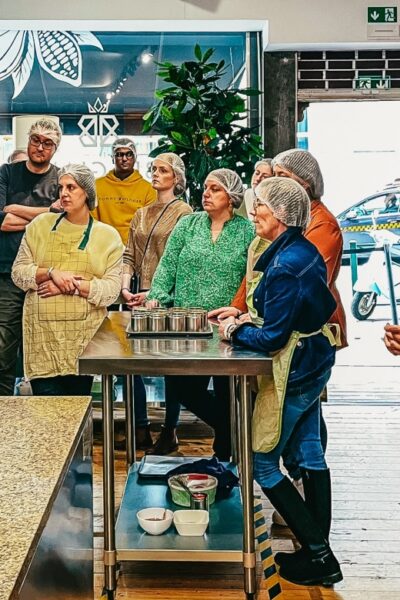
Belgian Chocolate Making Workshop with Tastings
Read our review →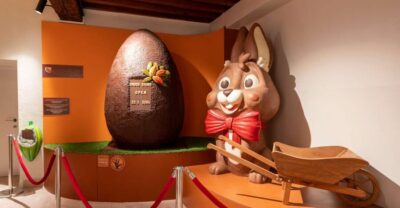
Choco-Story Chocolate Museum Guided Tour w/Tastings
Read our review →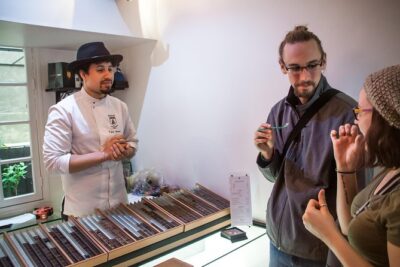
Paris French Sweets Tasting Tour with Pastries and Chocolates
Read our review →
Brussels Walking and Tasting Tour (Beers,Chocolates&Fries/Waffle)
Read our review →
Princeville Botanical Gardens Tour and Chocolate Tasting Ticket
Read our review →
Brussels and Bruges Tour & Optional Chocolate Tasting
Read our review →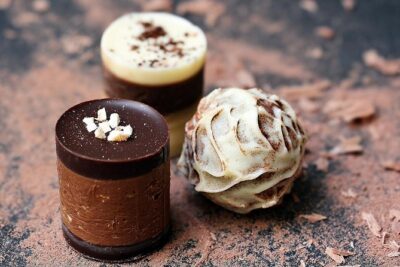
Browse the lists this tour appears in