
Review · CHOCOLATE PAIRING EXPERIENCES
Port Wines & Chocolate Pairing
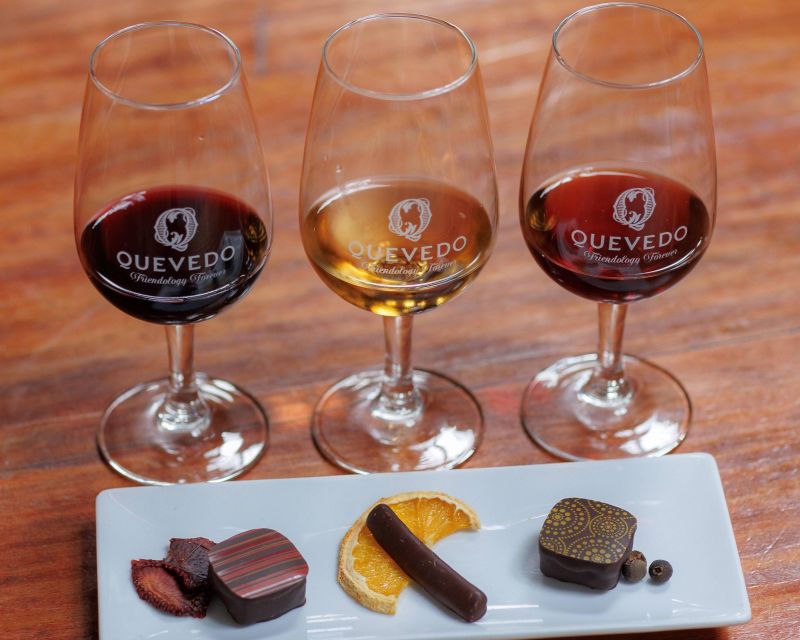
Port and chocolate make a fine little team here, but the real treat is the chance to compare three very different Quevedo wines in a relaxed family-run lodge. You taste an LBV, a 10 Year Old White Port, and a 20 Year Old Tawny, each matched with a Porto-made bean-to-bar chocolate.
I like the small group size, capped at eight, and the clear progression from fruit-led red Port to fresh white Port and nutty tawny. I also like the setting near Santa Marinha Church, close to the river and the Bordalo II rabbit sculpture. The main drawback is the short 40-minute schedule, which gives you a focused tasting rather than a long winery visit.
Key points to know before booking
- Three distinct Port styles: Compare LBV, 10 Year Old White Port, and 20 Year Old Tawny.
- Chocolate pairings from Porto: Try raspberry, candied orange, praline, and pepper with the wines.
- Family-owned producer: Quevedo has made Port for five generations and began bottling under its own name in 1993.
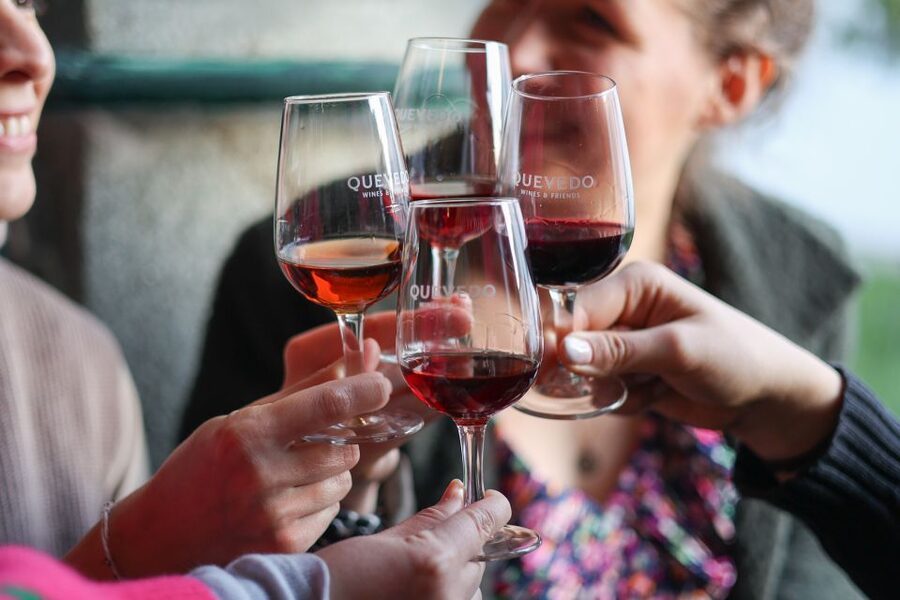
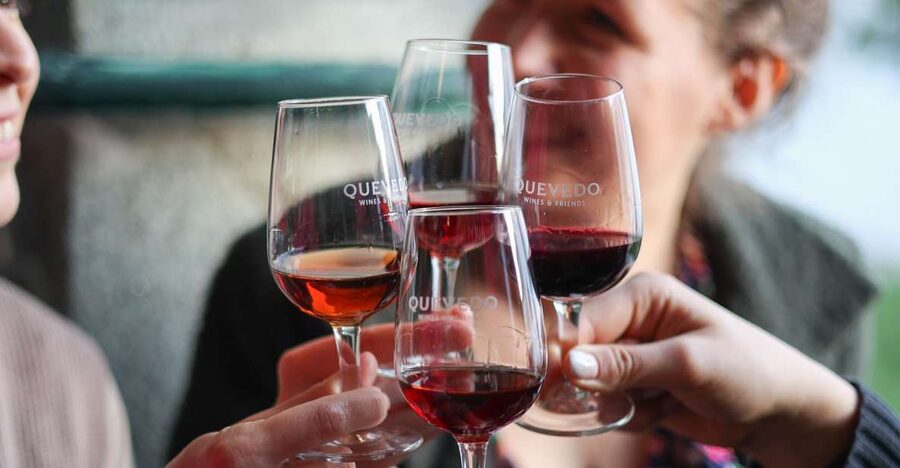
- Small, relaxed setting: The group limit is eight, and a tasting for four has sometimes felt private.
- Central Gaia meeting point: Find the lodge opposite Santa Marinha Church, just past the large rabbit sculpture.
- Short and easy to fit in: The tasting lasts 40 minutes and costs $34 per person.
Three Quevedo Ports, three very different pairings
This tasting works because it does not throw several similar ruby-colored Ports at you and ask you to sort them out. Each glass has its own character, and each chocolate gives you a simple way to notice how sweetness, fruit, spice, and texture interact.
Your first pour is a Late Bottled Vintage Port, paired with raspberry chocolate. LBV is a full, fruity style, and raspberry gives you a bright partner for that fruit character. This is likely to be the most direct pairing of the three, easy to understand even if Port is new to you.
Next comes a 10 Year Old White Port with dark chocolate covered candied orange. White Port can be a useful surprise for people who know only the dark, sweet styles associated with Portugal. The orange brings a citrus note, while the dark chocolate adds a firmer, slightly bitter edge.
The final pairing is a 20 Year Old Tawny Port with praline and pepper chocolate. Tawny Port is aged in wood and tends toward rounded, mature flavors rather than the bold berry profile of a young red Port. The praline and pepper combination gives this last course a more complex finish.
I like this order. It moves from a fruit-forward red to a lighter white, then finishes with an older tawny. You get a useful lesson in Port styles without having to sit through a long technical class.
More Chocolate Pairing Experiences in the world:
- Finca 18 Puerto Vallarta Tequila Tour + Chocolate Pairing
★ 5.0 · 393 reviews - Maltese Wine & Chocolate Pairing
★ 5.0 · 112 reviews - Malta: Wine and Chocolate Pairing Experience
★ 4.9 · 52 reviews
Why the chocolate matters
The chocolate is not simply a sweet snack placed beside the wine. It gives your palate a reference point. Raspberry emphasizes the fruit in the LBV, candied orange connects with the white Port, and praline with pepper gives the tawny a richer, spiced companion.
All three chocolates are made in Porto using a bean-to-bar approach. That local detail adds value, since the tasting connects the Douro wine tradition with a separate Portuguese craft product rather than relying on generic confectionery.
You do not need a trained palate to enjoy this. Pay attention to what changes when you take a small bite of chocolate, then sip the Port again. You may find the wine seems sweeter, more bitter, more fruity, or more rounded depending on the pairing.
The tasting is also a good choice if one person in your group likes wine and another is more interested in chocolate. The pairings give both of you a reason to pay attention, though this is still an alcohol tasting and not a dessert-only activity.
A family Port house with Douro roots
Quevedo is a small family-owned producer with five generations of Port-making behind it. The family began bottling under its own brand in 1993, after Portugal joined the European Union and changes made that possible.
That date gives the company an unusual position. The winemaking knowledge reaches back several generations, but the branded house itself is relatively new compared with some of the older names along the Gaia riverfront. You get a look at a family business still building its own identity.
The grapes come from the Douro Valley, where Quevedo manages 100 hectares of vineyards and 25 hectares of organic olive groves across five properties. The separate properties matter because different sites can produce grapes with different aromas and flavors.
The company places strong emphasis on the vineyard as the source of quality. For you, that means the tasting is not only about labels and aging periods. It can also explain why Port begins with a particular place and a particular crop before it reaches a cellar in Vila Nova de Gaia.
The wines are raised, matured, and bottled in the Douro Valley. That detail may matter if you are comparing this tasting with a Gaia cellar visit that focuses mainly on storage and aging near the river. Here, the story links the finished bottles back to the vineyards.
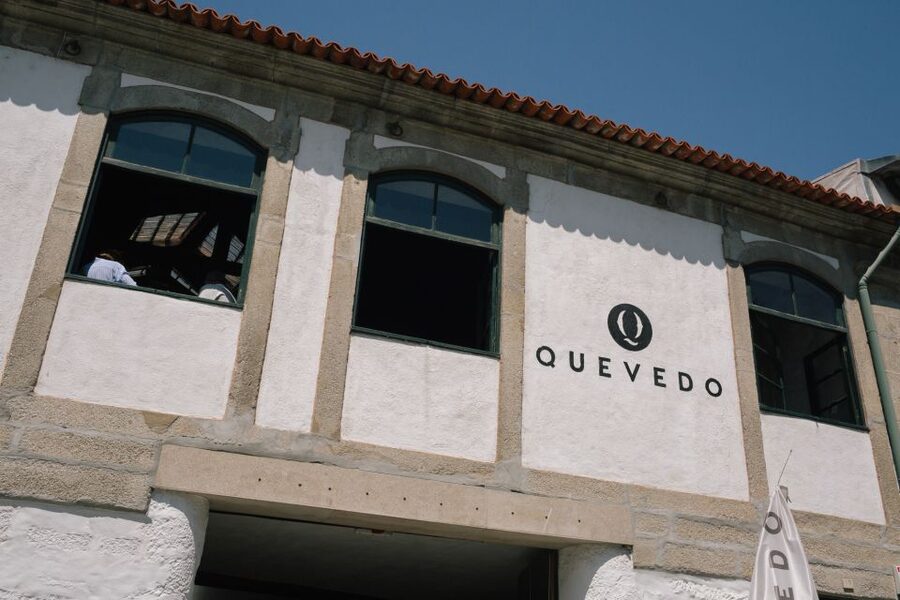
Finding the lodge beside Santa Marinha Church
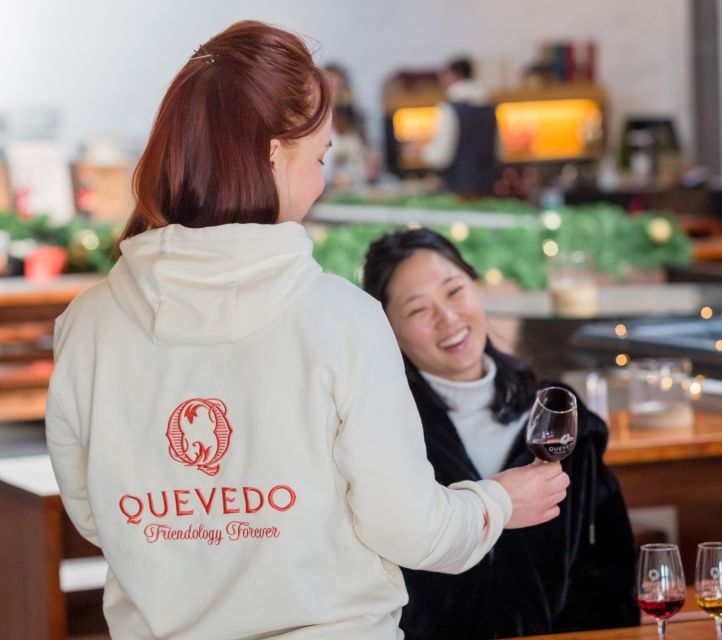
The meeting point is practical once you know the landmark. Quevedo is directly opposite Santa Marinha Church. If you walk up from the river, pass the Bordalo II rabbit sculpture and continue to the lodge.
The instructions are useful because Vila Nova de Gaia has many Port houses packed into a small area. A large sculpture and a church are easier to spot than a business name among several wine signs.
When you arrive, speak with a staff member so you can be directed to the tasting. Starting times vary, so you need to check availability when choosing your booking time.
The location makes this easy to add to a day in Gaia. You can schedule it around a walk by the Douro, a meal, or another cellar visit. Still, leave enough time to find the church and sculpture, especially if you are coming uphill from the waterfront.
More Wine and Chocolate Tours in the world:
- Melbourne: Yarra Valley Wine, Gin, Whisky and Chocolate Tour
★ 5.0 · 3,667 reviews - Epic Yarra Valley Wine Tour + Lunch, Chocolate & Gin/Beer Option
★ 5.0 · 1,819 reviews - Amazing Yarra Valley Wine Tour + Chocolate, Farm Fresh, Gin
★ 5.0 · 1,566 reviews - Melbourne: Yarra Valley Wine, Gin, Whisky and Chocolate Tour
★ 4.9 · 1,209 reviews
What 40 minutes feels like
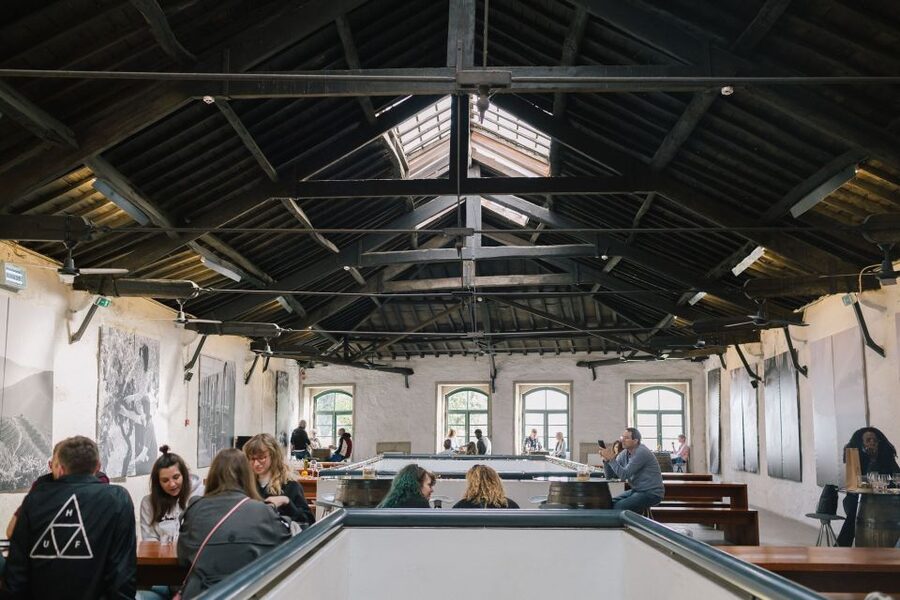
Forty minutes is enough for three pours and an introduction to the styles, but it is not a full winery tour. You should expect a compact tasting with explanation and conversation, not a long visit through vineyards, production rooms, or aging cellars.
That short format is useful if your day is full. You can learn the basic differences between LBV, white Port, and tawny without giving up half a day. It also keeps the tasting from becoming tiring, especially for people who are new to fortified wine.
The tradeoff is depth. If you want a detailed look at grape varieties, fermentation, blending, barrel management, or the full Port-making process, this experience may leave you wanting more. The focus is the glass in front of you and the food beside it.
A previous small-group tasting for four became a private experience, and the relaxed format allowed for detailed explanations and a friendly, humorous mood. That is not something you can count on for every departure, but the group limit of eight gives you a reasonable chance of personal attention.
The people leading the tasting
The staff speak Portuguese, English, and Spanish. You can ask questions in any of those languages, which is especially helpful when discussing taste rather than simply following a set speech.
The team is described as passionate about Port, and the strongest praise has focused on clear explanations of the differences between the wines and the way each pairing works. One small Danish group received a thorough introduction to Port styles and the flavors that match each chocolate.
That kind of guidance is useful because Port labels can be confusing at first. Terms such as LBV, white, and tawny tell you something about the wine, but they do not automatically explain how the wine will taste. A good host helps connect the label to what you smell and taste.
The staff also seem comfortable with first-time tasters. The experience is presented for both Port fans and people who are simply curious. You do not need to arrive with technical vocabulary or previous tasting experience.
Is $34 a fair price?
At $34 per person, the value depends on what you want from a Port stop. You receive three Quevedo wines, three specially selected chocolates, and guided explanation in a small group. For a brief tasting in central Gaia, that is a reasonable price.
The cost is easier to justify if you care about the pairings. You are not paying only for three small glasses. You are also paying for a structured comparison and Porto-made bean-to-bar chocolates that would take effort to select on your own.
The price is less attractive if you are looking for a large number of wines or generous pours. Additional wines and snacks are not included, so your final bill can rise if you want to continue tasting after the set pairing.
I see this as a focused introduction rather than a full wine day. It works well before or after other sightseeing, and the short duration keeps the commitment modest.
Who should book this tasting?
I would point this toward adults who want a clear introduction to Port without signing up for a long cellar tour. It is also a good fit for couples and small groups who like food pairings and prefer a calm setting to a large organized tasting.
The experience suits experienced wine drinkers too, especially if you want to compare white Port and tawny Port in the same sitting. The pairings can help you notice details you might otherwise miss.
It is not suitable for children under 18 or pregnant women. Anyone avoiding alcohol should skip it, since all three included pours are Port wines.
The wheelchair-accessible format is a useful practical point. You should still confirm the available starting time and speak with staff when you arrive so you are directed to the right tasting area.
A smart way to fit it into a Gaia day
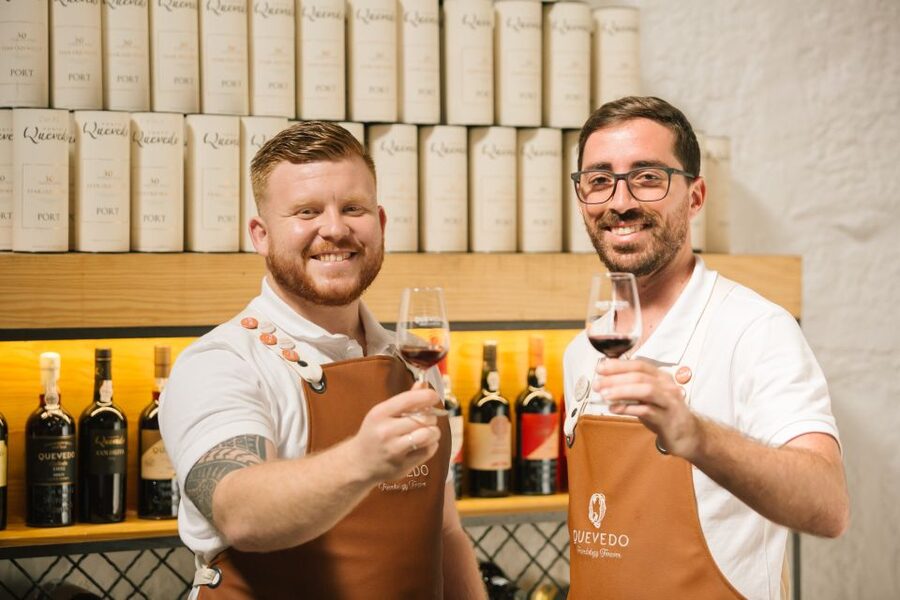
Plan to arrive near the church a little early. Use the rabbit sculpture as your visual marker, then check in with staff rather than wandering among the nearby Port houses.
Because the tasting lasts only 40 minutes, you can place it between other activities. It is short enough to work as an afternoon pause, though remember that you will be drinking three wines, so planning several further tastings immediately afterward may not be wise.
You can also use the tasting as a starting point for exploring Port styles. If the white Port surprises you, ask about it. If the tawny and pepper chocolate is your favorite combination, ask what creates that older, spiced character.
Quevedo also works with organic olive groves, though olive oil is not part of this included tasting. Do not expect the $34 experience to cover every part of the business. Its purpose is wine, chocolate, and a brief introduction to the family producer.
My booking advice
I would book this Port tasting if you want three well-matched examples, clear guidance, and an easy-to-manage 40-minute stop in Vila Nova de Gaia. The private-feeling small group format is its strongest feature, and the Porto-made chocolates make the experience more distinctive than a basic pour-and-leave tasting.
I would choose something longer if your main goal is a full production visit, vineyard tour, or a large selection of wines. For a compact introduction with a family-owned producer, $34 is a sensible spend, especially if you enjoy comparing food and wine rather than simply collecting tasting samples.
Free cancellation is available up to 24 hours before the start, and you can reserve without paying immediately. That makes it easier to fit into a changing Portugal itinerary.
FAQ
How long does the Port and chocolate tasting last?
The tasting lasts 40 minutes.
What wines are included?
You receive three glasses: Late Bottled Vintage Port, 10 Year Old White Port, and 20 Year Old Tawny Port.
What chocolates are paired with the wines?
The LBV comes with raspberry chocolate, the white Port with dark chocolate covered candied orange, and the tawny with praline and pepper chocolate.
Where is the meeting point?
Quevedo is opposite Santa Marinha Church in Vila Nova de Gaia. From the river, walk past the Bordalo II rabbit sculpture and look for the lodge.
What languages are available?
The staff can host the tasting in Portuguese, English, or Spanish.
Is the activity suitable for children?
No. The tasting is not suitable for children under 18. It is also not suitable for pregnant women.
Newest chocolate tours around the world
- Zurich Open-top Tour and Chocolate and Cheese Countryside★ 3.5 · 11 reviews
- Zurich: Chocolate Tasting and Walking Tour with a Local★ 4.2 · 13 reviews
- Lindt Chocolate Museum with Cruise Transfer from Zurich★ 4.6 · 7 reviews
- York: Introduction to Chocolate Making Experience★ 4.9 · 10 reviews
- Zagreb: Lake Bled and Ljubljana Day Tour with Chocolate Gift★ 5.0 · 26 reviews
- Zaandijk-Near Zaanse Schans Chocolate making demo & tasting★ 4.8 · 13 reviews
- Private Wine and Chocolate Tasting Experience★ 4.4 · 3 reviews
- Yarra Valley: Wine and Chocolate tasting tour.★ 5.0 · 5 reviews
Chocolate Pairing Experiences, compared.
Finca 18 Puerto Vallarta Tequila Tour + Chocolate Pairing
Read our review →


St. Augustine Distillery: A Bourbon & Chocolate Pairing
Read our review →
Nashville: Whiskey or Wine and Chocolate Pairing Experience
Read our review →
Discover Brussels beer world with a chocolate pairing by a young local
Read our review →
Browse the lists this tour appears in