

Review · CITY TOURS WITH CHOCOLATE
Kibera Chocolate City Tour
Kibera Chocolate City Tour takes you beyond Nairobi’s polished front door and into a community that is often reduced to a single word: slum. The better story is more complex. With local guides such as Collins, who grew up in Kibera, you see homes, businesses, children’s programs, markets, and the daily work that keeps the neighborhood moving.
I like the local leadership and the clear route. You are not being driven past Kibera from a distance. You walk with someone who knows the streets and the people. I also like the connection to Agape Hope’s school and library. The main consideration is that this is a tour of a low-income community, so you need to listen, ask permission, and avoid treating people’s lives as scenery.
Key points at a glance

- Local guides from Kibera: Collins, Allan, and Rama are named in the tour information and past guest accounts, with Collins especially noted for growing up in the community.
- Toi Market and Victoria Bones Craftshop: You see local trade and creative work, not only housing conditions.
- Agape Hope school and library: The visit adds a practical look at education, play, and community support.
- A two-hour walking route: The tour begins and ends at Kibera Town Centre, with the full activity taking about two to three hours.
- Small price, useful context: At $22 per person, the tour offers a low-cost way to learn about Kibera while supporting an organization connected to local children.
- Flexible format: Private tours and special interests can be requested in advance.
Why Kibera needs more than a quick photo stop

Kibera is widely known because of its hardship. That fact matters, but it is not the whole place. A short walk can show you crowded streets and limited resources, yet it can also show you shops, craft production, schools, play areas, transport links, and people earning a living.
That balance is the strongest reason to book this experience. The guides aim to explain both the difficulties and the ways residents respond to them. You get a look at how people make a living, how children spend time together, and how community projects try to improve daily life.
I would approach the tour with curiosity rather than pity. The goal is not to collect shocking images or compare your own comfort with someone else’s hardship. It is to understand a part of Nairobi through local eyes. That requires a little humility, and it makes the experience more worthwhile.
The tour is also useful because Kibera is not presented as a frozen place. The guides talk about its past, current life, and hopes for the future. You see a neighborhood with problems, but also with plans, relationships, and practical work already under way.
More City Tours with Chocolate in the world:
- Zurich: City Tour, Cruise, and Lindt Home of Chocolate Visit
★ 4.5 · 4,624 reviews - Puerto Plata Private City Tour with Mount Isabel & Rum &Chocolate
★ 4.5 · 123 reviews - Tony`s private city tour with picnic & chocolate degustation
★ 5.0 · 80 reviews
Starting at Kibera Town Centre
The meeting point is Kibera Town Centre at Kamukunji Grounds. The activity ends at the same place, which makes the route simple to plan and avoids the uncertainty of being dropped somewhere unfamiliar.
The published opening hours run from 8:00 a.m. to 6:00 p.m., Monday through Sunday. Your booking confirmation should give you the actual start time. Since the walk lasts about two hours, allow two to three hours in your day so you are not rushing to the next appointment.
The group can include up to 30 people. That is a reasonable maximum for a walking tour, though the feel will differ depending on the final number. A smaller group should make conversations easier. If you want a more personal pace or have particular interests, ask about a private tour or a customized route before booking.
Collins is the guide most closely associated with this experience. Other names connected with the tour are Allan and Rama. The important point is not simply having a local guide, but having someone able to explain the place with care and context. A guide raised in Kibera can help you understand what you are seeing instead of leaving you with only first impressions.
Toi Market: the working side of Kibera
The first major stop is Toi Market, where many local businesses operate. This is an important correction to the usual outside picture of Kibera. The area is not only a residential district. It is also a place where people buy, sell, repair, produce, and negotiate.
You can expect the market to add sound, movement, and human contact to the tour. The useful question is not simply what the market looks like, but how it works. A local guide can explain the role such businesses play in household income and community life.
You should keep your camera away unless you have permission. Markets are workplaces, not staged exhibits. A friendly greeting and a request before taking a picture will help you meet the area with respect.
The market can also be a good point to ask about prices, supply, and the kinds of work people do. Do not assume that every answer will fit the image you arrived with. Kibera includes many different livelihoods, and the tour is strongest when it gives you room to see that variety.
Victoria Bones Craftshop and local creativity

The route continues to Victoria Bones Craftshop. The name suggests a creative workshop rather than a standard sightseeing stop, and the visit gives the walk another useful angle: local production.
The craftshop matters because it shifts your attention from what Kibera lacks to what residents make. You can see how skill, material, and enterprise come together in a neighborhood where earning a living may require resourcefulness. The experience also gives you a chance to support local work through a purchase, if something is available and you genuinely want it.
Buy only if you like the item and understand the price. A purchase should not become an obligation built into the tour. If you do buy, it can be a direct way to support a local business, but conversation and attention are also valuable parts of the visit.
The craftshop is one of the places where the tour can feel less like a poverty-focused walk and more like a neighborhood tour. That change of focus is welcome. It reminds you that residents are workers, makers, parents, students, and business owners, not just people being observed.
More Chocolate Tours in the world:
- Lindt Home of Chocolate Museum Entry Ticket
★ 4.7 · 9,329 reviews - Choco-Story Brussels: Chocolate Museum Entrance with Tasting
★ 4.3 · 4,883 reviews - The Chocolatarium Chocolate Tour Experience in Edinburgh
★ 5.0 · 4,322 reviews - Award-Winning Geneva Chocolate &Old Town Tour with Boat Ride (3h)
★ 5.0 · 3,721 reviews
Agape Hope school and library

The stop at the Agape Hope school and library is likely to be the most emotionally memorable part of the route. You see where children receive education and have space to play with friends. The program gives the tour a concrete link to the organization behind it.
This is also the point where good manners matter most. Children should not be treated as photo subjects or symbols of hardship. Follow the guide’s instructions, ask before taking pictures, and keep your attention on the people and the program rather than turning the visit into a performance.
The school helps explain why the tour exists. Agape Hope is not only showing you around. Its work is connected to children and education, and the fee is presented as helping support that effort. One past account specifically noted that a large amount of the money goes to the children, though you should ask the organization directly if you want a precise breakdown of how funds are used.
You may also hear about the community’s hopes for the future. That is more useful than a quick, sad snapshot. Education, a library, and safe places for children to spend time are practical signs of local effort. They do not erase the area’s challenges, but they show how residents and community groups respond to them.
Walking beside the historic railway
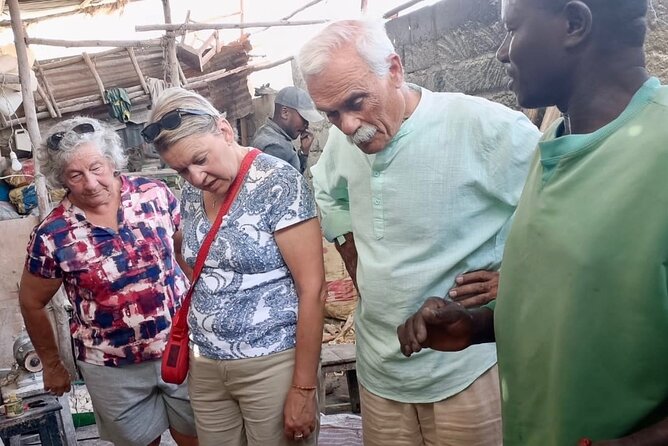
The final part of the route follows the historic railway and offers a broader view of Kibera. The railway is not just a backdrop. It helps place the neighborhood within Nairobi’s development and movement, while giving you a chance to reflect on what you have seen in the narrower streets.
This part may feel less structured than the market or school. That is a good moment to ask questions about Kibera’s past, present, and future. The tour description specifically promises a broader understanding of how people live there, and this wider viewpoint helps connect the individual stops.
Do not expect a panoramic attraction or a polished overlook. The value is in the explanation and the setting, not in a formal sightseeing platform. You are still walking through a working community, so stay with the guide and follow local instructions.
The walk returns to Kibera Town Centre. Because the route begins and ends there, you can arrange your next activity without needing to guess where the tour will leave you.
What the guides add to the experience

The guide is the difference between a respectful community walk and a shallow look at poverty. Collins is described as having been born and raised in Kibera, and that background gives him personal ties to the people and places along the route. Allan and Rama are also associated with guiding the experience.
The best use of your guide is to ask clear, ordinary questions. How do people earn money here? What does the school provide? How has the area changed? What does the community want outsiders to understand? These questions invite explanation rather than forcing the guide to defend the neighborhood.
Past accounts also describe guides taking care of people throughout the walk and making visitors feel welcome. That does not mean you should switch off your judgment. Stay alert, respect instructions, and remember that warmth from a guide does not make the area a theme park.
The tour can also be flexible. If you want a private outing or have a particular interest in education, local business, community projects, or history, contact Agape Hope for Kibera Tours before setting out. The available route may depend on local conditions and the guide’s advice.
Is $22 a fair price?

At $22 per person, this is an inexpensive Nairobi activity, especially for a two-hour guided walk with several stops. The value comes less from the number of attractions and more from access to local explanation that you would not get by walking through the area alone.
The price also appears to support a community-linked organization, including work connected with children. That gives the tour more purpose than a simple sightseeing circuit. Still, do not treat the fee as a donation unless the provider clearly explains how it is allocated. If that detail matters to you, ask before booking.
A group of up to 30 people keeps the listed price accessible, but it may limit private conversation if the group is full. A private tour could be a better value for families, photographers who want careful guidance, students, or anyone with detailed questions. The provider says private arrangements are possible, but the price is not given, so request a quote.
The tour is booked an average of 17 days ahead. That does not mean you must reserve exactly that early, but it is a useful warning for a fixed Nairobi schedule. If this is important to your visit, book before your arrival rather than assuming a same-day place will be available.
Practical advice before you go
Wear comfortable shoes suitable for a two-hour walk. The tour takes place on foot, and the ground may not always be smooth. The experience requires good weather, so rain can lead to a new date or a full refund.
Bring a phone with your mobile ticket available. Confirmation is sent at booking, and the meeting point is near public transportation. Exact transport instructions are not provided, so check your route to Kamukunji Grounds before leaving.
Service animals are allowed, and most people can participate. The provider lists a maximum of 30 people. If you have mobility concerns or any special need beyond those details, contact the operator first and ask what the route will allow.
Dress and behave as you would in any residential neighborhood. Keep valuables secure, avoid displaying expensive equipment, and do not hand out sweets or money to children unless the guide gives clear advice. Ask before photographs, especially at the school, homes, market stalls, and craftshop.
The cancellation terms are simple. You receive a full refund if you cancel at least 24 hours before the start time. Inside 24 hours, changes and refunds are not accepted. If poor weather cancels the tour, you are offered another date or a full refund.
Who should book the Kibera Chocolate City Tour?
I recommend this tour if you want a direct, locally guided look at Nairobi and are willing to think beyond a checklist of sights. It suits adults, older children, students, and anyone interested in community work, education, small business, and the way cities grow.
It is especially useful early in a Nairobi visit. The guide’s context can change how you understand the city afterward. You will also get more from it if you ask questions and listen carefully rather than expecting a dramatic attraction.
I would not book it if you want a quick photo opportunity, a polished museum-style visit, or a completely private experience without arranging one. The tour asks you to handle sensitive situations with respect, and the group size may reach 30 people.
For $22, the route is a strong value: Toi Market, Victoria Bones Craftshop, Agape Hope school and library, and the railway area, all explained by people connected to Kibera. Book it if you want a grounded introduction to the community and can approach the experience as a meeting with people, not a spectacle.
FAQ
How long does the Kibera Chocolate City Tour last?
The tour takes about two to three hours, with the main walking itinerary listed as two hours.
Where does the tour begin and end?
It begins at Kibera Town Centre, Kamukunji Grounds in Nairobi, Kenya, and ends back at the same meeting point.
What places are included on the tour?
The route includes Toi Market, Victoria Bones Craftshop, the Agape Hope school and library, and the historic railway area.
Who may guide the tour?
Collins, Allan, and Rama are named in the tour information and guest accounts. Collins is described as having grown up in Kibera.
How many people can join the tour?
The activity has a maximum group size of 30 people. Private tours and requests focused on particular topics or places can also be arranged by contacting the provider.
What is the cancellation policy?
You can cancel at least 24 hours before the start time for a full refund. Cancellations or changes made less than 24 hours before the start time are not accepted. If poor weather cancels the activity, you are offered a different date or a full refund.
Newest chocolate tours around the world
- Chocolate and Wine Pairing in Chantilly★ 5.0 · 21 reviews
- St Lucia Treasures – (Chocolates Rum and Rafting)★ 5.0 · 27 reviews
- Chocolate Tasting in Venice★ 5.0 · 7 reviews
- A Sweet Stroll Through Venice: Pastries, Chocolate, and Gelato★ 4.5 · 22 reviews
- Venchi Rialto: Chocolate Tasting Experience in Venice★ 4.9 · 8 reviews
- Venice: Chocolate Tasting Experience★ 4.1 · 7 reviews
- Cacao and Coffee Tour★ 4.5 · 24 reviews
- Minca: Hidden Waterfall + Coffee and Cocoa Workshop★ 4.9 · 6 reviews
City Tours with Chocolate, compared.

City Tour, Cruise, and Lindt Home of Chocolate Visit
Read our review →
Puerto Plata Private City Tour with Mount Isabel & Rum &Chocolate
Read our review →
Tony`s private city tour with picnic & chocolate degustation
Read our review →
Wildlife adventure, Chocolate factory, city Tour & Beach Break
Read our review →
Cruise Ship Combo: Sloths, Chocolate Factory, City Tour, Beach, Private Shuttle
Read our review →

Swiss Experience: Chocolate Tasting and City Tour of Basel
Read our review →
Browse the lists this tour appears in