Review · PASTRY AND CHOCOLATE TOURS
Paris: Pastries and Chocolate Walking Food Tour
Paris has plenty of famous food stops, but this tour’s best surprise is how it links serious pastry eating with the city’s 19th-century covered passages. You move from a top bakery to old glass-roofed arcades, a tea salon, a chocolate atelier, a crêperie, and a modern pâtisserie in 150 minutes.
I like the small maximum of 10 people, which keeps the walking group friendly and makes it easier to hear guides such as Dave, Khosi, Vanessa, and Sam. I also like the mix of tastes, from award-winning pain au chocolat to salted caramel crêpes and Normandy cider. The main drawback is simple: this is not a good match for vegans, people avoiding gluten, or anyone with a serious nut allergy.
Key points before you book
- Six or more tastings: Expect pastry, cake, chocolate, crêpes, cider, and macarons in generous succession.
- Covered passages: Passage Jouffroy, Passage Verdeau, and Passage des Panoramas add architecture and local history between the food stops.
- Small English-speaking group: The tour is limited to 10 people and lasts two and a half hours.
- Arrive hungry: Several people have found the food plentiful enough to replace breakfast.
- A neighborhood view of Paris: The route begins near Rue du Faubourg Montmartre and finishes near Rue Bachaumont, in the 2nd arrondissement.
- Not allergy-friendly: Almonds, hazelnuts, and pecans are used. Vegetarian and pescatarian adjustments are possible with advance notice.
A pastry tour with more than pastry
The appeal here is not just the number of sweets. It is the way the food stops give shape to a slice of Paris between the 9th and 2nd arrondissements.
You begin near 34 Rue du Faubourg Montmartre, close to the old theater and shopping district around the Grands Boulevards. From there, the route heads through covered passages that many visitors would miss if they stayed on the main streets. These passages once offered sheltered routes for shoppers, readers, artists, and café-goers. Today, they provide a quieter and more atmospheric setting for a food walk.
The food is varied enough to keep the tour from feeling like five versions of the same pastry. You get laminated dough at the bakery, a seasonal cake in a tea salon, chocolate from a bean-to-bar maker, a Breton-style crêpe with cider, and a macaron at the last stop.
That variety is a real strength. You are not simply eating your way through a row of pastry counters. You are also learning how Parisian food traditions range from everyday bakery fare to carefully made modern chocolate and pastry.
More Chocolate Walking Tours in France
- Saint-Germain: Gourmet Chocolate & Pastry Walking Food Tour
★ 4.8 · 495 reviews - Paris: Pure Chocolate Walking Tour
★ 4.7 · 52 reviews - Paris Marché d’Aligre Walking Tour with Chocolate and Cheese Tasting
★ 3.5 · 24 reviews
Starting with pain au chocolat at Victoire Boulangerie
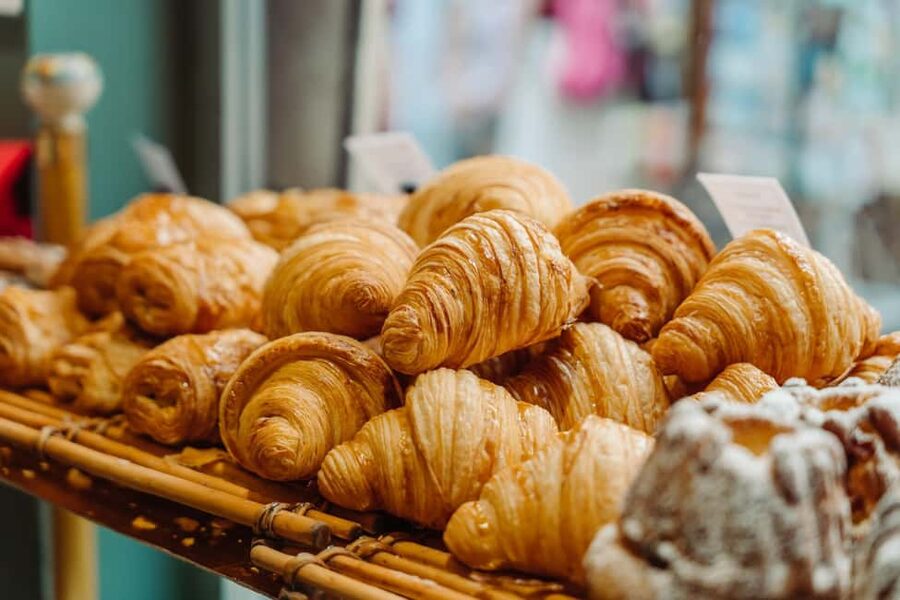
The first stop is Victoire Boulangerie, where you taste a pain au chocolat recently recognized among the best in Paris. This is a smart opening course: familiar enough to please almost anyone, but important enough in French bakery culture to merit a proper tasting.
Expect a buttery pastry with crisp layers and chocolate at the center. The stop lasts about 25 minutes, giving your guide time to explain what makes French viennoiserie different from an ordinary breakfast roll and to set the tone for the rest of the walk.
This is also why you should skip breakfast. The pastry is only the first of several substantial tastings. Arriving hungry is not a minor suggestion here. It affects how much you can enjoy later stops, especially the crêpe and cake.
The meeting point is in front of the restaurant Faubourg 34 at 34 Rue du Faubourg Montmartre. Arrive 15 minutes early and look for a guide carrying a red bag or a Devour Tours sign. The starting area is urban and easy to reach, but you should allow time to find the exact pedestrian-street meeting point.
Three covered passages and a quieter side of Paris
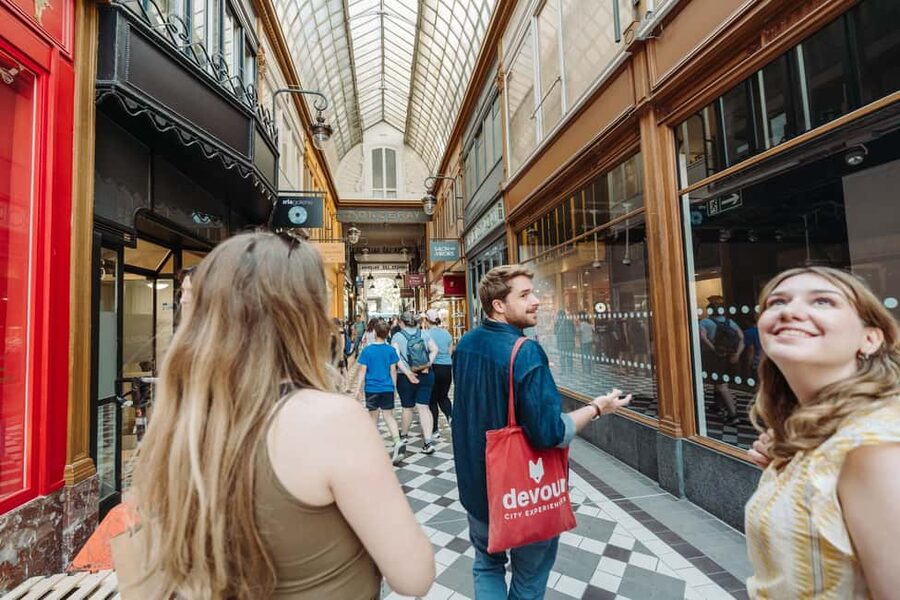
After the bakery, the food walk becomes an architecture walk. You pass through Passage Jouffroy, Passage Verdeau, and Passage des Panoramas, with roughly 20 minutes set aside for guided walking and short visits between them.
These passages are among the most enjoyable parts of the outing because they change your pace. Instead of walking broad avenues with traffic and crowds, you move beneath glass roofs through arcades lined with shops and old interiors. The tour gives you a reason to look up at the ironwork, notice the layout, and hear how these spaces once fit into ordinary Paris life.
Passage Jouffroy is especially well placed for the tea salon stop, while Passage Verdeau and Passage des Panoramas help show how several covered routes connect in this part of the city. The route does not promise a long architectural lecture, so the passage visits are brief. That is useful if your main aim is food, but it may feel too short if you want time for photographs or shopping.
One past participant wished for more time among the shops. I agree that you should treat the walk as an introduction rather than a full shopping visit. You may spot unusual gifts, books, and small objects, but the group keeps moving.
Cake at Le Valentin Jouffroy
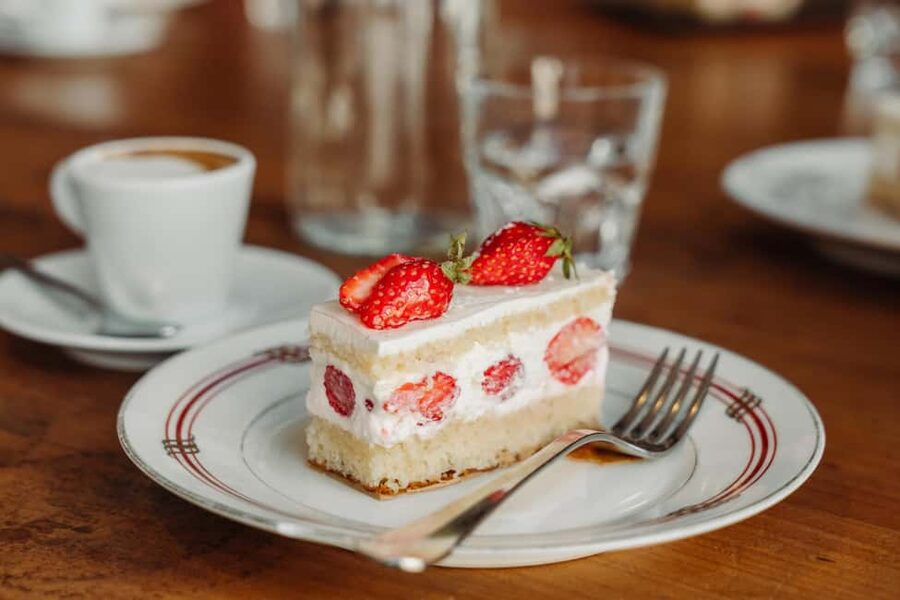
At Le Valentin Jouffroy, you settle into a cozy historic tea salon for a seasonal French cake. Depending on the time of year, that might be a Mont Blanc or a fraisier.
The Mont Blanc is associated with chestnut cream and meringue, while a fraisier centers on strawberries and cream. The exact cake changes with the season, so you should think of this as a chance to taste a classic French dessert in a fitting setting rather than a guarantee of one particular recipe.
The 30-minute stop gives you time to eat without rushing. It also lets the guide connect the dessert to the surrounding passage and the older social life of Paris. This pause matters. A food tour can become tiring when every stop is grab-and-go, but sitting down after the first walk makes the pace more comfortable.
Families and mixed-age groups should find this section manageable. One family described the whole route as well paced across generations, and that matches the structure: short walks, seated food stops, and enough variety to keep younger visitors interested.
Same city, a different tasting:
- Paris: Entrance Ticket to the Chocolate Museum
★ 4.1 · 1,105 reviews - Paris French Sweets Tasting Tour with Pastries and Chocolates
★ 4.5 · 947 reviews - Paris: Brussels and Bruges Tour & Optional Chocolate Tasting
★ 4.6 · 643 reviews - A Morning in Paris Food Tour: Croissants, Baguettes & Chocolate
★ 5.0 · 556 reviews
Bean-to-bar chocolate at PLAQ
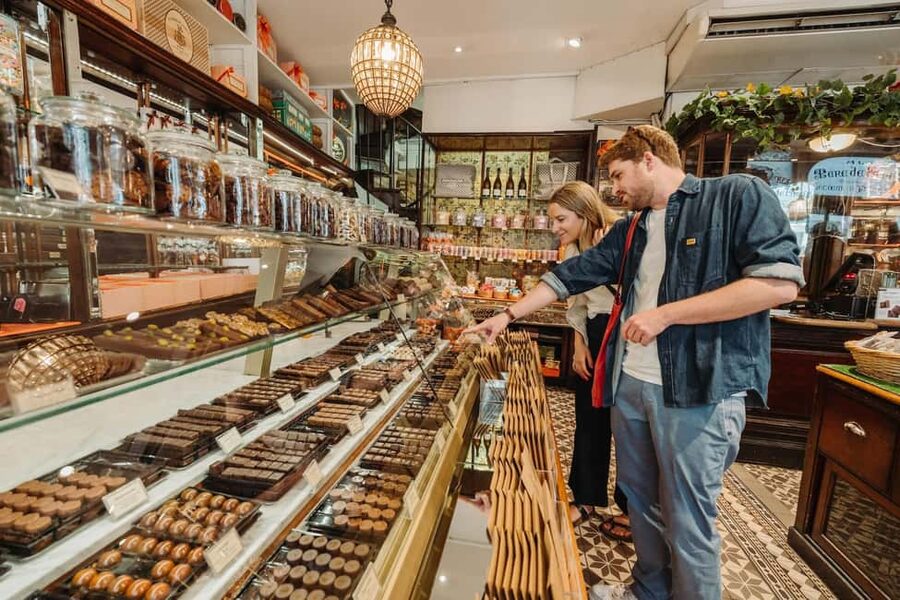
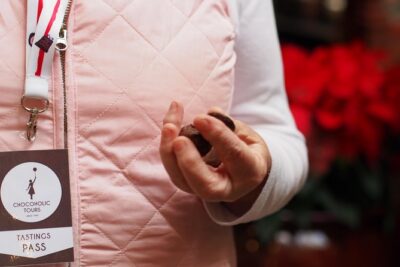
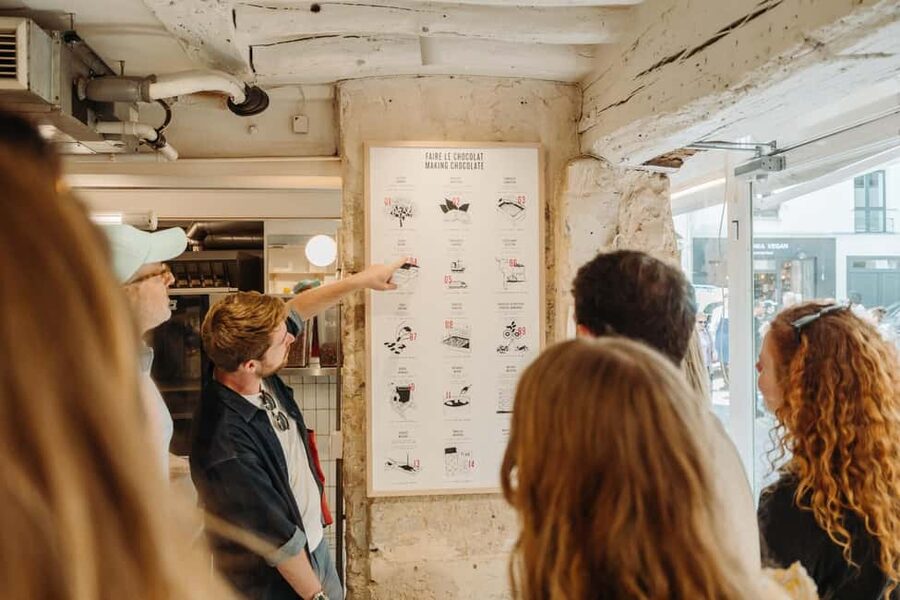
The chocolate stop at PLAQ offers a modern contrast to the old passageways. This is a bean-to-bar atelier, where chocolate is made from ethically sourced cacao rather than simply purchased and repackaged for sale.
You can expect tastings and the smell of roasted cacao beans. The focus is on the chocolate itself, including bold flavors that appeal most to people who prefer dark chocolate. This is one of the more distinctive stops because it gives you a look at how a newer Paris chocolate business approaches sourcing and production.
Set your expectations carefully. The supplied description promises tastings, but not a full demonstration of chocolate being made from start to finish. One past participant had expected to watch the production process and found the tasting more limited than anticipated, describing a brownie and a piece of chocolate rather than a workshop.
That is the clearest caution about this stop. If you want a hands-on chocolate class, this is not that. If you want to compare artisan chocolate and hear how bean-to-bar production works, it fits the tour well.
Salted caramel crêpes and Normandy cider
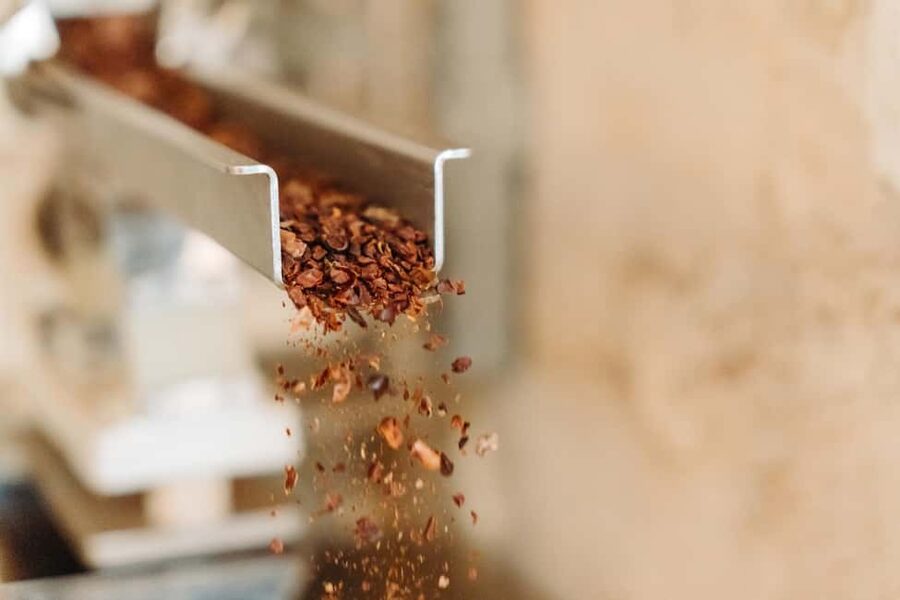
The stop at Le Comptoir du Commerce shifts from polished pastry to comfort food. This Breton-style crêperie serves salted butter caramel crêpes with a glass of dry Normandy cider.
The combination works because it balances sweetness and salt. The crêpe is warm and familiar, while the cider gives the course a drier, sharper edge. It is also a useful reminder that a Paris food tour does not have to stay inside the city’s most famous pastry traditions. Breton crêpes and Normandy cider are regional French foods that have found a natural home in Paris.
This stop lasts about 30 minutes, so you are not expected to rush through the crêpe. By this point, the earlier pain au chocolat and cake will have added up. Again, do not eat breakfast before the tour, and consider a light dinner afterward if you book a morning departure.
The cider is a factor for families and anyone avoiding alcohol. The supplied details do not state whether a replacement drink is available, so contact the tour company in advance if that matters to you.
Finishing with a macaron at Jeffrey Cagnes
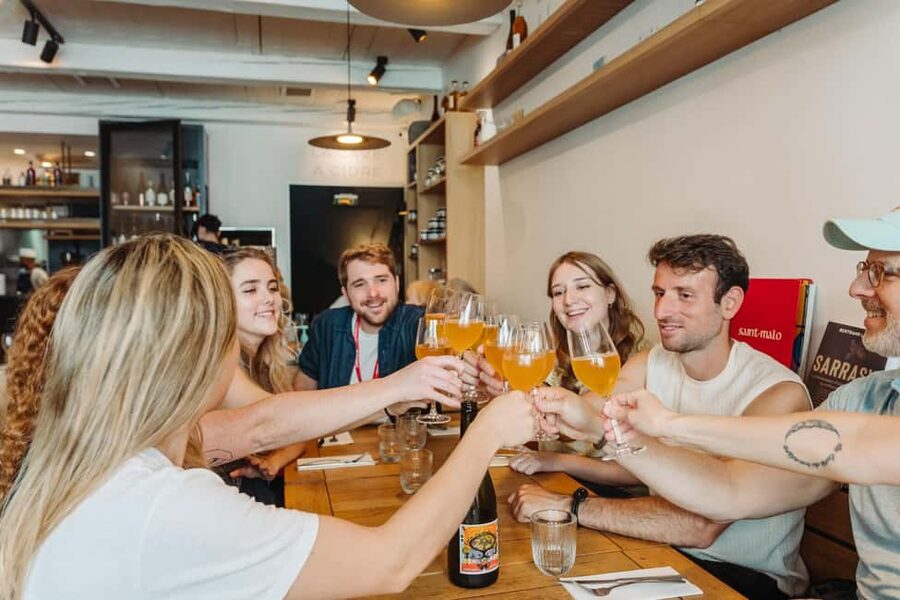
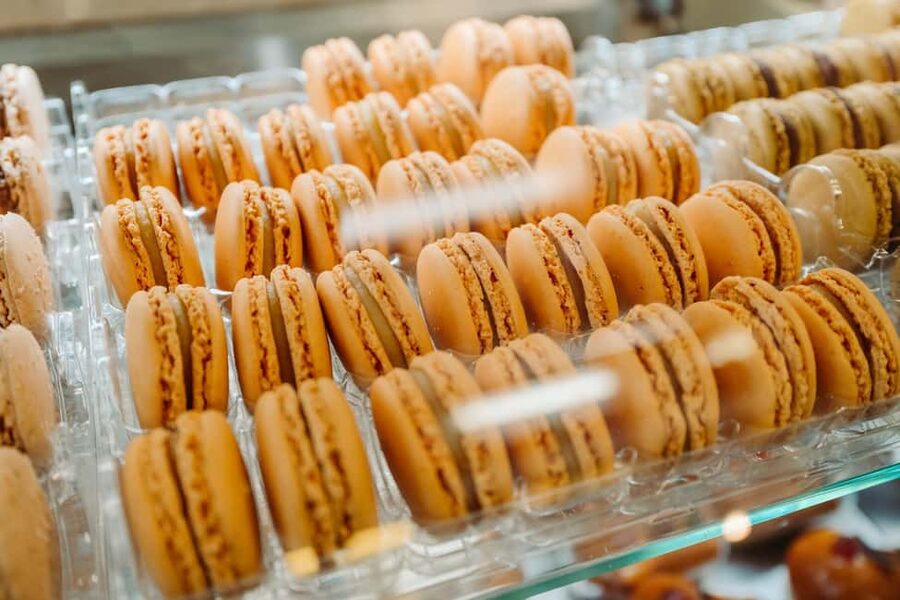
The final stop is Jeffrey Cagnes Paris 2ème, a sleek modern pâtisserie near 3 Rue Bachaumont. You finish with a macaron made by a rising pastry talent.
This ending brings the route back to refined pastry. A good macaron should have a light shell, a soft center, and a clear flavor rather than simple sweetness. Specific flavors can vary. One family had lemon and raspberry macarons, but you should not treat those as fixed choices.
The finish near Rue Bachaumont is practical. You end in the 2nd arrondissement, an area with plenty of places to continue walking, eat, or shop. Unlike a tour that returns you to its starting point, this route leaves you in a different part of central Paris. Plan your next stop from the finish rather than assuming you will be taken back to the beginning.
How the guides shape the experience
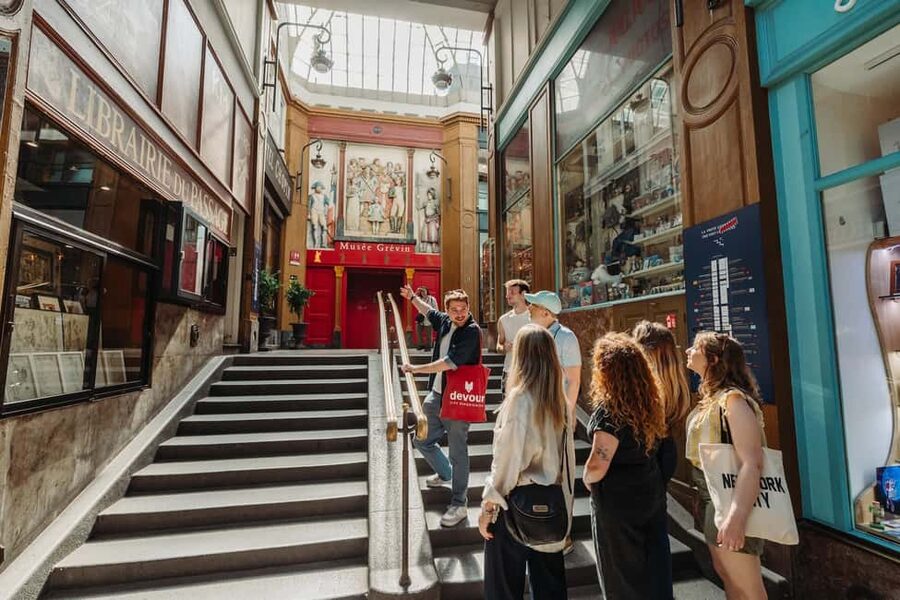
The guide makes a major difference here because the tastings alone would not fill two and a half hours. The strongest feedback centers on guides who combine food knowledge with stories about streets, buildings, and Parisian customs.
Dave is repeatedly praised for humor, an easy manner, and interesting facts. His British accent even became part of the fun for one family, but the more important point is his ability to keep the group relaxed while explaining what you are eating.
Khosi received praise for connecting the history of chocolate and pastry with the passageways, streets, and people around them. Vanessa was noted for her background on both the area and the stops. Sam was especially good at welcoming a mixed-age group and helping everyone settle into the same pace.
Other named guides include Emily, Juan, Joshua, and Davide. The guide assigned to your departure may differ, so you should not book on the assumption that one particular person will lead it.
The 10-person limit is worth paying attention to. A small group makes it easier to ask about ingredients, hear the history, and move through tight passageways without losing people. It also gives the tour a more personal feel than a large bus-style food outing.
Is $93 a fair price?
At $93 per person, this is not the cheapest way to eat pastries in Paris. You could buy a pain au chocolat, a crêpe, chocolate, cake, and a macaron on your own for less, especially if you skip the guide and the seated settings.
The value comes from the combination. You are paying for six or more tastings, an English-speaking local guide, research into several small stops, the covered-passage route, and a small group limited to 10 people. If you already know Paris and can easily find these places yourself, the price may feel high. If this is your first visit or you want food to lead you into less obvious streets, the cost is easier to justify.
I would also count the time saved. You do not have to decide which bakery is worth a visit, work out how the passages connect, or guess which chocolate shop offers a serious tasting. The guide handles the route while you focus on eating and looking around.
The tour is strongest for people who value context. It is less compelling for someone who wants only a large meal or a formal pastry-making class.
Walking, timing, and practical details
The tour lasts 150 minutes and moves at a moderate walking pace. You should wear comfortable shoes and bring water. The route includes short walks through the passages and between food stops, but it is still a city walking tour rather than a seated tasting event.
The tour is conducted in English. With the small group size, you should be able to follow the guide’s explanations and ask questions without much difficulty.
Hotel pickup and drop-off are not included. You make your own way to the starting point and leave independently from 3 Rue Bachaumont. If you need wheelchair or mobility arrangements, contact the Guest Experience team at booking time. The tour can accommodate mobility impairments or wheelchairs with proper planning, but you should not leave that request until the day of the tour.
Vegetarians and pescatarians can be accommodated with advance notice. Vegans, people avoiding gluten, and people who must avoid nuts should choose another activity. Peanuts are not used on the tour, but almonds, hazelnuts, and pecans are present. Anyone with a serious allergy must sign an allergy waiver at the start, and you should email the company after booking about dietary restrictions.
Free cancellation is available up to 24 hours before the tour, and you can reserve now and pay later. Those policies are useful if your Paris plans are still shifting, but the food restrictions are the more important booking issue.
Who should book this Paris food walk?
I would recommend it to first-time visitors who want a gentle introduction to Parisian food and a less obvious route through the city. It also suits couples, families with older children, and small groups who like to combine food with architecture and local stories.
Teenagers should have plenty to enjoy, especially the chocolate, crêpe, and macaron stops. The route also works for people who prefer small servings across several locations rather than one long restaurant meal.
I would be more cautious if you are a serious pastry enthusiast seeking technical instruction. You will taste excellent products and hear about their place in French food culture, but you will not be making pastries or watching a full chocolate production session.
You should also skip it if you need a vegan, gluten-free, or nut-free menu. This is a pastry-heavy route built around wheat, dairy, eggs, and nuts.
Should you book it?
Book this tour if you want a compact Paris food route with real neighborhood character, especially the covered passages and the mix of old tea rooms with modern chocolate and pastry shops. The small group, lively guides, and strong variety make the $93 price reasonable for a first visit.
Skip it if you want a full meal, a hands-on cooking lesson, or plenty of time to shop and photograph each passage. For most suitable eaters, though, the plan is simple: arrive early, wear good shoes, skip breakfast, and leave room for the final macaron.
FAQ
How long does the Paris pastries and chocolate walking tour last?
The tour lasts 150 minutes, or two and a half hours.
Where does the tour begin?
It begins at 34 Rue du Faubourg Montmartre, in front of the restaurant Faubourg 34, at the beginning of the pedestrian street. Arrive 15 minutes early and look for a red bag or Devour Tours sign.
Where does the tour finish?
The tour finishes at 3 Rue Bachaumont, 75002 Paris, in the 2nd arrondissement.
What food is included?
You receive six or more tastings, including pain au chocolat, seasonal French cake, artisan chocolate, a salted butter caramel crêpe with Normandy cider, and a macaron. Exact seasonal cake and macaron flavors can vary.
Can people with dietary restrictions join?
Vegetarians and pescatarians can be accommodated with advance notice. The tour is not suitable for vegans, people with gluten intolerance, or people with nut allergies. Almonds, hazelnuts, and pecans are used, though peanuts are not.
How many people are in the group?
The tour is limited to a maximum of 10 people and is conducted in English by a local guide.
More Pastry and Chocolate Tours in Paris
- Le Marais: Pastry and Chocolate Food Tour
★ 4.5 · 52 reviews - Paris: Choux Pastry and Chocolate Éclair Making Class
★ 4.9 · 50 reviews - Paris Chocolate and Pastry Private Tour With Secret Food Tours
★ 5.0 · 44 reviews
More Pastry and Chocolate Tours in France
- Paris Chocolate, Macaron & Pastry Food Tour: 10 Gourmet Tastings
★ 5.0 · 339 reviews - Saint-Germain The Original Chocolate Tasting Tour with Pastries and Macaron
★ 4.5 · 215 reviews - Paris: Montmartre Chocolate & Pastries Tour with 8+ Tastings
★ 4.7 · 131 reviews - Croissants and pains au chocolat with a pastry chef in Paris
★ 5.0 · 123 reviews
Newest chocolate tours around Paris
- Paris Marché d’Aligre Walking Tour with Chocolate and Cheese Tasting★ 3.5 · 24 reviews
- Paris Chocolate and Pastry Private Tour With Secret Food Tours★ 5.0 · 44 reviews
- Paris: Choux Pastry and Chocolate Éclair Making Class★ 4.9 · 50 reviews
- Paris : 45 min Chocolate Workshop at Choco-Story Paris★ 4.0 · 51 reviews
- Paris: Pure Chocolate Walking Tour★ 4.7 · 52 reviews
- Le Marais: Pastry and Chocolate Food Tour★ 4.5 · 52 reviews
- Paris Cooking Class: Chocolate Éclairs and Cream Puffs★ 5.0 · 87 reviews
- Croissants and pains au chocolat with a pastry chef in Paris★ 5.0 · 123 reviews
Pastry and Chocolate Tours, compared.
Historical Tour with Chocolate & Waffle Tasting
Read our review →
Paris French Sweets Tasting Tour with Pastries and Chocolates
Read our review →
Brussels Walking and Tasting Tour (Beers,Chocolates&Fries/Waffle)
Read our review →
Brussels Chocolate Beer Waffle and Belgian Whiskey All-in-One (Small Group) Tour
Read our review →
Paris Chocolate, Macaron & Pastry Food Tour: 10 Gourmet Tastings
Read our review →
Walking Food Tour with Chocolate, Beer, & Waffles
Read our review →