
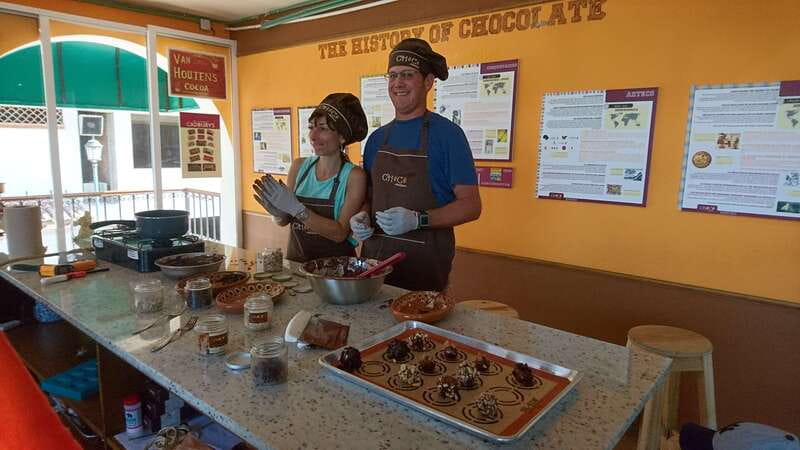
Review · 2-HOUR EXPERIENCES
Puerto Vallarta: 2-Hour Chocolate Truffles Workshop
The best part of this Puerto Vallarta experience is that chocolate is not treated as a quick snack stop. You first learn how cacao shaped Mesoamerican culture, then put that knowledge to work by tempering chocolate, making ganache, filling molds, and rolling truffles. You leave with 12 chocolates, not just a recipe card.
I like the small group of up to eight, which gives you room to ask questions and get hands-on time. I also like the practical mix of museum learning and kitchen work, especially the chance to choose flavors and toppings for your own chocolates. The main drawback is that the class is not suitable for children under 12 or wheelchair users, and transportation, food, and drinks are not included.
Key points at a glance
- A museum visit comes first: Learn about cacao and chocolate in Mesoamerica before beginning the workshop.
- Marble tempering is hands-on: You will learn why chocolate is tempered and practice the process on a marble surface.
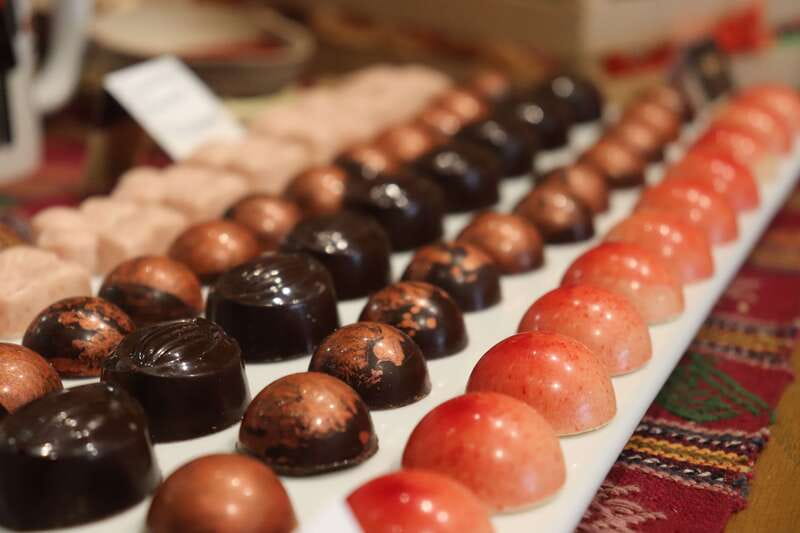
- Twelve chocolates go home with you: Make six filled chocolates with ganache and six decorated truffles.
- You choose the finish: Add toppings to the truffles and flavor your own ganache.
- The class stays small: With no more than eight participants and English instruction, the workshop feels personal.
- The format suits adults and older children: Participants must be at least 12, and comfortable shoes and clothes are recommended.
Why this chocolate class is more than a sweet stop
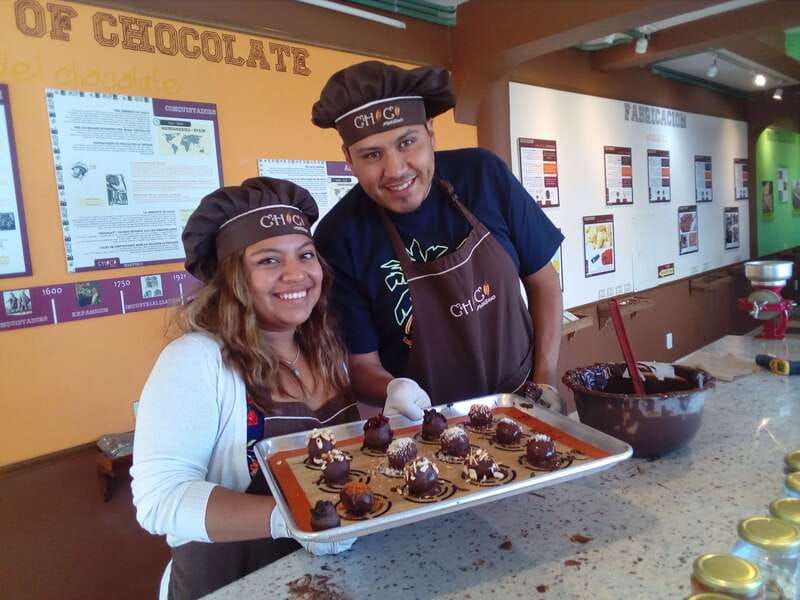
Puerto Vallarta has plenty of ways to spend two hours, but this one gives you something useful to do with your hands. The class connects a museum visit with a working chocolate session, so you are not simply watching a demonstration or buying a box from a shop.
The first portion introduces the story of cacao and chocolate in Mesoamerica. That matters because chocolate did not begin as the sweet, creamy treat familiar today. The class gives attention to the cultural side of cacao, an area that is often skipped when chocolate is presented only as a modern dessert.
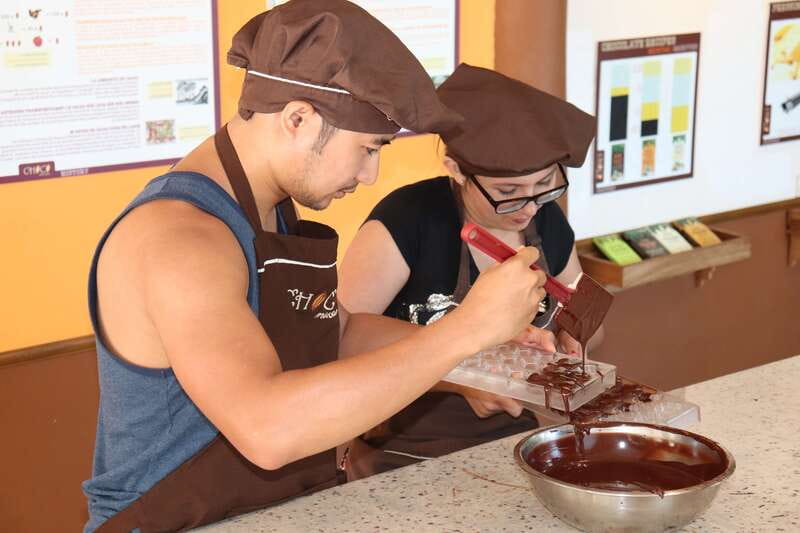
Then the pace changes. You put on an apron and hat, move into the practical work, and learn the basic techniques behind filled chocolates and truffles. The result is a good balance: enough cultural context to make the subject meaningful, followed by enough activity to keep the two hours moving.
I especially like this format for people who want a Puerto Vallarta activity beyond beaches, bars, and sightseeing. You get a local cultural subject, a creative task, and something edible to carry away.
More Two-Hour Experiences in Mexico:
- 2-Hour Medieval Walk and Chocolate Tasting in Bruges
★ 5.0 · 48 reviews - New York City: 2-Hour Chocolate Tasting Tour
★ 4.2 · 28 reviews - New York City: 2-Hour Chocolate Tasting Tour
★ 3.5 · 21 reviews
The museum introduction and Mesoamerican cacao
The class begins with museum admission and a guided look at the history of cacao and chocolate. The information focuses on Mesoamerica, giving you a better sense of how important cacao was long before modern candy shops and pastry counters.
Do not expect a full-day museum program. This is a short introduction designed to prepare you for the workshop. That is a strength if you want a focused activity rather than a long lecture. You get enough background to understand the ingredient before you begin working with it.
The guide teaches in English, and the group size is limited to eight people. That small number matters during the museum portion because it should be easier to stay with the guide and ask a question without competing with a large crowd.
The teaching style is one of the most important parts of this experience. Instructors named in connection with the class include Lizette and Elizabeth. Elizabeth has been described as kind, funny, and patient, while Lizette has been praised for making the material informative and entertaining. Your instructor may differ, but these details give you a useful idea of the intended approach: accessible, social, and practical rather than stiff or academic.
Tempering chocolate on a marble surface
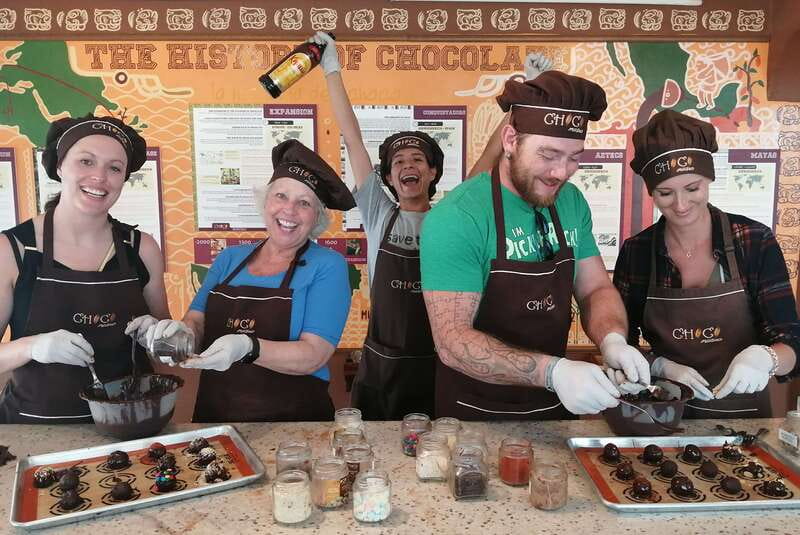
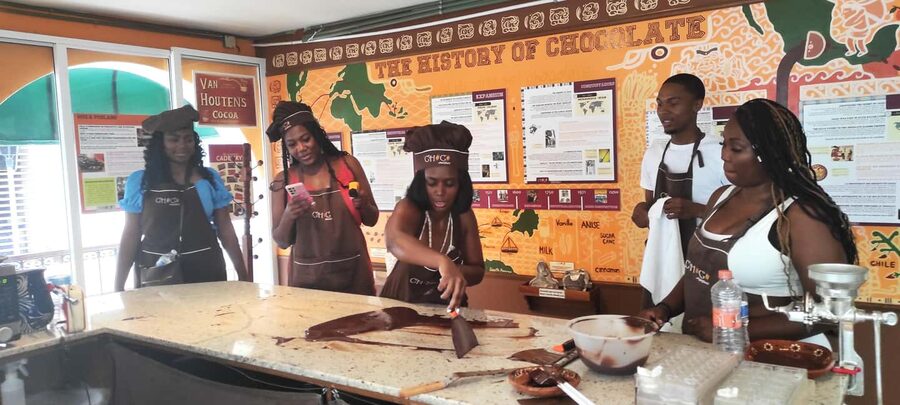
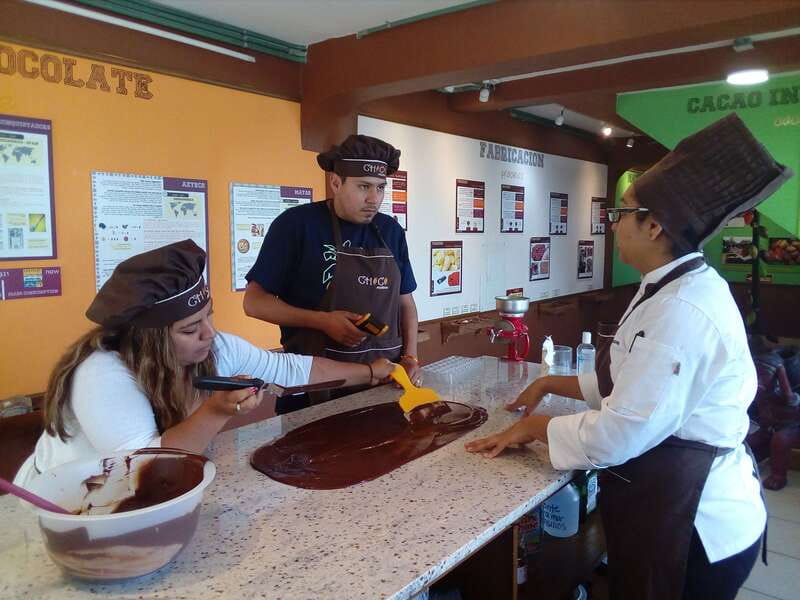
After the museum visit, you learn how to temper chocolate. This is the technical heart of the class.
Tempering controls the way chocolate cools and sets. Done properly, it helps create a smoother finish and a better snap. The workshop explains both why the process matters and how to do it on marble, then gives you a chance to take part rather than merely watch.
For a beginner, marble tempering can look more complicated than it is. You will need to pay attention to the instructor and work carefully, since chocolate responds to temperature and handling. The point is not to turn you into a professional chocolatier in two hours. It is to give you a basic skill you can understand and repeat at home.
This is also where the class offers more value than a standard tasting. You are not just learning that chocolate tastes good. You are seeing how texture, finish, and handling affect the final product.
The apron and hat are supplied for the duration of the workshop. Wear comfortable clothes and shoes, since you will be standing and working with ingredients and equipment. The supplied information does not promise that you will spend every minute on your feet, but comfortable clothing is sensible for a hands-on food class.
Making ganache and six filled chocolates
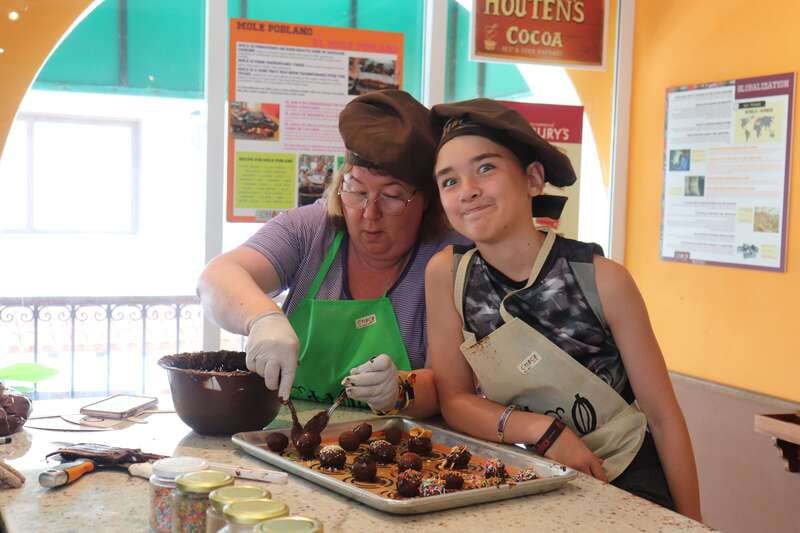
The next task is preparing ganache. You mix your own medium ganache and add flavors from a selection of spices or other flavor choices available during the session. The exact selection is not specified, so you should think of this as a chance to personalize the filling rather than a fixed menu.
Ganache is a useful thing to learn because it forms the soft center of many filled chocolates. You get to see how a simple mixture becomes the filling for molded bonbons.
You then mold six filled chocolates. This part rewards patience more than speed. The shells, filling, and final finish all need to come together, and the instructor guides you through the process.
One practical detail is worth noting: the class may have you work in pairs for the truffle portion, and possibly for parts of the wider process. If you book with a partner, that makes the arrangement easy. If you arrive alone, you should be ready to share the work surface with another participant.
That social setup can be a plus. Chocolate making is less formal when you are comparing flavors, helping with a mold, or deciding how to decorate. But if you want a completely individual cooking lesson, this is not that type of class.
More Chocolate Tours in Mexico:
- Finca 18 Puerto Vallarta Tequila Tour + Chocolate Pairing
★ 5.0 · 393 reviews - Bean to Bar Chocolate Workshop in Puerto Vallarta
★ 5.0 · 381 reviews - Chocolate Tour in Vallarta
★ 5.0 · 226 reviews - Chocolate & Margarita Workshop
★ 5.0 · 207 reviews
Rolling and decorating six truffles
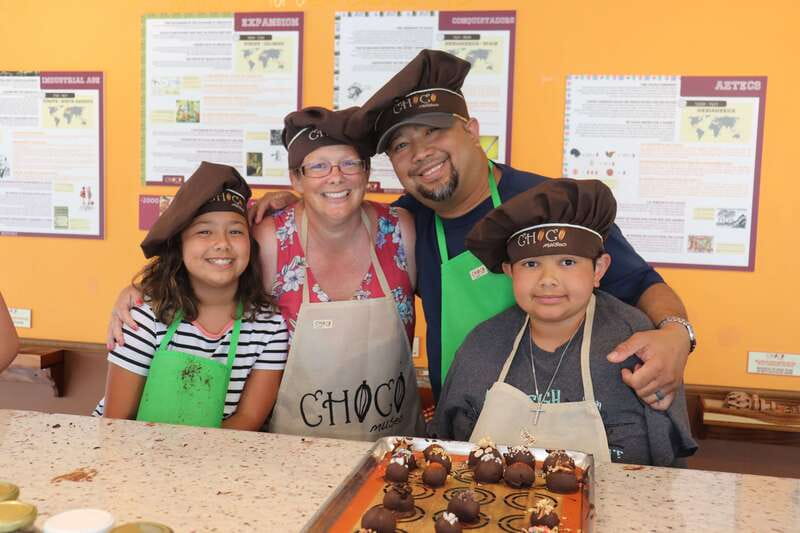
The second chocolate project is making six truffles. You hand-roll the chocolate, coat it, and add toppings of your choice.
This is the more relaxed part of the workshop. Molded chocolates call for neat shapes and careful filling. Truffles allow more freedom, since the handmade look is part of their appeal. You can choose how to finish them from the toppings provided during the class.
The two projects also give you a useful contrast. The filled chocolates teach structure and precision. The truffles let you work more freely with texture and decoration. Together, they cover the basic ideas a beginner wants from a short chocolate workshop.
You finish with at least 12 pieces in total: six truffles and six filled chocolates. That is a generous take-home result for a two-hour activity, particularly if you enjoy edible souvenirs more than decorative ones.
The chocolates are packed for you to take away. They can serve as a small gift, a snack for later, or a reminder of the class. Keep in mind that the activity does not include food or drinks beyond the chocolate you make, so do not book it as a full meal replacement.
What the $62 price gets you
At $62 per person, this is not the cheapest way to spend two hours in Puerto Vallarta. It is also more than the cost of buying ordinary chocolate from a shop. The value comes from the combination of museum entry, instruction, ingredients, equipment, and the 12 chocolates you make yourself.
You receive:
- Museum entrance
- An English-speaking cacao and chocolate expert
- Ingredients and materials
- Apron and hat during the workshop
- Six truffles
- Six filled chocolates
- Packaging for your finished chocolates
One useful way to judge the price is to ask what kind of souvenir you want. If you only want a box of sweets, a shop purchase may be simpler. If you want a short cultural lesson, a guided activity, and the chance to produce your own chocolates, the price becomes easier to justify.
The included chocolate also has real value. One participant calculated that the finished chocolates alone could cost more in the United States, though prices vary. I would not book the class solely for that comparison, but it helps explain why the experience can work well as both an activity and a purchase.
Transportation is not included. You need to reach the meeting point yourself and arrive on time. Since the activity lasts only two hours, a late arrival could cut into the museum introduction or the hands-on work.
Who will enjoy this workshop most
This class suits couples, friends, families with children aged 12 or older, and solo visitors who enjoy meeting people through a shared activity. It is also a good choice if you want an indoor plan or a break from more physically demanding sightseeing.
The small group helps the class feel manageable. With a maximum of eight people, you are not lost in a large demonstration crowd. You should have a fair chance to participate in tempering, filling, rolling, and decorating.
The workshop is especially good for:
- People curious about cacao and Mesoamerican culture
- Beginners who want an introduction to chocolate making
- Couples looking for a cooperative activity
- Families with children over 12
- Anyone who prefers an edible souvenir
- Visitors who enjoy social classes rather than passive tours
It is less suitable if you need wheelchair access, since wheelchair users cannot take part according to the activity information. It is also not designed for younger children. Under-12s are not permitted, even if they already enjoy cooking.
You should wear comfortable shoes and clothes. No special equipment is required, and the apron and hat are supplied.
A practical two-hour schedule
The exact start time varies, so check availability when you book. The structure should follow this general order:
- Arrive at the meeting point on time.
- Enter the museum and learn about cacao and chocolate in Mesoamerica.
- Meet the English-speaking instructor and put on the supplied apron and hat.
- Learn why chocolate is tempered and practice tempering it on marble.
- Prepare flavored ganache.
- Mold six filled chocolates.
- Hand-roll and decorate six truffles.
- Pack the finished chocolates and take them with you.
The order of the final workshop steps may vary, but the key point is that the class is active from the middle onward. You are not simply watching a professional make everything while you sample the results.
The two-hour limit is both useful and limiting. It fits neatly into a morning or afternoon plan, but it does not allow for a long, advanced lesson. The instructor needs to keep the group moving, especially when everyone is working with the same chocolate and equipment.
Booking flexibility and meeting-point advice
You can cancel for a full refund up to 24 hours before the activity. The reserve-now-and-pay-later option also lets you hold a place without paying at the time of booking. That is handy when your Puerto Vallarta schedule still depends on weather, restaurant plans, or other tours.
The meeting point is not paired with transportation. Plan your route before the start time and allow enough margin to arrive promptly. The activity specifically asks you to be on time, and a late arrival may mean missing part of the museum visit or the explanation of the chocolate process.
Because the group is capped at eight, places may be limited on popular dates. Checking available times early is sensible if you want a particular morning or afternoon slot.
My take: should you book it?
I would book this Puerto Vallarta chocolate workshop if you want more than a tasting and like the idea of making your own souvenir. The strongest reasons are the small English-language group, the mix of cacao culture and hands-on work, and the 12 finished chocolates you take home.
Book it especially if you are traveling with a partner or friend. The shared work, flavor choices, and decorating make it a natural social activity. Families with children 12 and older can also find it a good fit, provided everyone is comfortable with the workshop format.
I would skip it if you are looking for a full meal, private transportation, wheelchair access, or a serious professional pastry course. It is a friendly beginner workshop, not an advanced certification class.
For most visitors who enjoy chocolate and want a useful two-hour cultural activity, the $62 price is fair. You learn where cacao fits into Mesoamerican history, practice real techniques, and leave with something you made yourself. That is a better souvenir than another mass-produced trinket, and it gives the afternoon a clear purpose.
FAQ
How long does the chocolate workshop last?
The activity lasts two hours.
Where does the activity take place?
It takes place in Jalisco, at ChocoMuseo Puerto Vallarta.
What language is the workshop in?
The instructor teaches in English.
How many people can join the class?
The group is limited to eight participants.
What chocolates will I make?
You will make six filled chocolates with ganache and six truffles with toppings of your choice.
Can I take the chocolates home?
Yes. The chocolates you make are packed for you to take with you.
Is museum admission included?
Yes. Museum entrance is included in the activity.
Are children allowed to participate?
Children must be at least 12 years old.
Is transportation included?
No. Transportation, food, and drinks are not included.
Newest chocolate tours around Mexico
- Tulum: Chocolate & Honey Sanctuary Experience with Lunch★ 4.2 · 34 reviews
- Tulum: Chocolate & Honey Sanctuary Experience with Cenote★ 3.5 · 6 reviews
- Cultural Adventure: Artisanal Chocolates, Coffee and Doll Making★ 5.0 · 2 reviews
- Sayulita Magical Town Tour: Local food, and chocolate.★ 5.0 · 18 reviews
- Tarot Reading with Coffee & Chocolate or Smoothie★ 5.0 · 17 reviews
- Chocolate Macarons Workshop in Puerto Vallarta★ 5.0 · 5 reviews
- Private Make Your Own Chocolate Experience in Puerto Vallarta★ 5.0 · 8 reviews
- Amazing Walk through the Zapotec Mountains with Hot Chocolate★ 5.0 · 4 reviews
2-Hour Experiences, compared.
Transformative 2-Hour Sound Healing Journey & Cacao Ceremony
Read our review →
2h immersive tasting in Beaujolais – Wine and Chocolate Accord
Read our review →
Manchester: 2-Hour Chocolate Truffle-Making class
Read our review →
Browse the lists this tour appears in