
Review · CHOCOLATE MAKING WORKSHOPS
Chocolate Making and Tasting at a Local Factory in San José
Fresh cacao fruit is the surprise here. At Tapir Chocolates in San José, you do not simply taste finished bars and go home. You follow cacao from fruit and seed through nibs, powder, butter, drinks, and chocolate, then make your own bars under the guidance of Mauricio, a warm and patient chocolatier.
I like the full tasting sequence, and I like the chance to make chocolate that suits your own taste with more than 15 fillings and toppings. The main caution is group size: the experience is promoted as intimate, but the stated limits conflict, with some sessions apparently much larger than eight people. A large class can slow down the hands-on part.
Key points at a glance
- Fresh cacao fruit comes first: You taste the fruit itself before moving on to beans, nibs, powder, butter, and chocolate.
- You make your own bars: Each person can combine chocolate, fillings, and toppings, then take the finished creations home.
- Mauricio leads the class: His history lessons, clear directions, and patient help are a major part of the experience.
- Barrio Escalante is a useful setting: The workshop sits near restaurants, drinks, and public transportation in one of San José’s popular food neighborhoods.
- Packaging is part of the craft: Boxes, wrapping paper, stickers, and other eco-friendly materials let you finish the presentation yourself.
- Check the group size: The experience information gives both eight and twelve as maximum group sizes, while one session reportedly had around 20 people.
From cacao fruit to finished chocolate
This is a workshop with a tasting lesson built into it. The opening section gives you a short account of cacao in the Americas, then moves quickly to the plant and its products. The useful part is that you taste cacao at several points instead of hearing a long talk before doing anything.
You begin with fresh cacao fruit. This is not the same as biting into a chocolate bar. The fruit has its own flavor and texture, and tasting it helps you understand that chocolate begins as an agricultural product, not as a sweet treat in a wrapper.
From there, the class works through cacao beans at different stages. You taste whole beans, nibs, cocoa powder, cocoa butter, and cacao drinks before reaching finished chocolate. Each step shows how much changes through roasting, grinding, separating, mixing, and refining.
I like this order because it gives the class a clear purpose. You can compare the bitter, earthy, fatty, and sweet elements instead of treating chocolate as one fixed flavor. If you already know a fair amount about chocolate, the hands-on comparisons still give you something useful to examine. If you are new to cacao, the sequence makes the process easy to follow.
The tasting includes a complete bean-to-bar progression, plus several chocolate concentrations. That matters if you usually reach for milk chocolate but are curious about darker styles. You get a practical sense of how cocoa percentage affects flavor and how your choice of fillings or toppings can change the final result.
More Chocolate Making Workshops in the world:
- Vienna: Chocolate Workshop in Chocolate Museum w/ Tasting
★ 4.5 · 1,802 reviews - Brussels: Belgian Chocolate Making Workshop with Tastings
★ 4.7 · 1,629 reviews - Brussels: 2.5-Hour Belgian Chocolate Making Workshop
★ 4.8 · 933 reviews
Mauricio’s teaching style and the pace of the class
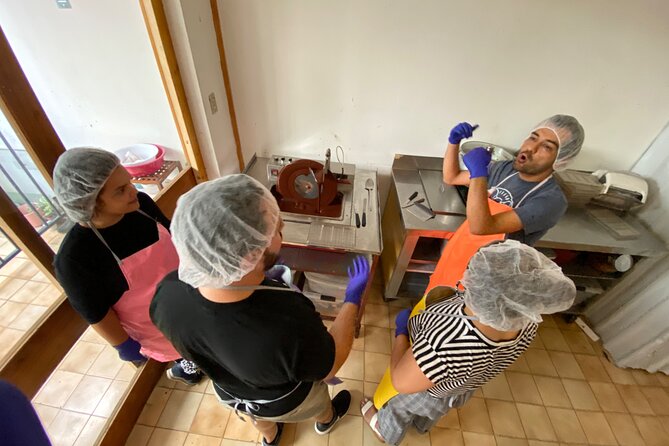
Mauricio is repeatedly singled out as friendly, patient, and clear. He explains the history of cacao and the chocolate-making process, welcomes questions, and helps people who feel unsure about following the steps. That last point is worth noting if you are bringing children, teenagers, or anyone who does not usually cook.
The session is designed to be interactive rather than formal. You taste, listen, ask questions, and then work with the ingredients. Some classes are small enough to feel almost private. A few people have had groups of only three, which gives the instructor plenty of time to offer help and talk about San José food and drink spots afterward.
There is a practical wrinkle. The supplied information gives a maximum of eight in the highlights but lists a maximum of 12 elsewhere. One person reported a group of at least 20, saying the chocolate-making stage became slow. I would confirm the expected group size before booking if personal instruction is important to you.
The class can also be conducted in more than one language. That is helpful for mixed-language groups, though switching between languages may interrupt the flow. If you want every explanation in one language, ask about that when you arrange your visit.
Making two personal chocolate creations
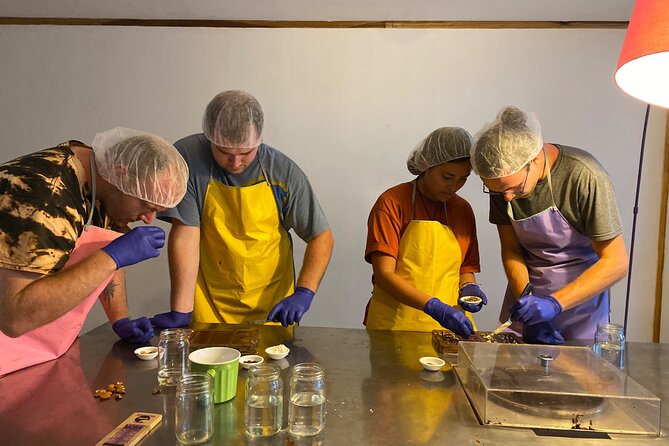
The workshop becomes more fun once you stop tasting and start making. You use the supplied equipment, including molds, spatulas, and machines, with aprons, gloves, and other personal-use materials provided.
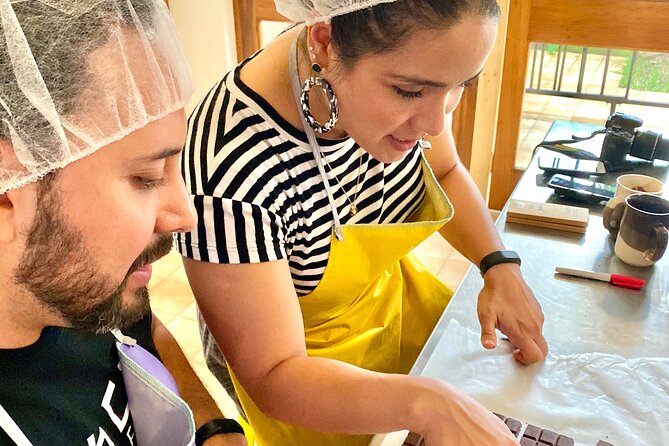
The exact number of finished pieces can vary in the descriptions, but several people report making two chocolate bars each. One is generally made with toppings, while another includes a filling. You choose from more than 15 local ingredients, fillings, and toppings, then combine them according to your own taste.
This is not a demonstration where you watch a chocolatier do the difficult work while you take pictures. You have a role at each stage of your creations. The instructor gives directions, but you decide what goes into the bars and how they look.
That freedom is part of the appeal. You can keep things simple with a plain chocolate base or try combinations from the available local ingredients. The class gives you enough structure to avoid feeling lost, while still leaving room for a bar that is clearly your own.
There is one thing to keep in mind: chocolate making takes time. If you arrive with a hard departure deadline, you may feel rushed, particularly if the group is large. One unhappy participant had to leave early, and the provider explained that leaving before the full class meant missing part of the chocolate-making process. I would keep the rest of your afternoon open.
Designing your own eco-friendly package
The final stage is easy to overlook, but it makes the souvenir more personal. Tapir supplies boxes, wrapping paper, stickers, and other eco-friendly materials. You pack your own creations rather than receiving them in a standard commercial package.
The packaging also gives children and creative adults another task after the food work is finished. You can decorate the box, wrap the bars, and create a small gift that carries the memory of the class. The chocolate you take home is not just something purchased in a shop. You made the choices and finished the presentation.
Do not expect to eat every piece immediately. The useful point of the packaging is that it lets you carry the bars onward, making the workshop a good choice near the end of a San José stay. You can also use the class as a relaxed final-evening activity, since it lasts about two hours and ends where it began.
More Chocolate Factory Tours in the world:
- Lindt Home of Chocolate Museum Entry Ticket
★ 4.7 · 9,329 reviews - Zurich: City Tour, Cruise, and Lindt Home of Chocolate Visit
★ 4.5 · 4,624 reviews - Zurich Sights: Cruise, Lindt Chocolate and optional FIFA Ticket
★ 4.0 · 1,028 reviews - Full-Day Tour: Concord Waterfall, Chocolate Factory, Rum Distillery, Grand Etang
★ 5.0 · 871 reviews
Why Barrio Escalante helps the experience
Tapir Chocolates is at Barrio Escalante, San José, at the listed address of 10101 San José, Costa Rica. The neighborhood is known in the supplied information as a popular spot for restaurants and local food and drink, so it is easy to pair the workshop with a meal or a drink afterward.
The location is near public transportation, but private transportation is not included. You need to make your own way to the meeting point at Tapir Chocolates and return there after the class. The activity starts at 3:00 pm and ends back at the same location.
The workshop can be difficult to spot, so allow extra time to find the entrance. That is especially important in San José, where a few spare minutes can make the difference between arriving calmly and walking in late. The confirmation is sent at booking, so keep the meeting details available on the day.
What the $57.50 price buys you
At $57.50 per person, this is not the cheapest chocolate class in San José. You can find less expensive options, and one person who had tried another local class felt this experience was priced too high for the setup.
The value depends on what you want from the afternoon. You are paying for a guided tasting across many cacao forms, a short cultural and historical lesson, hands-on equipment, ingredients, at least one or two personal chocolate creations, snacks, a cacao drink, water, and eco-friendly packaging. You also support a local chocolate business rather than simply buying a bar from a large shop.
I think the price makes more sense if you care about the full process and want to make your own chocolate. It is less appealing if you only want a quick tasting or a polished factory tour with lots of machines and a large production floor. Tapir is described as a small chocolate laboratory, not a huge industrial plant.
The small-operation feel cuts both ways. It can produce a personal class with direct contact and flexible help from Mauricio. It can also mean less polish, a harder-to-find entrance, or slower service when the group is larger than expected.
Who will enjoy this workshop most
This is a good fit for families with older children and teenagers. The class combines a short history lesson, tasting, practical work, and a souvenir. It gives younger participants something to do with their hands, while adults can focus on cacao varieties and production.
Couples can use it as a low-key afternoon activity, particularly before dinner in Barrio Escalante. Solo visitors also have a place here. The small-group format, when available, makes it easier to ask questions and get help without feeling out of place.
It also suits anyone with a strong interest in food. The value comes from seeing how a raw product changes, not just from eating sweets. You will get more from it if you are curious about flavor, ingredients, and the work behind chocolate.
I would be more cautious about booking if you have a tight schedule, dislike group activities, or want a fully polished commercial attraction. The class is active and social. It may feel slow if a large group attends, and the experience information does not give one fully consistent group limit.
Practical details before you go
The activity lasts about two hours and begins at 3:00 pm. It ends at Tapir Chocolates, so plan your onward meal or transportation from Barrio Escalante rather than from another part of San José.
The price includes snacks, water, a cacao drink, tasting inputs, equipment, gloves, aprons, and packaging supplies. Private transportation is not included. Service animals are allowed, and the meeting point is near public transportation.
Free cancellation is available up to 24 hours before the start time. Changes or cancellations made inside that window are not accepted for a refund. The provider also notes that the activity may be canceled if minimum numbers are not met or if conditions prevent the experience from operating, in which case you are offered another date or a refund.
The experience is generally booked about 14 days ahead. That does not mean you must reserve exactly two weeks early, but it is a useful sign for planning during a busy Costa Rica trip. I would also confirm the expected number of participants and the language of instruction before paying.
Should you book Tapir Chocolates?
I would book this class if you want an educational food activity with real participation. The fresh cacao fruit, bean-to-bar tasting, personal fillings, and handmade packaging give the two hours a clear shape. Mauricio’s patient teaching is another strong reason to choose it.
I would hesitate only if you are comparing prices closely or need a guaranteed small group. At $57.50, the class must deliver more than a few samples, and the inconsistent group-size information deserves a quick check. If Tapir confirms a small session, the price is easier to justify. If the class is full, expect less individual help and a slower turn at the chocolate-making equipment.
For families, couples, solo visitors, and food-focused people staying in San José, this is a worthwhile way to spend an afternoon. You leave with a better sense of what cacao tastes like before it becomes candy, plus chocolate bars you made yourself.
FAQ
Where does the chocolate workshop take place?
The meeting point is Tapir Chocolates in Barrio Escalante, San José, Costa Rica. The listed address is 10101 San José, San José, Barrio Escalante, 10101.
What time does the class begin?
The experience starts at 3:00 pm.
How long does the experience last?
The workshop lasts approximately two hours.
Is transportation included?
No. Private transportation is not included. You make your own way to Tapir Chocolates, and the activity ends at the same meeting point.
What will I taste during the class?
You taste fresh cacao fruit, cacao seeds at different processing stages, nibs, cocoa powder, cocoa butter, chocolate drinks, and chocolates with different cocoa concentrations.
Can I make my own chocolate?
Yes. You make personal chocolate creations using the available equipment, chocolate, fillings, and toppings. Several descriptions of the activity state that people make two chocolate bars each.
What is included in the price?
The price includes tasting items, snacks, a cacao drink, water, aprons, gloves, personal-use materials, chocolate-making equipment, more than 15 fillings and toppings, and eco-friendly packaging supplies.
Can I cancel for a full refund?
You can cancel at least 24 hours before the start time for a full refund. Cancellations or changes made less than 24 hours before the experience are not refunded or accepted.
Newest chocolate tours around the world
- Bohol Chocolate Making and Farm Tour★ 5.0 · 2 reviews
- Big Island Hawaii: Craft Chocolate Tasting and Farm Tour★ 5.0 · 14 reviews
- Bogotá: Candelaria Tour with Cacao and Coffee Workshop★ 5.0 · 3 reviews
- Bordeaux: Chocolate and Pastry Food Tasting Tour★ 4.9 · 40 reviews
- Barossa: Enjoy Wine, Lunch, Brewery, Chocolate & Wildlife★ 4.5 · 26 reviews
- Chocolatier for a day: raw bean to bar chocolate in Modica★ 5.0 · 33 reviews
- Bern: Gruyères Cheese and Cailler Chocolate Tasting Tour★ 4.7 · 3 reviews
- Barcelona: Delicious Chocolate walking tour★ 5.0 · 2 reviews
Chocolate Making Workshops, compared.
Chocolate Workshop in Chocolate Museum w/ Tasting
Read our review →
Belgian Chocolate Making Workshop with Tastings
Read our review →
Belgian Praline and Mendiants Chocolate Workshop
Read our review →
1.5h Belgian Chocolate Workshop in Brussels (bean to bar)
Read our review →
45-minute Chocolate Making Workshop at Choco-Story
Read our review →
Chocolate Bar Making Workshop at York Cocoa Works
Read our review →
Bean to Bar Chocolate Workshop in Puerto Vallarta
Read our review →Browse the lists this tour appears in