

Review · CHOCOLATE WALKING TOURS
Nairobi: Chocolate City Kibera Slum Walking Tour
Kibera is not a sightseeing backdrop. It is a working community, home to families, shops, schools, workshops, and busy streets. This tour gives you a chance to see daily life with a local guide, visit Agape Hope Children Centre, and learn how community projects support children and residents.
I like two things here: your $15 directly supports local initiatives, and the tour includes more than a walk past buildings. You visit the children’s centre, see beadwork production, and may make a home visit. The main drawback is that the experience can be emotionally heavy, and the advertised languages may not always be available. English appears to be the safest choice.
Key points to know before you book

- Local guides lead the walk: Collins and Allan are two guides praised for their kindness, clear explanations, and care with transport at the end.
- The tour supports community work: Your fee helps Agape Hope for Kibera, with visits to a children’s centre and beadwork projects.
- You see more than a photo stop: The route includes Kibera streets, Toi Market, a beadwork factory, and a possible home visit.
- Safety is built into the experience: Guides lead the route, explain how to move through the area, and stay with you throughout.
- English may be the practical choice: French, German, Japanese, Italian, and Spanish are listed, but Japanese-language bookings have resulted in English tours.
- Wear sturdy shoes: Closed-toe, comfortable shoes are required. The route is not suitable for wheelchair users or people with mobility problems.
What this Kibera walk is really about
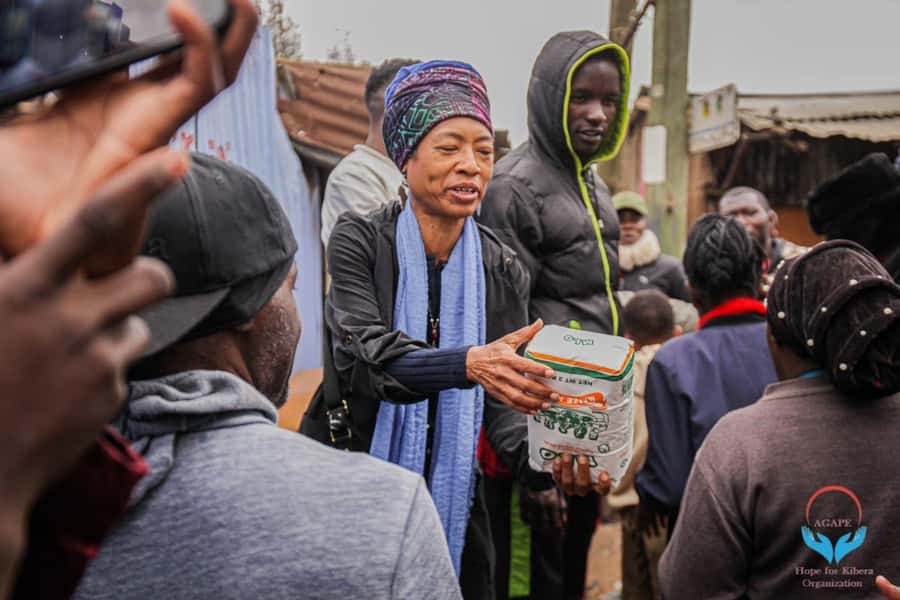
A visit to Kibera asks you to look past the label slum. That word is common in tourism, but it can flatten a complicated place into one grim image. During this walk, you see a community where people live under difficult conditions, but also work, trade, teach, create, and organize.
The tour begins in Nairobi and takes you into Kibera with a guide who knows the area. The point is not to collect dramatic photographs. It is to listen, ask respectful questions, and understand how residents manage daily life.
That distinction matters. You are not simply looking at poverty from a moving vehicle. You are walking through streets where people live and work. The experience can be uncomfortable, but discomfort is part of the lesson. A good visit requires attention, restraint, and respect for people who are not there for your entertainment.
The tour receives a very high overall rating, but the more useful point is why it works for many people: the guides explain what you are seeing, make time for questions, and help you feel secure. Collins, in particular, is praised for explaining Kibera carefully and pointing out good places for photographs. Allan is praised for waiting until a taxi arrived after the tour.
More Chocolate Walking Tours in the world:
- Brussels: Historical Walking Tour with Chocolate & Waffle Tasting
★ 5.0 · 1,165 reviews - Brussels Walking and Tasting Tour (Beers,Chocolates&Fries/Waffle)
★ 5.0 · 929 reviews - Brussels Chocolate Walking Tour and Workshop
★ 4.5 · 885 reviews
Starting at Ayany Equity Bank or Prestige Plaza
Your starting point depends on the option you select. The listed meeting choices are Agape Hope for Kibera and Prestige Plaza Shopping Mall. Another description identifies Ayany Equity Bank Kibera as the place where the walk begins, so confirm the exact meeting point and pickup arrangement before setting out.
This is one detail worth taking seriously. Kibera is large, and a wrong meeting point can waste time before a short tour even begins. Keep the confirmation details handy and allow enough time to reach the selected location.
The meeting area is described as a local gathering point, with ordinary Nairobi activity around you. That is useful context. You do not begin at a polished visitor center. You begin where the city is already moving, then meet the guide who takes over the route.
A safety briefing comes first. Your guide explains how the group will move, where photographs are appropriate, and how to stay together. The exact group size is not provided, so you should not assume a private walk or a small group.
Walking through Chocolate City
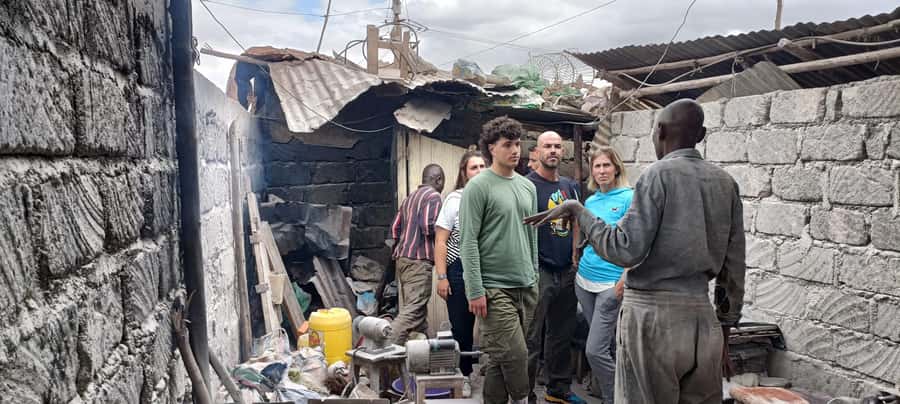
The route takes you through Kibera, also known as Chocolate City. Expect a two-hour experience according to the activity details, although the itinerary also gives the walking portion as two and a half hours. That mismatch is small but worth noting if you have a flight, lunch reservation, or another Nairobi appointment afterward.
This is a walking tour, not a comfortable coach ride. One itinerary also uses the words bus tour and self-guided tour, but the central experience described is a guided walk through Kibera. Ask your provider if you need certainty about the exact format on your date.
Your guide helps you read the area rather than simply pass through it. You may see the close-up details of ordinary life: homes, small businesses, foot traffic, market activity, and community facilities. The most valuable part is the explanation around those sights. Without local context, you might notice only crowded streets or poor infrastructure. With a guide, you can ask how people work, raise children, trade goods, and support local projects.
Photography needs care. The tour includes a photo stop, and guides can point out suitable places, but that does not mean every person is a willing subject. Ask before photographing residents, children, homes, or businesses. Put the camera away when conversation or a visit calls for your full attention.
The setting may feel intense if you have just come from a safari lodge or Nairobi’s more polished shopping areas. One Japanese visitor described the contrast with ordinary life in Japan as striking. That reaction is understandable, but try not to turn the community into a comparison exercise. Listen to the people and explanations in front of you.
Agape Hope Children Centre
The Agape Hope Children Centre is the heart of the visit for many people. It gives the tour a practical purpose. Instead of simply describing the challenges facing children in Kibera, the guide takes you to a local initiative working in education, care, health, or economic support.
The supplied information identifies the centre as a place connected with education, healthcare, and empowerment. It does not provide a detailed program schedule, so do not expect a formal classroom presentation or a guaranteed activity with children. The visit is best understood as an introduction to a community organization.
That distinction also protects the children. A responsible visit should not treat them as a photo opportunity. You can show support by listening, asking sensible questions, and following the centre’s rules. If you hope to spend a long time interacting with children, ask the guide in advance what is appropriate.
One visitor wished for more contact with the children and recognized that this might have been something to discuss with the guide. That is practical advice. If you have a particular interest in the centre, tell Collins, Allan, or your assigned guide early rather than expecting the standard route to include extra time.
The centre also helps explain where your money goes. At $15 per person, this is inexpensive by international tour standards. The value is not only the guide service. You are also paying for access arranged through a local organization and helping support a project in the community.
More Chocolate Tours in the world:
- Lindt Home of Chocolate Museum Entry Ticket
★ 4.7 · 9,329 reviews - Choco-Story Brussels: Chocolate Museum Entrance with Tasting
★ 4.3 · 4,883 reviews - Zurich: City Tour, Cruise, and Lindt Home of Chocolate Visit
★ 4.5 · 4,624 reviews - The Chocolatarium Chocolate Tour Experience in Edinburgh
★ 5.0 · 4,322 reviews
Beadwork, a factory, and a home visit

The tour includes a community-based beadwork project and a visit to a beadwork factory. These stops add an economic angle to the walk. You see how local skills can become income, and you gain a better sense of the work behind handmade goods.
The word factory can suggest a large industrial building, but no size or production method is specified. Expect an introduction to beadwork production rather than a full manufacturing tour. You can ask how pieces are made, who produces them, and how sales support workers.
A purchase may be possible, but it should not be treated as compulsory. One of the strongest details from the experience is that there was no pressure to buy. That matters in community tourism. You should feel free to ask questions and support the project at a level that suits you.
The itinerary also includes a home visit. This can be one of the most personal parts of the walk, but it requires extra sensitivity. A home is not an exhibit. Follow the guide’s instructions, ask permission before taking photographs, and remember that the visit is a privilege, not an entitlement.
These stops are useful because they keep the tour from focusing only on hardship. You see a children’s initiative, local craft work, and household life. Together, they show how residents build routines and income despite serious challenges.
Toi Market and the everyday rhythm of Kibera

Toi Market brings a different energy to the route. It is described as full of color, sound, smells, trade, and conversation. The market helps you see Kibera as a place of commerce, not only as a residential area.
Markets can be crowded and fast-moving. Stay close to the guide and keep your belongings secure, as you would in any busy urban market. Wear shoes that can handle uneven walking surfaces, and leave high heels at home.
Toi Market is also a good place to practice respectful curiosity. Ask the guide what people are selling, how the market fits into local life, and what visitors commonly misunderstand. You may see clothing, household items, food, or other goods, but the exact stalls will change from day to day.
This stop may be less comfortable than a conventional Nairobi shopping visit. You are not entering a quiet, air-conditioned store. You are sharing working space with people who are there to earn a living. That makes it more revealing, but it also demands better manners.
How safe does the experience feel?
Safety is a major concern for anyone considering a Kibera walk. The tour places an English-speaking professional guide with you, provides a safety briefing, and keeps the group on a planned route. Direct accounts praise guides for staying attentive and helping with the trip home.
Collins is praised for answering questions throughout the walk and explaining where to take photographs. Allan is praised for waiting while a taxi arrived. Those details suggest a guide who thinks beyond the official end time, though you should still arrange your own transport and confirm the drop-off plan.
The available drop-off choices are Prestige Plaza Shopping Mall and Agape Hope for Kibera. Your guide may also help you get into a taxi, but a ride is not listed as included. Do not assume that transport to your hotel is part of the $15 price.
No city walk can promise that every person will feel comfortable. The setting is busy, the subject matter is serious, and the route may involve surfaces that are awkward for some people. Stay with the guide, follow instructions, and avoid wandering off for photographs.
Price, timing, and what you receive

At $15 per person, this is a low-cost tour with a clear community benefit. The package includes a professional English-speaking guide, bottled water, the Kibera walk, the Agape Children Centre visit, beadwork activities, the factory visit, and a home visit.
The price is especially good if you want a guided introduction rather than a quick drive past Kibera. You receive local interpretation and access to community projects that would be difficult to arrange respectfully on your own.
Still, do not judge value only by the number of stops. A two-hour walk cannot explain every part of Kibera, and it cannot solve the area’s wider problems. The value comes from meeting local guides, asking useful questions, and directing some tourism income toward community work.
The tour offers free cancellation up to 24 hours before the start and a reserve-now, pay-later option. Those terms are useful if your Nairobi schedule is still changing. Check availability for the actual starting time, since no fixed daily departure time is given.
Languages, clothing, and physical demands
The activity is advertised with live guides in English, French, German, Japanese, Italian, and Spanish. In practice, English appears to be the most dependable option. Japanese-speaking customers who selected Japanese were assigned English guides, so do not book this assuming a Japanese-language tour unless the provider confirms it directly.
Wear comfortable closed-toe shoes. The route is on foot and may include uneven or crowded areas. High heels and bare feet are not allowed, and comfortable footwear will make the experience much easier.
The activity is not suitable for wheelchair users or people with mobility impairments. It is also listed as unsuitable for pregnant women and people with epilepsy. The age restrictions are repeated in several forms, including limits for children under two, three, or four, and babies under one. Because those details conflict, check the exact age policy attached to your booking.
The tour is not suitable for anyone bringing weapons, sharp objects, or explosive substances. Those restrictions are straightforward and should be taken seriously.
Who will appreciate this tour most?
You should consider this walk if you want to understand a difficult part of Nairobi through local voices rather than from a vehicle. It suits people who can walk comfortably, listen without judgment, and accept that the experience may raise more questions than it answers.
It is also a good match if you want your spending to support a local project. The children’s centre and beadwork stops give your visit a direct connection to community work.
You may want a different activity if you are looking for a light, relaxed outing, a polished cultural show, or a fully accessible route. Families should check age rules carefully, and anyone hoping for a non-English guide should get written confirmation before booking.
Should you book the Chocolate City walk?
I would book this tour if your aim is to gain a more honest understanding of Nairobi and you are prepared to treat Kibera as a home, not a spectacle. The local guides, children’s centre, beadwork project, and home visit give the walk substance beyond a quick look at poor housing.
Book with realistic expectations. The tour is short, the route may feel confronting, and the language information needs checking. Choose closed shoes, confirm the meeting point, ask before taking photographs, and tell your guide what you hope to learn.
For $15, it offers strong value, especially when you consider the local connection and community support. If you want a respectful, guided introduction to Kibera and can handle its difficult realities, this is a worthwhile addition to a Nairobi visit.
FAQ
How much does the Kibera walking tour cost?
The tour costs $15 per person.
How long does the tour last?
The activity is listed as two hours. The walking portion is also described as two and a half hours in the itinerary, so allow extra time and confirm the schedule when booking.
Where does the tour start?
Starting points may include Agape Hope for Kibera or Prestige Plaza Shopping Mall. Another meeting description identifies Ayany Equity Bank Kibera. Confirm the exact location for your selected option.
Where does the tour finish?
The listed drop-off choices are Prestige Plaza Shopping Mall and Agape Hope for Kibera.
Is an English-speaking guide included?
Yes. The tour includes a professional English-speaking guide. Other languages are listed, including French, German, Japanese, Italian, and Spanish, but English appears to be the most reliable option.
What places are included?
The experience includes a guided walk through Kibera, Agape Hope Children Centre, a community beadwork project, a beadwork factory, and a home visit.
Is bottled water included?
Yes. Bottled water is included.
What should I wear?
Wear comfortable, closed-toe shoes. High-heeled shoes and bare feet are not allowed.
Is the tour suitable for wheelchair users?
No. The activity is not suitable for wheelchair users or people with mobility impairments.
Can I cancel the booking?
Yes. You can cancel up to 24 hours in advance for a full refund. A reserve-now, pay-later option is also available.
Newest chocolate tours around the world
- Bohol Chocolate Making and Farm Tour★ 5.0 · 2 reviews
- Big Island Hawaii: Craft Chocolate Tasting and Farm Tour★ 5.0 · 14 reviews
- Bogotá: Candelaria Tour with Cacao and Coffee Workshop★ 5.0 · 3 reviews
- Bordeaux: Chocolate and Pastry Food Tasting Tour★ 4.9 · 40 reviews
- Barossa: Enjoy Wine, Lunch, Brewery, Chocolate & Wildlife★ 4.5 · 26 reviews
- Chocolatier for a day: raw bean to bar chocolate in Modica★ 5.0 · 33 reviews
- Bern: Gruyères Cheese and Cailler Chocolate Tasting Tour★ 4.7 · 3 reviews
- Barcelona: Delicious Chocolate walking tour★ 5.0 · 2 reviews
Chocolate Walking Tours, compared.
Historical Walking Tour with Chocolate & Waffle Tasting
Read our review →
Brussels Walking and Tasting Tour (Beers,Chocolates&Fries/Waffle)
Read our review →



Guided Walking Tour and Chocolate Museum Ticket
Read our review →
Walking Food Tour with Chocolate, Beer, & Waffles
Read our review →
Melbourne Lanes & Arcades Chocolate and Dessert Walking Tour
Read our review →Browse the lists this tour appears in