

Review · CHOCOLATE MUSEUMS
Dresden: Guided Walking Tour and Chocolate Museum Ticket
Dresden’s past comes at you in layers: medieval power, Renaissance ambition, Baroque splendor, wartime destruction, and the peaceful revolution that helped reunite Germany. This tour gives you that story on foot, then adds a very different chapter at the Dresden Chocolate Museum, where cocoa, factory history, and tasting take over.
I like the clear route through the Old Town and the way the walk links famous sights instead of treating them as isolated photo stops. I also like the flexibility: you choose a walking-tour time, then visit the museum whenever you wish that day. The main catch is that the guide speaks German only, and the museum visit is self-guided, not part of the walking tour itself.
Key points at a glance
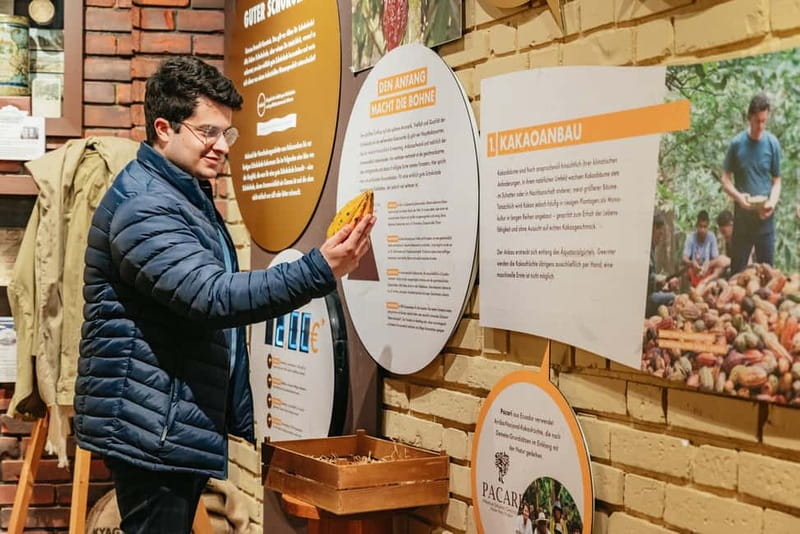
- A compact Old Town route: Walk from Dresden Castle past Brühl’s Terrace, the Procession of Princes, Stallhof, Dresden Cathedral, Taschenbergpalais, Augustus Bridge, and Frauenkirche.
- History in a short format: The 1.5-hour walk covers the Middle Ages, Renaissance, Baroque Dresden, the 1989 Peaceful Revolution, and German reunification.
- A museum with a local angle: Learn why Dresden was once called Germany’s capital of chocolate and why the city is linked to the invention of milk chocolate.
- A serious collection of chocolate molds: The museum features one of the world’s largest collections of molds made by Anton Reiche.
- Tasting included: After the museum displays, you can sample German milk chocolate and consider how chocolate production changed over time.
- Good booking flexibility: Cancellation is free up to 24 hours before the activity, and you can reserve now and pay later.
Starting beneath the QF Passage
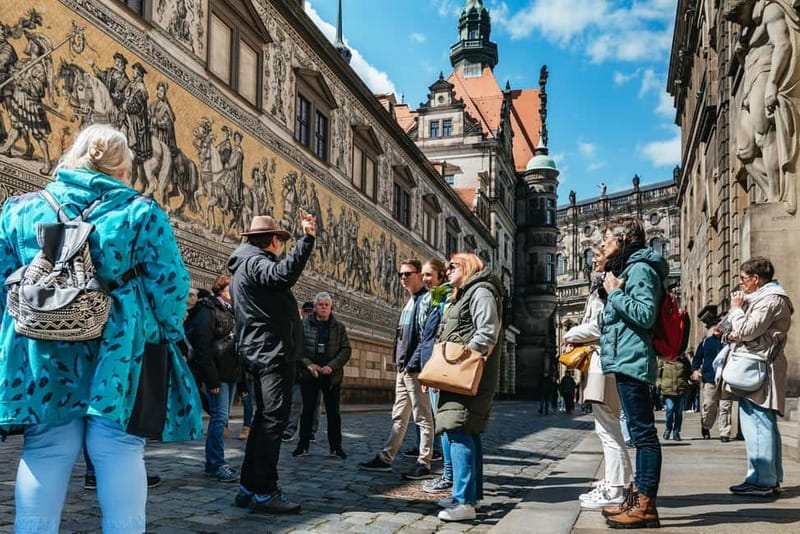
Your meeting point is in the basement of the QF Passage, in the seating area of Dresden Information. This detail matters because Dresden’s central streets can feel confusing at first, especially if you arrive near the large public squares and shopping passages.
Allow enough time to find the correct level. You need to be at Dresden Information for the guided walk, not at the Chocolate Museum. The walk is booked for a specific date and time, while the museum entry can be used at any point during its opening hours on that same day.
The tour is listed as 1.5 hours. That makes it easy to fit into a day of sightseeing, though you should not treat the stated duration as the total time needed for both activities. The museum is a separate self-guided visit, and you will need to allow extra time for it.
The tour is wheelchair accessible. The exact walking pace and group size are not specified, but the route includes several major Old Town sights in a fairly short period. If you prefer slow photography stops, plan to return to your favorite places after the walk.
More Chocolate Museums in the world:
- Lindt Home of Chocolate Museum Entry Ticket
★ 4.7 · 9,329 reviews - Choco-Story Brussels: Chocolate Museum Entrance with Tasting
★ 4.3 · 4,883 reviews - Cologne: Chocolate Museum Entrance Ticket
★ 4.4 · 2,790 reviews
Dresden Castle and the city’s changing story
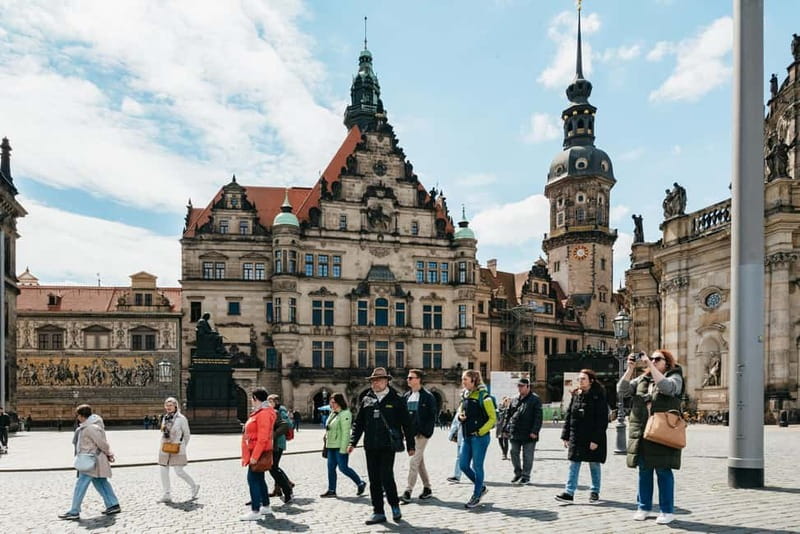
The walking route begins at Dresden Castle, one of the city’s key historic landmarks. From here, the guide sets up Dresden’s long story, beginning with the Middle Ages and moving through the Renaissance and Baroque eras.
That broad time span is one of the tour’s strengths. You are not simply looking at ornate buildings without context. You hear how the city changed as rulers gained power, art became a tool of prestige, and Dresden developed the grand appearance that defines its center today.
The Middle Ages section includes the darker side of the city’s past. That balance is useful. Dresden’s historic center is full of grand façades, but a short city tour should not turn the past into one long parade of royal triumphs.
The Renaissance period brings a different mood, with stronger interest in learning, art, architecture, and political confidence. Then comes the Baroque era, when Dresden’s rulers shaped the city into a display of wealth and courtly ambition.
The guide’s role matters here. The strongest praise is aimed at guides who explain things with humor, energy, and a well-prepared structure. Several comments describe the tour as lively, informative, and easy to follow, even though it covers a lot in a short time.
Brühl’s Terrace and the Procession of Princes
From the castle area, the walk continues to Brühl’s Terrace. This riverside stretch is one of Dresden’s most recognizable viewpoints, with a strong connection to the city’s royal and architectural identity.
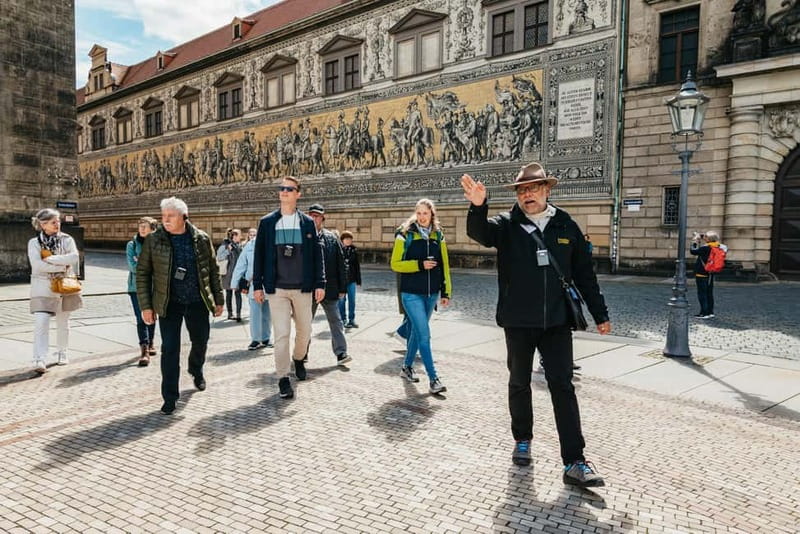
You then see the Procession of Princes, a long wall image made from porcelain tiles. It presents rulers of Saxony and belongs to the visual core of Dresden’s historic center. A guide can help you read the image as more than a long decorative wall, pointing out its role in presenting Saxon power and continuity.
Nearby, Stallhof adds another piece of the former court complex. The name refers to the old stable yard, and the space helps you picture how royal life operated behind the grand public buildings.
These stops work well together because they are close but tell different stories. Brühl’s Terrace gives you the city’s river setting, the Procession of Princes shows how rulers wanted to be remembered, and Stallhof offers a glimpse of the working side of court life.
You should expect the guide to keep moving. The route is designed to cover a good portion of the center, not to provide a long lecture at each stop. If one site catches your eye, make a note and return later with more time.
Dresden Cathedral, Taschenbergpalais, and Augustus Bridge
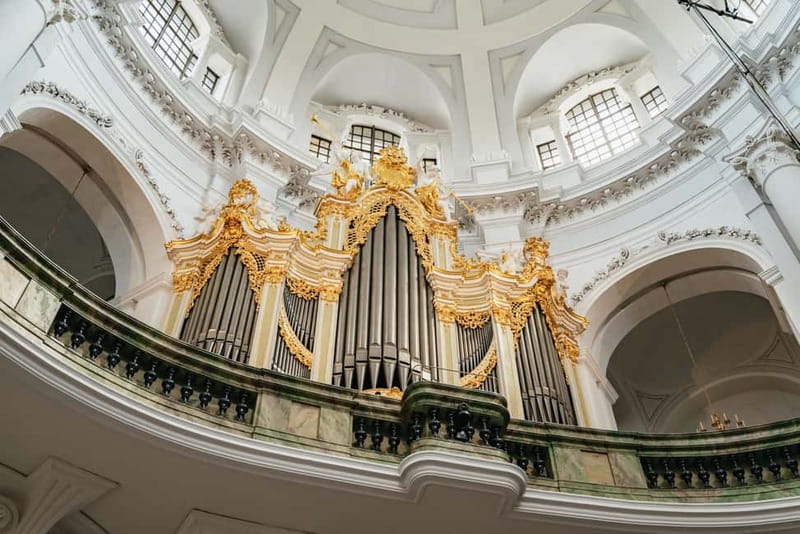
The route leads to Dresden Cathedral, another major landmark in the Old Town. Its position near the former royal complex makes it part of the same story of church, court, and city power.
You also pass the Taschenbergpalais. This building adds another courtly detail to the route and helps connect Dresden’s large monuments with the smaller architectural pieces that filled in royal life.
The walk then reaches Augustus Bridge. From here, the city’s position along the Elbe becomes easier to appreciate. The bridge also gives the route a natural pause before it turns back toward the central landmarks near Frauenkirche.
The itinerary is well chosen for a first look at Dresden because it combines major sights with useful orientation. You get a sense of where the castle, cathedral, river, opera house, Zwinger, and Frauenkirche sit in relation to one another.
The drawback is simple: this is an overview, not an in-depth architectural tour. You will hear the main historical points, but anyone wanting long interior visits, detailed art commentary, or extensive photography time will need to explore the sights separately.
More Chocolate Walking Tours in the world:
- Brussels: Historical Walking Tour with Chocolate & Waffle Tasting
★ 5.0 · 1,165 reviews - Brussels Walking and Tasting Tour (Beers,Chocolates&Fries/Waffle)
★ 5.0 · 929 reviews - Brussels Chocolate Walking Tour and Workshop
★ 4.5 · 885 reviews - Chocolate Flavors Walking Tour of Geneva
★ 4.9 · 670 reviews
Semperoper and the Baroque Zwinger
The Semperoper and the Baroque Zwinger are among the most important visual stops connected with Dresden’s historic center. Even if the walk does not include a full interior visit, seeing these landmarks from the outside gives you a sense of the city’s Baroque scale.
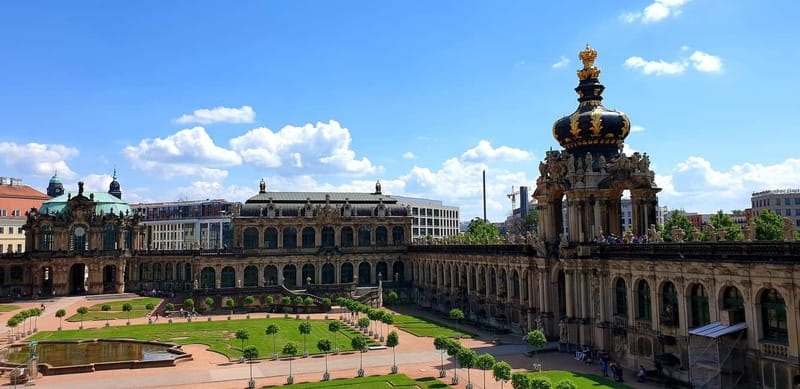
The Zwinger represents the grand style that made Dresden famous. Its courtyards, ornament, and formal design reflect the ambitions of the Saxon court. The guide can place it within the wider Baroque plan for Dresden, where architecture was used to project power and taste.
The Semperoper adds another layer. It represents Dresden’s musical and cultural reputation, while also fitting into the city’s pattern of rebuilding and renewal. Together, the opera house and Zwinger show why Dresden’s center is often associated with Baroque grandeur.
You should keep your expectations realistic. The experience is a guided walk, not an opera-house performance or a museum entry package. The value comes from seeing these places in sequence and hearing how they fit into the city’s past.
Frauenkirche and the meaning of 1989
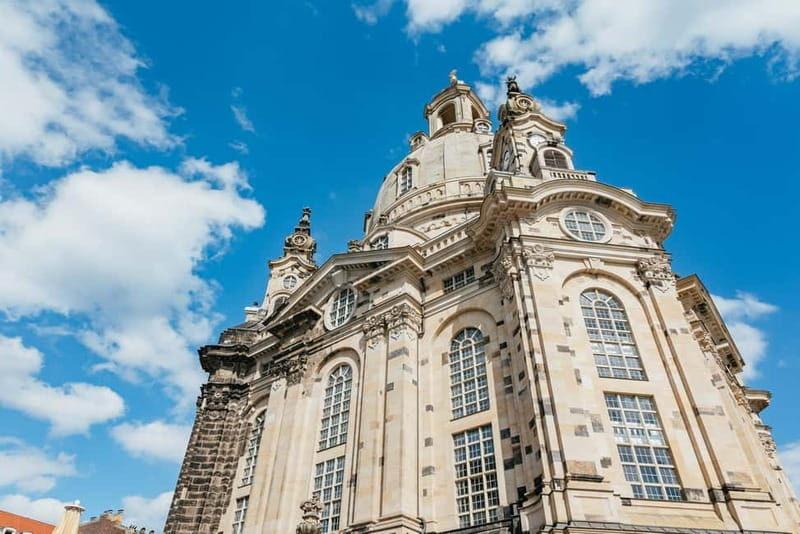
The walk ends near Frauenkirche, Dresden’s best-known landmark. Its presence gives the tour a strong finish because the church represents both the historic city and its modern recovery.
The guide also discusses the Peaceful Revolution of 1989 and the reunification of East and West Germany. This is an important part of the experience. Dresden is not only a Baroque showpiece, and a useful city tour should explain how life changed in the former East Germany.
The 1989 story gives the older buildings a modern setting. You begin with medieval and royal history, then reach a period that many people still remember personally. That range is one reason the tour works well for first-time visitors who want more than a list of monuments.
The walk does not promise an extended political history seminar. Instead, you get a compact explanation of how peaceful protest and wider change shaped Dresden and Germany. If this subject interests you, use the tour as a starting point and seek out more detailed local history afterward.
A separate visit to Dresden’s Chocolate Museum
After the walking tour, you visit the Chocolate Museum on your own. Your voucher is valid at any time during the museum’s opening hours on the day of your walking tour, from 11 a.m. to 6 p.m. You do not need to arrange a separate museum time in advance.
That flexibility is useful. You can take the walk first and visit the museum later, or reverse the order if you select the 4 p.m. walking tour. For the late tour, the museum visit must happen before the walk because the museum closes at 6 p.m.
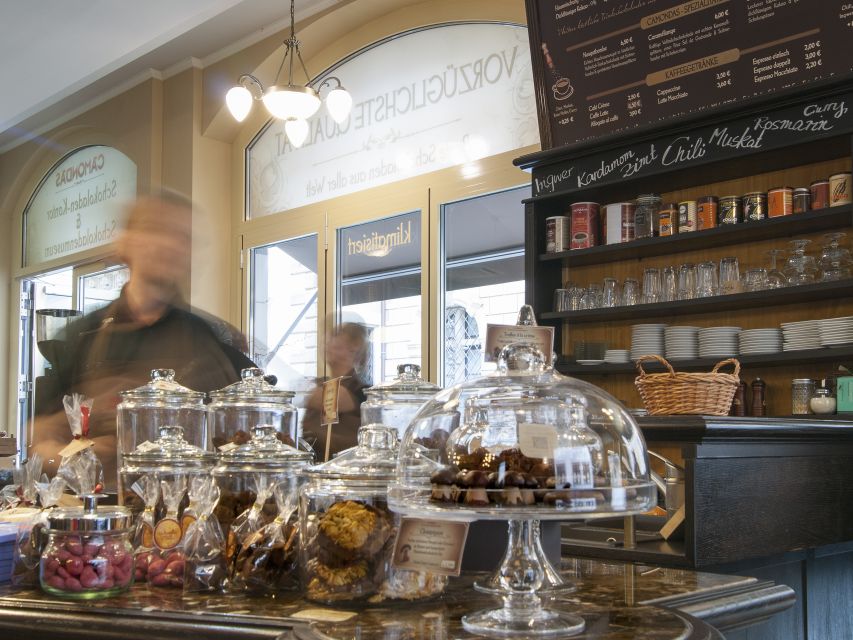
The museum adds a playful contrast to the serious city history. Dresden was once known as Germany’s capital of chocolate, and the exhibits explain the city’s connection with nineteenth-century chocolate factories.
You learn about cocoa beans, production methods, the ingredients that affect quality, and the long process that turns raw cocoa into a finished bar. The museum also looks at the origins of milk chocolate, which is said to have been invented in Dresden.
One of the most unusual features is the collection of chocolate molds made by Anton Reiche. The collection is among the world’s largest, giving you a look at the molds used to shape chocolate into familiar forms.
The museum is self-guided. That means you can read at your own speed, spend longer on the factory displays, or move quickly toward the tasting. It also means you do not get a guide to explain the museum exhibits, so the experience depends more on your interest in the displays.
The tasting and the value of the $18 price
At $18 per person, the package is priced fairly for a guided Old Town walk, museum admission, and chocolate tasting. Dresden’s central sights can be seen without an entry fee, but the value here comes from having the route organized and the city’s complicated history explained in a compact way.
The chocolate tasting makes the package more appealing, especially if you are traveling with children or simply want a lighter activity after several churches, palaces, and museums. It also gives the tour a clear local angle instead of adding a generic food stop.
The value is strongest if you want a first orientation to Dresden. You get the major landmarks, a basic historical framework, a museum ticket, and a small taste of German chocolate for one moderate price.
The value is weaker if you speak little or no German, dislike guided walks, or want a long, detailed visit at each monument. The guide speaks German, and the museum visit is entirely on your own. Also, the stated 1.5 hours refers to the scheduled activity duration, not a guaranteed total time covering every museum display.
The booking terms are practical. You can reserve now and pay later, and cancellation is free up to 24 hours before the activity. Those options help if your Dresden schedule is still changing.
Who will enjoy this Dresden combination?
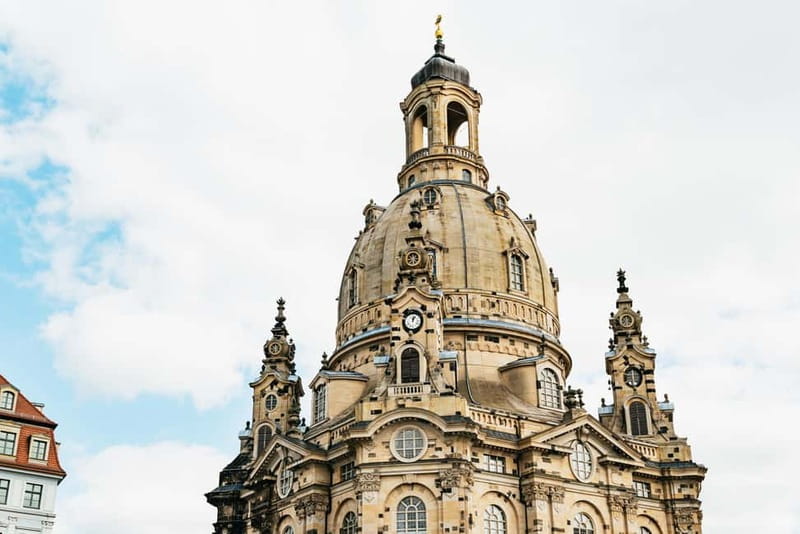
I would recommend this experience to you if you want a quick but meaningful introduction to the Old Town. It suits first-time visitors who need to understand the layout before returning to the Frauenkirche, Zwinger, Semperoper, or castle on their own.
It is also a good fit for people who enjoy a mix of serious history and lighter subjects. The walk covers war, political change, royal ambition, and reunification. The museum then shifts to cocoa, factory production, molds, and tasting.
Families may appreciate the chocolate section, though the walking portion still asks for attention and a fair amount of time on foot. Young people may find the museum more immediately engaging than the historical explanations, while adults can enjoy the connection between Dresden’s industry and its wider urban story.
German-speaking visitors have the clearest advantage. The guides are praised for being enthusiastic, witty, prepared, and able to explain a lot in a short time. If you need an English-language tour, this is not the right choice based on the stated language.
It also suits visitors using a wheelchair, since the activity is listed as wheelchair accessible. You may still want to confirm any personal route requirements before booking, because the experience includes outdoor city walking and several historic areas.
What I would plan around the tour
I would avoid booking the walking tour at 4 p.m. unless I planned to visit the Chocolate Museum first. The museum closes at 6 p.m., so the late start leaves a narrow window for the self-guided visit.
For a more relaxed day, choose a morning or early afternoon walk, then visit the museum afterward. That order lets you use the guide’s history as a frame for the city, followed by a completely different subject.
Wear comfortable shoes and keep your camera ready, but do not expect to stop for long at every landmark. The route covers many important places in 90 minutes, so you will get more from it if you listen closely and save detailed photography for a second visit.
Make sure you arrive at the QF Passage with time to find the Dresden Information seating area in the basement. A missed meeting point would be an unnecessary way to lose the walking portion.
Should you book this Dresden tour?
Book it if you want an efficient introduction to Dresden with a German-speaking guide, a well-planned Old Town route, and a separate chocolate museum visit included. The strongest reasons are the lively delivery, the broad historical coverage, the clear list of landmarks, and the freedom to use the museum voucher at any time that day.
Skip it if you need an English-language guide, want extensive time inside the major monuments, or prefer a completely independent visit. For everyone else, the $18 price is a sensible way to pair Dresden’s grand public history with its less expected chocolate past.
FAQ
How long does the Dresden walking tour last?
The guided walking tour lasts 1.5 hours. The Chocolate Museum visit is separate, so you should allow additional time if you want to see the displays at a relaxed pace.
Is the Chocolate Museum visit guided?
No. You visit the Chocolate Museum on your own. The guide accompanies you on the walking tour but does not accompany you through the museum.
When can I visit the Chocolate Museum?
You can use your voucher at any time on the day of your walking tour. The museum is open daily from 11 a.m. to 6 p.m., although special closing times may occur.
What if I choose the 4 p.m. walking tour?
You need to visit the Chocolate Museum before the walking tour. The museum closes at 6 p.m., so visiting it afterward is not suitable with the 4 p.m. tour time.
What language is the walking tour in?
The live guided tour is in German. The provided activity information does not list another tour language.
Is the activity wheelchair accessible?
Yes. The activity is listed as wheelchair accessible. You can also cancel up to 24 hours in advance for a full refund, subject to the booking terms.
Newest chocolate tours around the world
- Bohol Chocolate Making and Farm Tour★ 5.0 · 2 reviews
- Big Island Hawaii: Craft Chocolate Tasting and Farm Tour★ 5.0 · 14 reviews
- Bogotá: Candelaria Tour with Cacao and Coffee Workshop★ 5.0 · 3 reviews
- Bordeaux: Chocolate and Pastry Food Tasting Tour★ 4.9 · 40 reviews
- Bern: Gruyères Cheese and Cailler Chocolate Tasting Tour★ 4.7 · 3 reviews
- Barossa: Enjoy Wine, Lunch, Brewery, Chocolate & Wildlife★ 4.5 · 26 reviews
- Chocolatier for a day: raw bean to bar chocolate in Modica★ 5.0 · 33 reviews
- Barcelona: Delicious Chocolate walking tour★ 5.0 · 2 reviews
Chocolate Museums, compared.
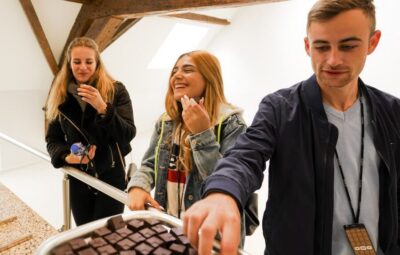
Choco-Story Brussels: Chocolate Museum Entrance with Tasting
Read our review →
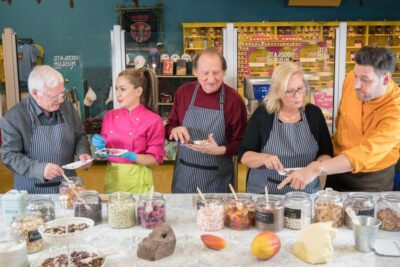
Chocolate Workshop in Chocolate Museum w/ Tasting
Read our review →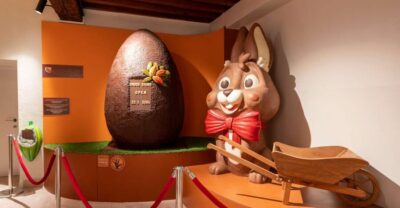
Choco-Story Chocolate Museum Guided Tour w/Tastings
Read our review →
45-minute Chocolate Making Workshop at Choco-Story
Read our review →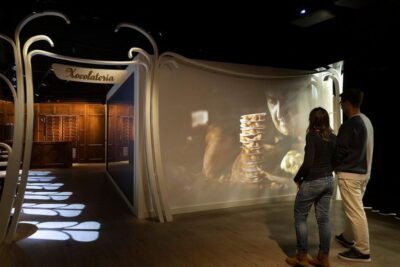

Chocolate Museum – Unwrap the Secrets of Chocolate
Read our review →Browse the lists this tour appears in