

Review · CHOCOLATE WALKING TOURS
Nairobi: Kibera Slum (The Chocolate city)Guided Walking Tour
Kibera is not a sightseeing prop. It is a living Nairobi neighborhood, and this walking tour puts you alongside local guides who know its streets, people, and daily challenges. You’ll visit Toi Main Market, meet artisans and musicians, and see community work aimed at giving children and young people better opportunities.
I like that the tour connects your $22 fee to local initiatives, including support for children and a school. I also like the chance to walk with people from Kibera itself, including guides named Daniel and Elijah, rather than hearing only an outside account. The main consideration is comfort: this is a walking tour through a crowded informal settlement, not a polished attraction, and it is not suitable for children under 10, wheelchair users, or people with heart problems.
Key points to know before you go

- Local guides lead the walk: Guides born and raised in Kibera explain the area from personal experience.
- Toi Main Market is a central stop: You can browse, shop, and see an important part of local commerce.
- Community work is part of the visit: Part of the payment supports local projects, including efforts connected with children and education.
- The route is on foot: It begins at Greenhouse Mall, passes through Kibera, and ends at Equity Bank Kibera.
- You meet working locals: The tour includes contact with artisans, musicians, and young people involved in community change.
- Prepare for a real neighborhood: Wear walking shoes, carry sun protection, and ask before taking photographs.
Why a Kibera walk offers a different Nairobi

Most first visits to Nairobi focus on wildlife, museums, or the city center. This walk takes you into a neighborhood that many visitors would otherwise see only from a distance. That change in setting is the point. You are not simply looking at Kibera. You are walking with people who live there and hearing how daily life works from their side.
Kibera is described as Africa’s largest informal settlement. That label gives you scale, but it does not tell you much about the people who live there. A local guide can explain the area through markets, community groups, creative work, and personal stories. You get a fuller picture than the usual headlines about poverty and overcrowding.
I appreciate that the experience includes both difficulty and progress. You learn about the problems residents face, but you also meet people building useful projects, making art, creating music, and working with children. That balance matters. Kibera is not a single story.
This tour does require a respectful attitude. You are entering people’s homes and working neighborhood, not a museum arranged for visitors. Listen carefully, avoid treating residents as photo subjects, and follow your guide if photography is restricted.
More Chocolate Walking Tours in the world:
- Brussels: Historical Walking Tour with Chocolate & Waffle Tasting
★ 5.0 · 1,165 reviews - Brussels Walking and Tasting Tour (Beers,Chocolates&Fries/Waffle)
★ 5.0 · 929 reviews - Brussels Chocolate Walking Tour and Workshop
★ 4.5 · 885 reviews
Starting at Greenhouse Mall
The walk begins at Greenhouse Mall. This gives you a clear meeting point before you enter Kibera, though you are responsible for getting there because transportation to and from the area is not included.
The starting point also creates a useful transition. You begin in a familiar public setting, then move on foot toward the settlement and its local streets. Your guide can help you get oriented before the walk becomes more involved.
You should arrive ready to walk rather than expecting a short transfer between stops. The activity is listed as lasting one day, but no exact walking time or departure schedule is provided. Check the available start times when booking and allow enough room in your Nairobi plans for a guided route that may involve frequent stops.
Comfortable shoes are important. Bring a hat and sunscreen, especially if you are walking during the warmer part of the day. A small bag is easier to manage than bulky luggage, and you should carry only what you need.
Walking through Kibera with a local guide

The heart of the experience is the walk through Kibera itself. The guides are described as people born and raised in the community, which changes the tone of the visit. You can ask direct questions about daily routines, local challenges, and the work being done to improve opportunities for children and young people.
The guide is not there simply to point out sights. The value comes from explanation and conversation. You can ask about what you see, and the guide can place markets, projects, homes, and businesses in a broader social setting.
Daniel and Elijah are names connected with this experience. Their work includes education and creating opportunities for children and the wider community. If they lead your walk, you can ask them about the projects they support and how funds from the tour are used.
This is also where the tour asks the most from you as a visitor. Streets may be busy, walking surfaces may not be smooth, and the area is not arranged for sightseeing. You need to stay close to the guide, pay attention to instructions, and avoid wandering into private areas.
The setting can feel intense because you are seeing real homes and businesses at close range. That is also what gives the tour its value, but only if you approach it with care. Do not assume every person wants to talk or be photographed. Photography may be limited in some places, so ask before raising your camera.
Toi Main Market: shopping and everyday trade
The route includes a guided visit to Toi Main Market. This is more than a quick stop for souvenirs. You can see local commerce at work, browse goods, and learn how the market fits into the neighborhood.
The market section gives the tour a practical anchor. Instead of discussing Kibera only in broad terms, you see people buying and selling, moving through stalls, and carrying on with ordinary business. Your guide can help you understand what you are seeing and may point out details that would be easy to miss alone.
Shopping is included as an option, but it is not required. If you buy something, do so because you want it, not because you feel pressured to support the tour. Keep personal spending separate from the $22 tour price, since meals and personal expenses are not included.
Markets can be crowded and distracting, so keep an eye on your belongings and follow the guide’s advice. The experience provider specifically asks visitors not to smoke and not to bring alcohol or drugs. Those rules are simple, but they matter more in a residential area where the tour depends on trust.
Toi Main Market is likely to be one of the most active parts of the walk. If you want a quiet, highly controlled visit, this may not suit you. If you like seeing how a neighborhood works through its shops and trade, it adds real value.
More Chocolate Tours in the world:
- Lindt Home of Chocolate Museum Entry Ticket
★ 4.7 · 9,329 reviews - Choco-Story Brussels: Chocolate Museum Entrance with Tasting
★ 4.3 · 4,883 reviews - Zurich: City Tour, Cruise, and Lindt Home of Chocolate Visit
★ 4.5 · 4,624 reviews - The Chocolatarium Chocolate Tour Experience in Edinburgh
★ 5.0 · 4,322 reviews
Community projects, artisans, and musicians

The tour also visits community projects and introduces you to local artisans and musicians. This is the part that keeps the experience from becoming a tour focused only on hardship.
You may see how creative work gives people a way to earn money, express ideas, and connect with the wider community. The supplied information does not name each project or guarantee a particular performance, so you should treat the exact encounters as dependent on the day. Still, the format gives you a chance to meet people doing something constructive in their own neighborhood.
The connection to children is especially important. Part of the proceeds supports local community initiatives, including expenses connected with a school for children. That does not mean your $22 payment funds every project you see, but it does give the tour a direct community purpose beyond sightseeing.
I would ask your guide specific questions here. Which projects receive support? How are children involved? What kind of work do the artisans do? How do young people find opportunities? A good conversation can turn a brief stop into the most meaningful part of the day.
You should also remember that these projects are not entertainment staged for you. Meet people with respect, buy only what interests you, and avoid making promises or demands. The best approach is friendly curiosity without turning the visit into a performance.
Finishing near Equity Bank Kibera
The walk finishes at Equity Bank Kibera. This is useful because you have a clear endpoint, but transportation after the tour is not included. Plan your onward journey before you start, especially if you have another appointment in Nairobi.
The end point also means you should not assume that you will return to Greenhouse Mall. If you leave a vehicle, luggage, or other belongings at the starting point, confirm the route and your return plan before booking.
Because the experience ends in Kibera rather than at a central hotel, give yourself a little time to get your bearings. Your guide can help you understand where the walk ends, but you remain responsible for your transport and personal expenses.
What $22 gets you

At $22 per person, this tour offers good value if you want a local perspective rather than a standard Nairobi attraction. The price covers a local guide, the walking route, the market visit, community project visits, and contact with artisans and musicians.
The most important value is the access created by the guide. On your own, you might pass through the area without understanding what you are seeing, or you might avoid entering altogether because you do not know where to go. A local guide provides context and helps the visit take place with greater respect.
The price also has a social angle. A portion supports local community initiatives, and the tour has a stated connection to children’s education and opportunities. That makes the fee feel more useful than a simple entry charge, though you should still ask your guide for more detail about the current projects if that matters to your decision.
Meals, transport to and from Kibera, shopping, and other personal costs are extra. The tour is best value for someone already arranging a Nairobi stay and looking for a focused half-day style activity, even though the booking information lists the activity as valid for one day.
The five available ratings are all five out of five, with particular praise for the guides’ kindness, the sense of safety provided during the walk, and the work supporting children. Those points match the main strengths of the tour: people are central to the experience, and the community purpose is not an afterthought.
Who should book this walk
I would recommend it to adults and older teenagers who want to understand Nairobi beyond its most familiar attractions. It suits you if you are comfortable walking, asking questions, adapting to a busy neighborhood, and accepting that the experience may not follow a perfectly polished tourist format.
It is also a good choice if you want your sightseeing money to support a local effort. The link to community projects and children’s education gives the visit a practical purpose, though you should still treat the people you meet as residents and workers first, not as part of a display.
This is not a good match for children under 10. It is also not suitable for wheelchair users or people with heart problems. The route is on foot, and the setting may be physically and emotionally demanding.
You should reconsider if your main goal is shopping, photography, or a quick look at poverty. The tour asks for more care than that. Its strongest moments come from listening to guides, meeting local people, and understanding how community work creates hope in a difficult setting.
The available guide languages are English, Spanish, German, French, and Chinese. That gives you a better chance of discussing serious topics clearly, but confirm the language available at your selected start time.
Practical ways to make the visit respectful

Wear shoes you can walk in for an extended period. Add a hat and sunscreen, and carry water if needed, though meals are not part of the tour.
Ask before taking photographs. Some areas restrict photography, and even where it is allowed, a friendly request is the right habit. Do not photograph children or private homes casually.
Keep your questions open and respectful. You can ask about housing, work, schooling, community projects, and the guide’s own experience without reducing the neighborhood to its difficulties.
Do not smoke, drink alcohol, or use drugs during the activity. Keep your belongings close in market areas and follow the guide’s instructions about where to walk and where to stop.
You can cancel up to 24 hours ahead for a full refund, and the reserve now, pay later option lets you hold a place without paying at once. Those terms are useful if your Nairobi schedule is still changing.
Should you book the Kibera walking tour?
Book it if you want a candid, community-led look at Nairobi and are ready to walk with respect. The combination of local guides, Toi Main Market, community projects, artisans, musicians, and support for children gives the $22 price a clear purpose.
Skip it if you need a comfortable, highly structured attraction, have mobility or health limits listed above, or mainly want photographs. For the right visitor, this is less about collecting sights and more about meeting people who are shaping their own neighborhood. That is the reason to go.
FAQ
Where does the Kibera walking tour start?
The tour starts at Greenhouse Mall.
Where does the tour finish?
The walk finishes at Equity Bank Kibera.
Is transportation included?
No. Transportation to and from Kibera is not included.
What languages are available for the guide?
Guides may be available in English, Spanish, German, French, and Chinese. Check the available language when selecting your time.
Is the tour suitable for children?
The tour is not suitable for children under 10 years old.
Can I cancel for a refund?
Yes. You can cancel up to 24 hours in advance for a full refund.
Newest chocolate tours around the world
- Bohol Chocolate Making and Farm Tour★ 5.0 · 2 reviews
- Big Island Hawaii: Craft Chocolate Tasting and Farm Tour★ 5.0 · 14 reviews
- Bogotá: Candelaria Tour with Cacao and Coffee Workshop★ 5.0 · 3 reviews
- Bordeaux: Chocolate and Pastry Food Tasting Tour★ 4.9 · 40 reviews
- Barossa: Enjoy Wine, Lunch, Brewery, Chocolate & Wildlife★ 4.5 · 26 reviews
- Chocolatier for a day: raw bean to bar chocolate in Modica★ 5.0 · 33 reviews
- Bern: Gruyères Cheese and Cailler Chocolate Tasting Tour★ 4.7 · 3 reviews
- Barcelona: Delicious Chocolate walking tour★ 5.0 · 2 reviews
Chocolate Walking Tours, compared.
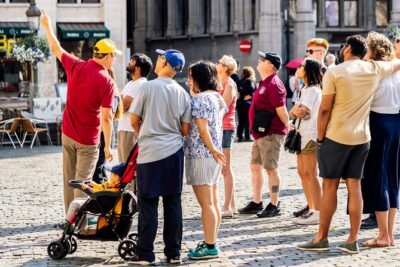
Historical Walking Tour with Chocolate & Waffle Tasting
Read our review →
Brussels Walking and Tasting Tour (Beers,Chocolates&Fries/Waffle)
Read our review →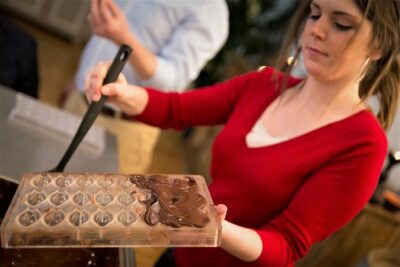



Guided Walking Tour and Chocolate Museum Ticket
Read our review →
Walking Food Tour with Chocolate, Beer, & Waffles
Read our review →
Melbourne Lanes & Arcades Chocolate and Dessert Walking Tour
Read our review →Browse the lists this tour appears in