
Review · MEXICO CHOCOLATE TOURS
Bean to Beverage: Roast and grind cacao into chocolate
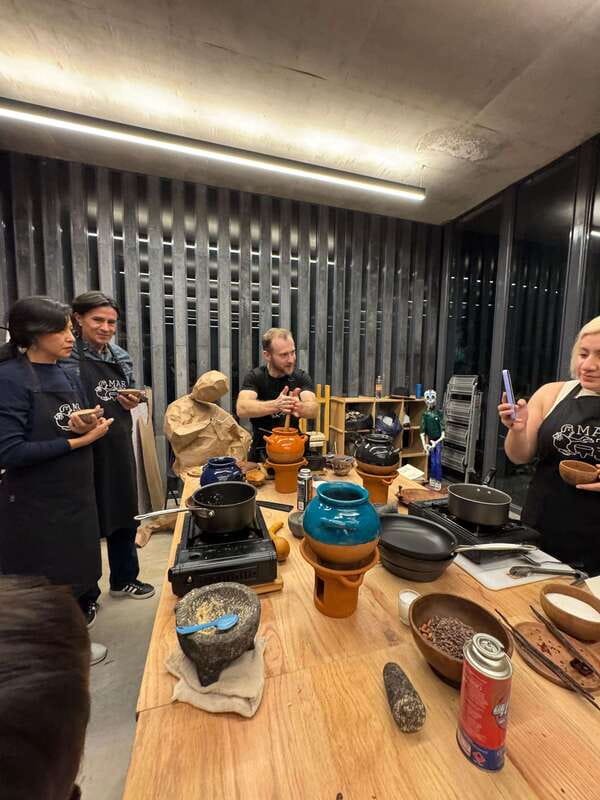
Cacao becomes far more interesting when you handle the whole process yourself. At Jim’s home in Condesa, you learn how cacao was used in the Mayan and Aztec worlds, then roast and grind beans on a metate before turning them into hot chocolate.
I like the class for two clear reasons: you make six different drinks, not just one demonstration, and the flavor work goes well beyond sugar and cinnamon. Chile, achiote, and avocado leaf let you taste ingredients tied to older Mesoamerican cooking. The relaxed home setting also makes this feel personal rather than like a standard cooking-school lesson.
The main drawback is practical: the class takes place in a building without an elevator, and two cats live in the house. Allergy pills are available, and cats are kept away from the cooking area, but this may still matter if you have a serious allergy or limited mobility.
Key points at a glance
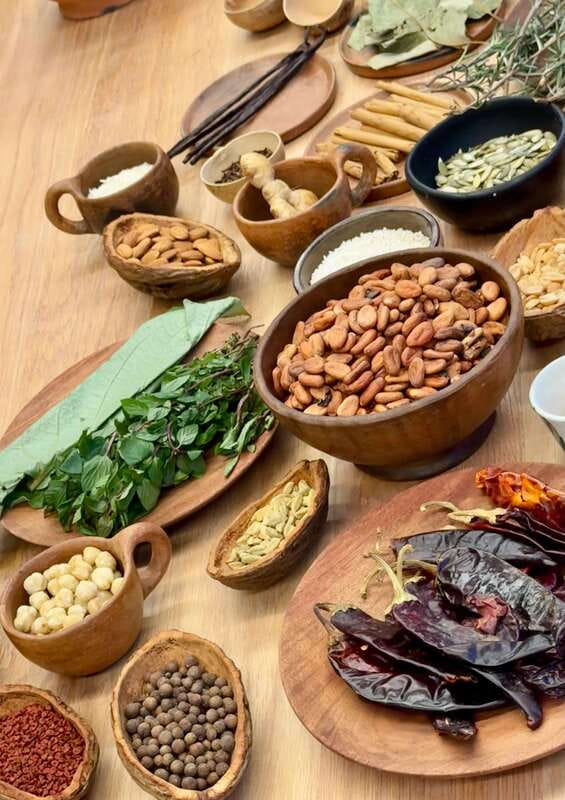
- Six hot chocolates from one batch of cacao: You roast, grind, season, and compare several drinks rather than watching someone else do the work.
- A metate adds real hands-on work: Grinding cacao the old way gives you a feel for the effort behind traditional chocolate.
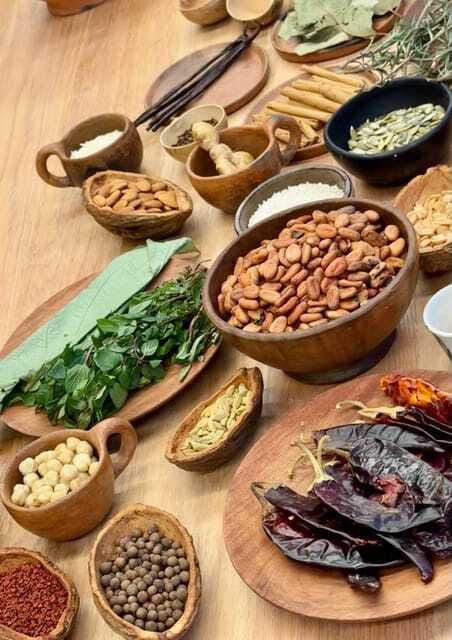
- Mesoamerican ingredients lead the tasting: Chile, achiote, and avocado leaf bring savory, earthy, and spicy notes to the cup.
- Jim teaches the history through food: The class connects cacao with Mayan and Aztec traditions, as well as later international additions such as sugar and spices.
- Good for mixed-age families: Children as young as 8, along with teenagers and adults, have found plenty to do.
- A home-based class with a few limits: Expect a friendly, informal room rather than a fully accessible commercial kitchen.
Starting with cacao, not a chocolate bar
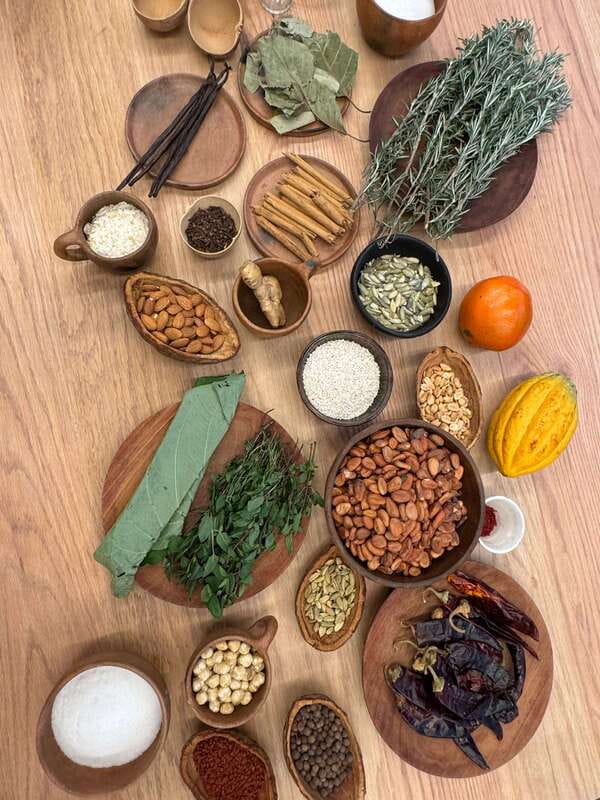
The class begins with the cacao bean itself. That matters because most of us meet chocolate only after roasting, grinding, sweetening, and shaping have already been done for us. Here, you start much closer to the source.
Jim introduces the place of cacao in the pre-Hispanic world, focusing on how Mayan and Aztec cultures valued and prepared it. This history is not treated as a long lecture detached from the kitchen. It leads directly into the work you will do with your hands.
I appreciate that link between story and action. You do not simply hear that cacao was important, then move on to a modern cup of cocoa. You handle the beans and follow a process that helps explain why the drink had such meaning and value.
The session is taught in English or Spanish. Jim leads the class with help from an assistant, and the tone is informal. That suits people who want room to ask questions, try combinations, and take their time. If you prefer a fast demonstration with little participation, this is not that sort of class.
More Chocolate Tours in Mexico:
- Finca 18 Puerto Vallarta Tequila Tour + Chocolate Pairing
★ 5.0 · 393 reviews - Bean to Bar Chocolate Workshop in Puerto Vallarta
★ 5.0 · 381 reviews - Chocolate Tour in Vallarta
★ 5.0 · 226 reviews
Roasting cacao over the first step of the process
You will roast your own cacao beans before grinding them. The roasting stage is a useful reminder that flavor does not appear all at once. Heat changes the beans and prepares them for the next stage, while also making the process feel more like cooking than a museum lesson.
The activity is designed so you can follow the process from bean to drink. You are not handed a finished cacao paste and asked to stir it into milk. You take part in the early work, then continue through grinding and brewing.
The exact pace can vary with the size of your group. A private booking or small group should give you more space to ask questions and experiment. Since the full class lasts three hours, you are not being pushed through a ten-minute tasting.
Grinding on a metate, where the work gets real
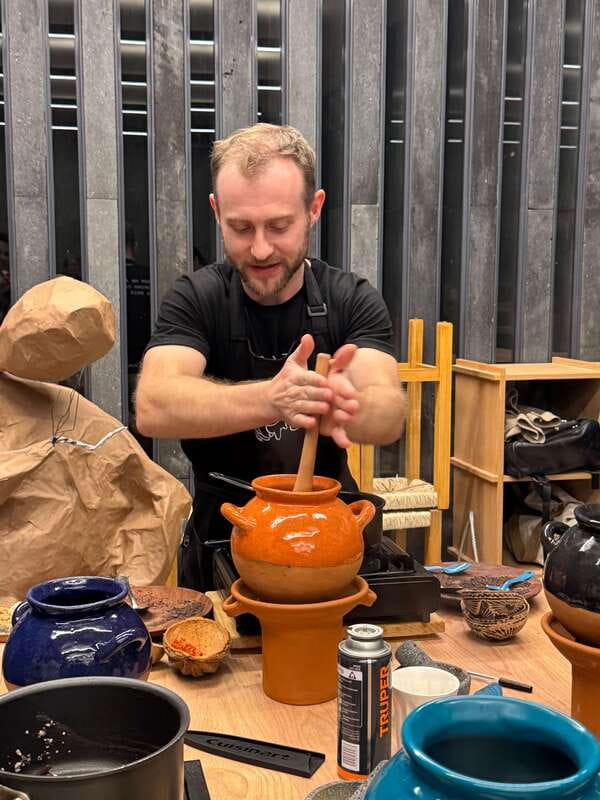
The most distinctive physical part of the class is grinding cacao on a metate. This stone tool connects your modern kitchen activity with older methods used in the region.
Grinding takes effort and attention. That is part of the point. You feel how much labor sits behind a smooth drink, and you gain a better sense of why cacao preparation was a skilled task rather than a casual stir of powder into hot water.
For children, this can be the moment that keeps the class lively. The activity gives them something concrete to do, while the history gives the work a reason. Families with children around 8 to 10 have found the format particularly suitable, and teenagers can take part without being reduced to spectators.
I would not choose this class if you want a polished, hands-off tasting. The metate is a working tool, and the class asks you to participate. That hands-on quality is its strength, but it also means the session is less passive than a café visit.
Six drinks, six chances to adjust the flavor
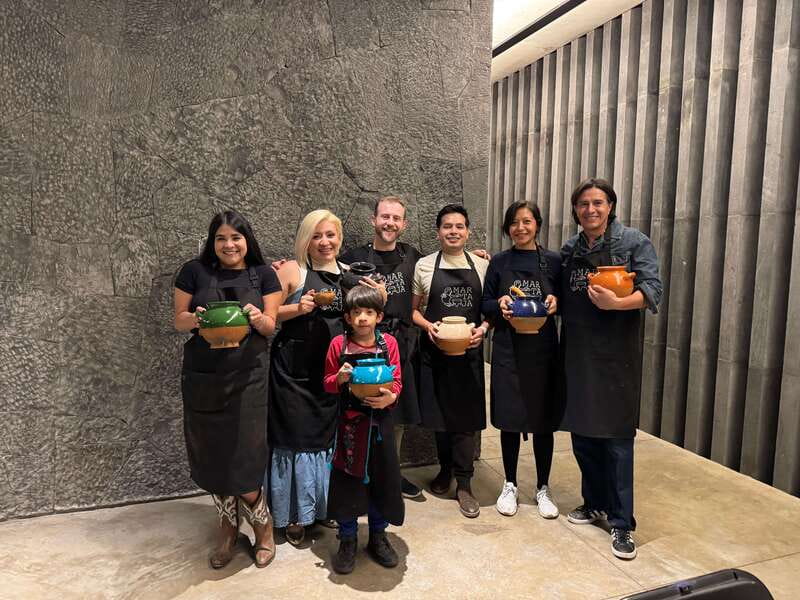
The class includes all the ingredients needed to prepare six hot chocolate drinks. You are encouraged to create combinations rather than follow one fixed recipe.
The flavor choices include chile, achiote, and avocado leaf. These ingredients matter because they shift hot chocolate away from the familiar sweet European-style cup. Chile can bring heat, achiote can add an earthy character, and avocado leaf offers a distinctly herbal note.
You may find that some combinations work better for you than others. That is a useful part of the class, not a problem to be hidden. The point is to compare flavors and understand how traditional ingredients change the drink.
Jim also explains the later influence of sugar and spices from outside the pre-Hispanic world. That gives you a fuller picture of the beverage without pretending that every modern cup follows one ancient formula. You get the older local ingredients alongside the international additions that helped shape chocolate as many people know it today.
The six-drink format adds value to the $115 price. You are not paying for one small sample. You get a guided tasting built around your own work, with enough variety to make the flavor discussion worthwhile. Still, the price is high for a three-hour food activity, so the value depends on how much you enjoy learning by doing.
Same city, a different tasting:
- Chocolate & Margarita Workshop
★ 5.0 · 207 reviews - Chocolate and truffles workshop
★ 5.0 · 157 reviews - San Jose del Cabo Art Walk, Beer Tasting &Chocolate Demonstration
★ 5.0 · 141 reviews - Artisanal Mezcal and Fine Chocolate Tasting
★ 5.0 · 132 reviews
A dessert and a table set for tasting
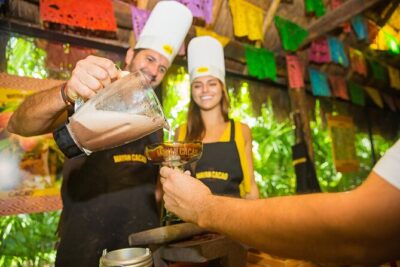
Once the drinks are ready, you taste your creations with a dessert. The final serving takes place at a table set with artisanal serveware, which gives the session a proper finish after the more physical roasting and grinding.
The dessert is included, but its specific type is not stated, so I would not book this expecting a particular pastry or regional sweet. Think of it as an accompaniment to the tasting rather than the main reason to attend.
I like this closing stage because it gives you time to compare notes. You can decide which ingredients worked best, which cup had the most surprising flavor, and which combination you would try again at home. It also turns the class into a shared meal-like moment instead of ending as soon as the drinks are poured.
What Jim adds to the class
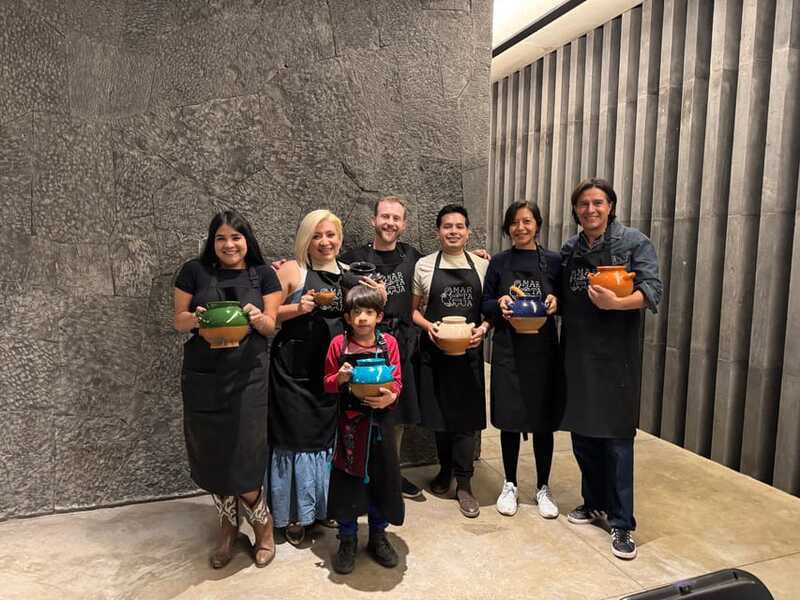
Jim is the key to the experience. His teaching covers cacao, pre-Hispanic food traditions, preparation methods, and the role of later ingredients. He also brings an easygoing energy that suits a home kitchen.
He has been especially helpful to people planning the rest of their time in Mexico City, offering suggestions for local restaurants and other activities. That is a small extra, but it can be useful when you are still shaping your itinerary.
The teaching style appears to work across age groups. Families with an 8-year-old, 9-year-old, and 10-year-old have used the class successfully, while adults have enjoyed the cultural and culinary detail. You should still expect children to participate rather than simply sit quietly. The class works best when everyone is willing to roast, grind, taste, and talk.
Jim and his assistant also teach cooking classes focused on mole and tamales. Those are separate offerings, but the mention is useful if you want to build a wider food program around your Mexico City stay.
Why the Condesa home setting matters
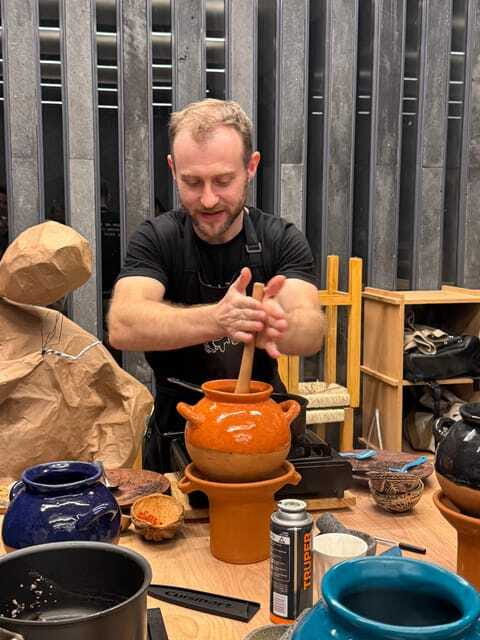
A home-based class changes the mood. You are not in a large school with several stations and a rotating stream of groups. You are in a personal setting where the cooking, history, and conversation are closely tied together.
That intimacy is a plus for people who like asking questions or trying unusual combinations. A private or small-group booking should make the setting even more comfortable, though the meeting point can vary depending on the option you choose. Check your booking details carefully rather than assuming every option begins at the same address.
The tradeoff is that a private home may not have the same accessibility features as a purpose-built venue. The building has no elevator. Wheelchair users have taken part before, but you should confirm that the stairs and room layout work for your needs before booking.
There are also two cats in the house. They are kept out of the cooking area, and allergy pills are available, but people with significant allergies should treat this as an important booking question. Dietary needs are discussed by email after booking, and most can be accommodated. Strict kosher requirements cannot be met at present.
Who gets the most from three hours and $115
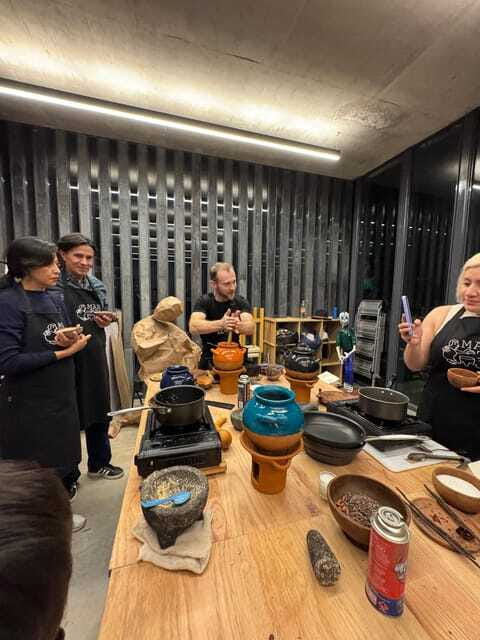
At $115 per person, this is best viewed as a cultural cooking workshop, not a cheap hot chocolate stop. The fee includes the ingredients for six drinks and dessert, but the real value comes from the instruction, the history, and the chance to do every major step yourself.
I would recommend it most strongly for:
- Families looking for an activity that can hold the attention of children and adults.
- Couples or small groups who enjoy tasting unusual ingredients together.
- Food-focused visitors who want more context than a restaurant menu can provide.
- People curious about pre-Hispanic cooking methods and the history of cacao.
- Anyone who prefers a personal home setting to a large group class.
I would be more cautious if you have a tight budget, serious cat allergies, strict kosher requirements, or difficulty with stairs. The class is also less suitable if you want a quick, polished demonstration with no physical work.
There is one booking detail worth noting. The same class may cost less when booked directly through the Martaja website than through another sales channel. Compare prices before paying, especially since the experience itself is offered by Martaja, Market tours and cooking classes in Mexico City.
Timing, language, and cancellation flexibility
The workshop lasts three hours, so give it a solid place in your day. Do not schedule it between two fixed appointments unless you have generous spare time.
English and Spanish instruction is available. The class can be private or arranged for a small group, depending on the option you book. Starting times vary, so check availability before choosing your date.
Cancellation is flexible up to 24 hours before the activity for a full refund. You can also reserve now and pay later, which helps if your Mexico City plans are still changing. Keep an eye on your email after booking because the team will contact you about dietary requirements.
My call: book it if you want chocolate with a story
I would book this class if you want to understand cacao through touch, taste, and conversation. Roasting the beans, grinding them on a metate, and trying six combinations gives you a much clearer sense of the ingredient than ordering another prepared chocolate drink.
The strongest reasons to go are the pre-Hispanic food context, the unusual ingredients, the family-friendly format, and Jim’s personal teaching style. The main cautions are the $115 price, the stairs, the cats, and the fact that strict kosher needs cannot be handled.
For a casual cup of hot chocolate, choose a café. For a three-hour food lesson that connects Mayan and Aztec traditions with the drink in your hands, this is a thoughtful and unusually hands-on choice.
FAQ
How long does the cacao and hot chocolate class last?
The activity lasts three hours.
Where does the class take place?
It takes place at a home in Condesa, Mexico City. The exact meeting point may vary according to the option you book.
How much does the experience cost?
The listed price is $115 per person.
What languages are available?
The class is offered in English and Spanish.
How many hot chocolate drinks will I prepare?
You will prepare six different hot chocolate drinks using the included ingredients.
Which ingredients can I use to flavor the drinks?
The class includes Mesoamerican ingredients such as chile, achiote, and avocado leaf. You can use them to create different flavor combinations.
Is dessert included?
Yes. A dessert is included to accompany the hot chocolate drinks.
Is the class suitable for children?
Yes. The format has worked well for families with children from about 8 years old and for teenagers. Children should be ready to participate in roasting, grinding, and tasting.
Can dietary requirements be accommodated?
Most dietary requirements can be accommodated if you share them after booking. Strict kosher requirements cannot be accommodated at this time. There are also two cats in the home, although they are kept away from the cooking area.
Newest chocolate tours around Mexico
- Art Workshops and Chocolate Shops Tour in Oaxaca★ 5.0 · 4 reviews
- Magic Teotihuacan and Chocolate★ 5.0 · 4 reviews
- Cacao Chronicles: A Mexican Chocolate Tasting★ 5.0 · 14 reviews
- Oaxaca: Chocolate and Ancestral Drinks Tour★ 4.5 · 13 reviews
- Chocolate Tasting & mayan Presentation★ 4.5 · 20 reviews
- Cozumel: Chocolate Workshop at The Mayan Cacao Company★ 4.8 · 41 reviews
- Private Tour Uxmal Ruins and Chocolate Museum plus Cenote★ 5.0 · 43 reviews
- Make Your Own Chocolate with Oaxacan Tradition Private Class★ 5.0 · 45 reviews
Mexico Chocolate Tours, compared.
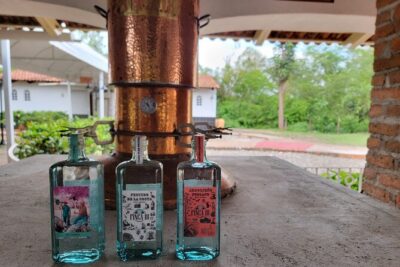
Finca 18 Puerto Vallarta Tequila Tour + Chocolate Pairing
Read our review →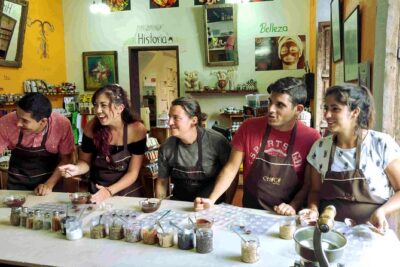
Bean to Bar Chocolate Workshop in Puerto Vallarta
Read our review →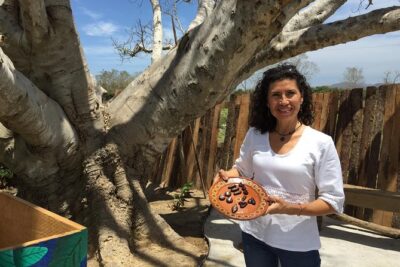
San Jose del Cabo Art Walk, Beer Tasting &Chocolate Demonstration
Read our review →
Browse the lists this tour appears in