
Review · CHOCOLATE MUSEUMS
Choco-Story: The Chocolate Museum in Bruges
Chocolate in Bruges is more than a souvenir shop treat. At Choco-Story, you follow cocoa from its beginnings as a spicy Mayan drink to the polished pralines associated with Belgium today. The museum fills a 15th-century building across four floors, with old tools, machines, displays, and an audio guide that lets you set your own pace.
I like the live praline demonstration and the chance to see more than 1,000 chocolate-making objects. I also like that children get a lower display layout and their own audio content. The catch is that this is a self-guided museum, not a walking tour with a person leading you, and busy periods can make the small rooms feel crowded.
At a glance
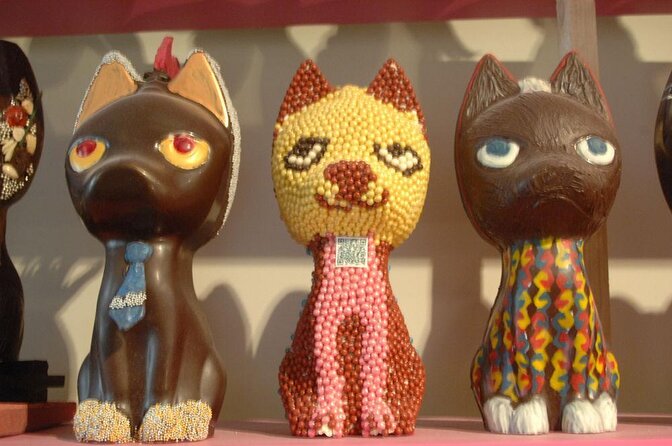
- Four floors in an old Bruges building: The setting gives the visit more character than a plain modern exhibition hall.
- A long story, not just a tasting: You trace cocoa from Mayan use through its arrival in Europe and the rise of Belgian chocolate.
- More than 1,000 objects: Tools, machines, and chocolate-making items show how production changed over time.
- English audio guide: You listen through a small handheld device and move from station to station at your own speed.
- Fresh praline demonstration: A chocolatier shows how filled chocolates are made, with one freshly made praline for each person.
- Best for about 90 minutes: Allow longer if you read everything or stop at each audio point, but do not expect a full-day attraction.
Entering Choco-Story in a 15th-century house
The museum is in an old building in central Bruges, and the architecture is part of the appeal. You move through four floors rather than one large gallery, so the visit feels like a series of compact rooms tucked into a historic property.
That layout has two sides. I enjoy the sense of discovery as the exhibits lead you upward, but the rooms can feel tight when school groups, families, or rainy-day crowds arrive at the same time. Some people also wish for more places to sit during the visit.
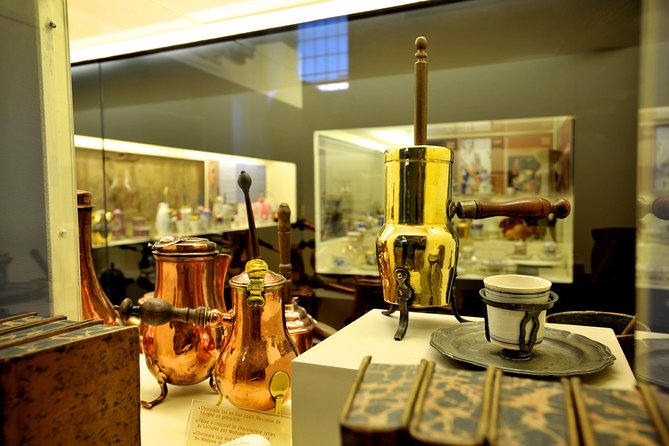
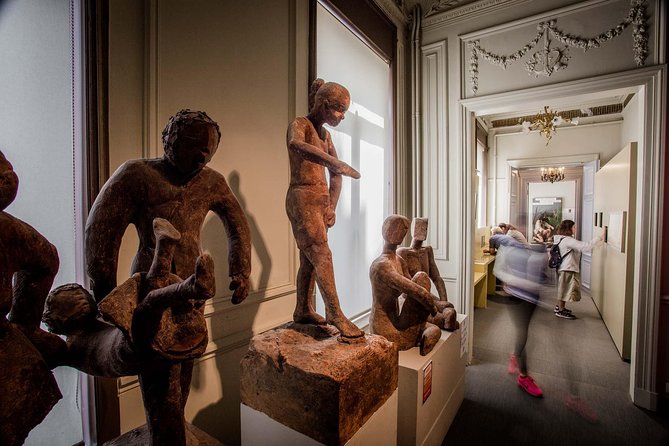
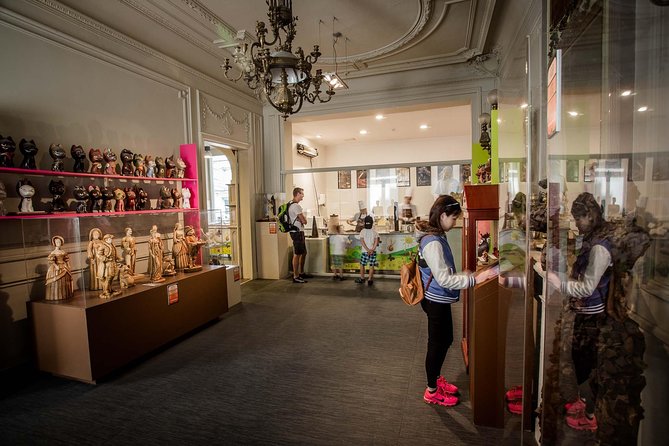
The museum has 80 information boards and more than 1,000 historic objects. You will see displays connected with cocoa growing, early preparation methods, chocolate production, and the equipment used by chocolatiers. The objects give the story a physical shape, especially when paired with the audio explanations.
Do not expect a working chocolate factory with large production lines. This is mainly a museum about the history and making of chocolate, with a demonstration at the end.
More Chocolate Museums in Belgium
- Bruges: Choco-Story Chocolate Museum Guided Tour w/Tastings
★ 4.2 · 1,379 reviews - Bruges: Chocolate Making Workshop and Chocolate Museum Entry
★ 4.6 · 395 reviews - Chocolate Workshop at Choco-Story Brugge
★ 5.0 · 84 reviews
From Mayan cocoa drink to Belgian praline
The central story begins with the Mayans, who prepared cocoa as a spicy drink rather than the sweet chocolate most of us know. The museum then follows cocoa as it reached Europe, first through Spain and later France, before Belgium became famous for its chocolate-making tradition.
That historical arc is useful because it explains why chocolate is not simply a Belgian invention. Belgium’s reputation grew from later production methods, skilled confectionery, and the popularity of pralines. The displays connect older cocoa traditions with modern gourmet chocolate and show how machinery changed the trade.
The museum gives you plenty to listen to, but the level of historical detail may not suit everyone. If you already know a great deal about cocoa, you may find parts of the early history familiar. The treatment of sugar, colonial trade, and the human cost behind cocoa production also feels limited for visitors looking for a fuller critical account.
I would approach the museum as an accessible introduction rather than the final word on chocolate. It works well for a first look, particularly if you want a break from Bruges churches, canals, and art museums. It is less satisfying if you want a serious examination of global cocoa economics or colonial history.
How the self-guided audio visit works
At the entrance, you receive a small audio device. You tap the relevant icon or number and listen as you move around the museum. The system lets you choose how much time to spend at each station, so you can skip material or linger when a subject catches your attention.
This is one of the experience’s strengths. You are not tied to a group schedule, and you can move at a comfortable pace. An adult who wants to hear every explanation can take the full 90 minutes or more, while someone making a quick stop can keep the visit shorter.
The downside is clear: there is no human guide leading the tour. If you prefer conversation, questions, and lively commentary, a series of recorded presentations can feel flat. A few audio units may also be unreliable, so check that yours works before you get too far into the museum.
The children’s version uses lower information boards and display cases. A child-friendly audio option is also available, and the shorter reach to the exhibits helps younger children take part. Still, the museum has plenty of listening and reading, so children who need constant action may lose interest. The chocolate-making demonstration is likely to be the strongest part for them.
The objects and displays across four floors
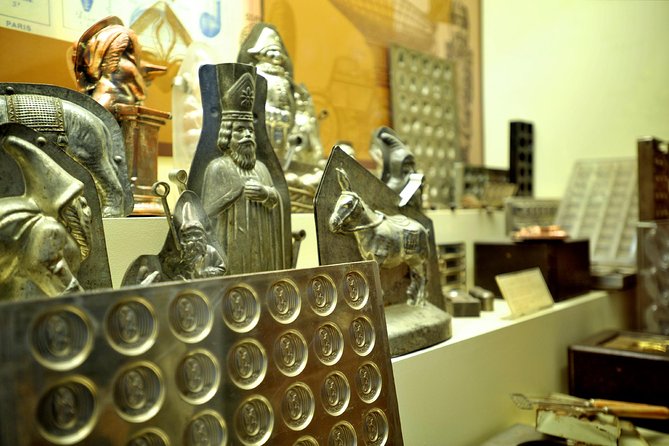
The museum’s collection is the main reason to come if you want more than a quick sugar hit. More than 1,000 objects explain how cocoa was processed and how chocolate equipment changed across time.
You will encounter historic tools and modern production ideas rather than simply rows of finished chocolates. The exhibits help explain why Belgian chocolate became so closely linked with quality and craftsmanship. The comparison between older hand methods and modern equipment is especially helpful because it shows how chocolatiers gained speed and consistency.
The 80 information boards provide a lot to read. You can treat them as a detailed lesson or use the audio device to pick the subjects that interest you most. Since the museum is self-paced, you do not have to absorb every panel to enjoy the visit.
The displays are also designed to show how chocolate moved from a bitter or spiced drink toward the sweet products sold today. That change is a good reminder that familiar foods often have surprising origins.
More Chocolate Museums in Bruges:
- Lindt Home of Chocolate Museum Entry Ticket
★ 4.7 · 9,329 reviews - Choco-Story Brussels: Chocolate Museum Entrance with Tasting
★ 4.3 · 4,883 reviews - Cologne: Chocolate Museum Entrance Ticket
★ 4.4 · 2,790 reviews - Vienna: Chocolate Workshop in Chocolate Museum w/ Tasting
★ 4.5 · 1,802 reviews
The praline demonstration and chocolate tasting
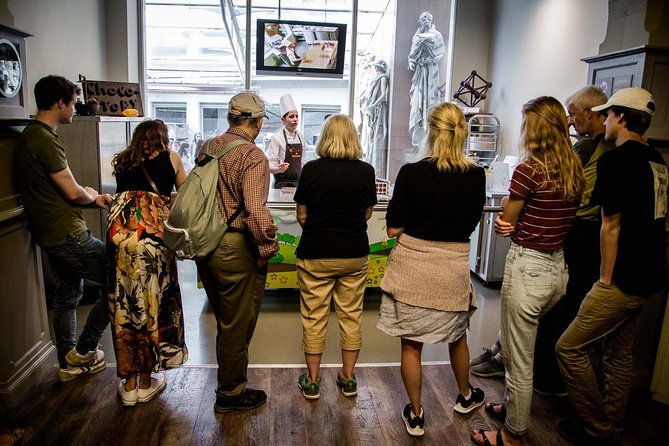
The visit ends with a live demonstration of Belgian chocolate sweets. A chocolatier shows how filled chocolate, or praline, is made. This is the most hands-on part of the experience and the moment many people anticipate.
Demonstrations take place at set intervals, reportedly every 15 minutes. A clock indicates when the next session begins. Plan to stay for it rather than arriving at the demonstration area between sessions and assuming it has been canceled.
Each person receives one freshly made praline during the demonstration. You do not need to buy a box to receive it. This is worth knowing because the tasting is sometimes misunderstood. The fresh praline is one portion per person, while the chocolate from the dispensers is available separately.
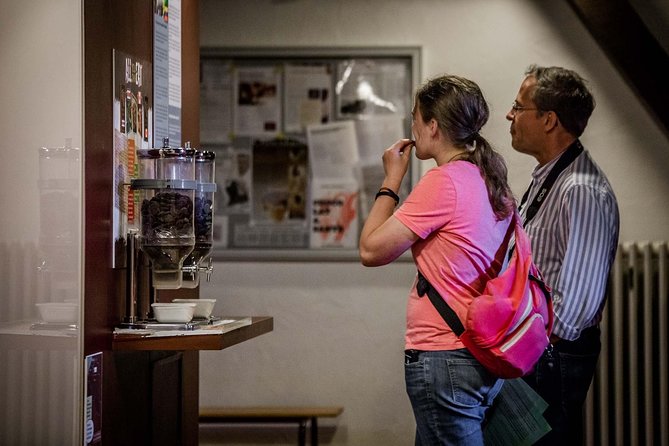
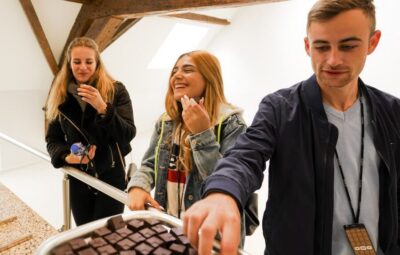
At the end, four dispensers offer chocolate pieces that you can take yourself. The portions are self-service, and the museum describes them as all-you-can-eat. That setup is simple, though it may not feel as polished as a formal tasting with several types explained by a chocolatier.
The museum says the dispenser chocolate is Belgian couverture chocolate, the kind used by chocolatiers to make pralines. The presentation is not fancy, and the dispensers can look untidy during busy periods, but they provide more than the single praline. Bring realistic expectations: this is a sample station, not a sit-down chocolate tasting.
Crowds, timing, and the best way to visit
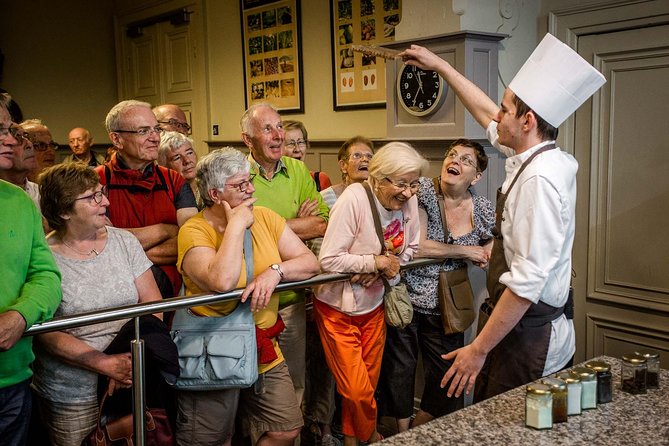
Crowding is the biggest practical issue. Weekends, school holidays, summer visits, and rainy days can fill the museum. When several groups occupy the same floor, it may be difficult to see an object or hear the demonstration clearly.
I would aim for early morning if your schedule allows. You can also use the four floors to move away from a crowded section, but the building’s narrow rooms limit how much space there is. If the demonstration matters to you, check the clock soon after arrival and plan the rest of your visit around the next session.
The advertised duration is about one hour and 30 minutes. That is a sensible target for a normal visit, though your timing depends on how closely you follow the audio guide. A rushed five-minute visit will miss most of the value. The museum rewards a steady pace, with enough time to listen, inspect the objects, and watch the chocolatier.
The attraction is near public transportation, but transportation to and from the museum is not included. If you are arriving from a coach drop-off, check the walking distance before setting out. Bruges is compact in the center, yet a long walk can be tiring when your day already includes several stops.
Is $19.22 good value?
At about $19.22 per person, this is not a cheap chocolate sample. The price pays for access to the museum, the audio visit, the historic setting, the collection, the demonstration, and the tasting.
I think the value depends on your expectations. For someone who wants a clear, self-guided introduction to cocoa and Belgian chocolate, the combination is fair. You receive enough material for 90 minutes, and the live demonstration gives the visit a proper finish.
It feels less worthwhile if you mainly want free chocolate or expect a guided factory tour. The tasting is modest, with one fresh praline and self-service pieces from dispensers. The audio tour also means you are doing much of the work yourself.
Compared with a short chocolate shop stop, the museum offers much more context. Compared with a specialist food tour led by a chocolatier, it offers less personal contact and less tasting detail. I would book it for the history and objects first, with the chocolate samples as a welcome extra.
The experience is offered in English, and confirmation is provided at booking. It is commonly reserved well ahead of time, with bookings averaging about 16 days in advance, so booking early is sensible during busy periods. Free cancellation is available until 24 hours before the start time. Within 24 hours, the amount paid is not refunded.
Who will enjoy Choco-Story most?
I would recommend it to adults who enjoy food history, families with children who like chocolate, and anyone looking for an indoor activity in Bruges. The child-friendly boards and audio option make it more workable for families than a standard text-heavy museum.
It suits you especially well if you like to set your own pace. You can listen to every explanation, skip familiar material, and pause at the sections that interest you. The old building and the chocolate demonstration add variety to what could otherwise be a straightforward museum visit.
You may want to skip it if you strongly dislike audio guides or prefer a host who talks with the group. It is also not the best choice if your main interest is modern chocolate tasting, a factory production line, or a detailed discussion of colonial trade.
Most people should allow the full 90 minutes. Children under 12 may need encouragement, although younger children can enjoy the audio and the final demonstration if chocolate holds their attention.
Should you book this chocolate museum?
Book Choco-Story if you want a compact, indoor Bruges activity that combines cocoa history, old chocolate-making objects, and a live praline demonstration. Time your arrival so you can watch the chocolatier, and do not confuse the self-service chocolate dispensers with a formal tasting menu.
I would call it a good, not essential, Bruges stop. The strongest parts are the old building, the large collection, the flexible audio guide, and the praline demonstration. The weak points are crowding, limited seating, recorded rather than personal guiding, and a tasting setup that may feel basic for the price.
If you are curious about how chocolate became Belgian, you have children with you, or you need a rainy-day plan, the ticket is reasonable. If you want a rich sampling session or a critical study of cocoa’s global story, spend your money elsewhere.
FAQ
Where is Choco-Story located?
Choco-Story is located in Bruges, Belgium, inside a 15th-century building.
How long does the visit take?
The visit takes approximately one hour and 30 minutes, depending on how much of the audio material and displays you choose to explore.
Is the experience guided by a person?
No. The visit is self-guided with an audio device. The museum also includes a live chocolate-making demonstration.
Is the audio guide available in English?
Yes. The experience is offered in English.
What can I see inside the museum?
You can see more than 1,000 historic chocolate-making objects, 80 information boards, and displays covering cocoa and chocolate from the Mayan period to modern production.
Is chocolate tasting included?
Yes. Food tasting is included. The visit includes chocolate from self-service dispensers and one freshly made praline during the demonstration.
Are children allowed to visit?
Yes. Children must be accompanied by an adult. The museum provides lower information boards, lower display cases, and a child-focused version of the visit.
Can I cancel for a full refund?
Yes. You can cancel at least 24 hours before the experience starts for a full refund. Cancellations or changes made within 24 hours are not refunded or accepted.
Newest chocolate tours around Bruges
- Bruges: Belgian Beer Tour with Chocolate Pairing★ 4.4 · 32 reviews
- Bruges: Walking Tour with Hot Chocolate & Chocolate Tasting★ 3.2 · 28 reviews
- Belgian Chocolate Truffle Making Workshop in Bruges★ 5.0 · 49 reviews
- Unique Belgian Chocolate Making Workshop in Bruges★ 5.0 · 47 reviews
- 2-Hour Medieval Walk and Chocolate Tasting in Bruges★ 5.0 · 48 reviews
- Bruges: History, Chocolate and Beer Walking Tour★ 4.9 · 65 reviews
- Medieval Tour in Bruges with Chocolate Tasting★ 5.0 · 71 reviews
- Chocolate Workshop at Choco-Story Brugge★ 5.0 · 84 reviews
Chocolate Museums, compared.
Choco-Story Brussels: Chocolate Museum Entrance with Tasting
Read our review →
Chocolate Workshop in Chocolate Museum w/ Tasting
Read our review →
Choco-Story Chocolate Museum Guided Tour w/Tastings
Read our review →
Guided Walking Tour and Chocolate Museum Ticket
Read our review →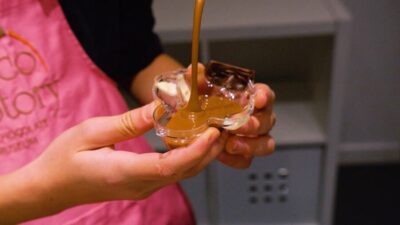
45-minute Chocolate Making Workshop at Choco-Story
Read our review →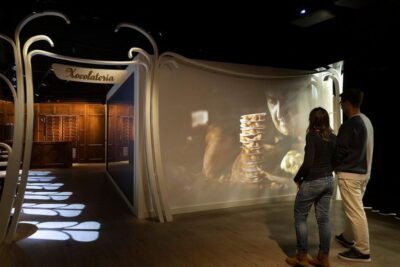
Browse the lists this tour appears in