
Review · CACAO FARM TOURS
Cuenca to Guayaquil one-way tour with Cajas Park and a Cacao Farm visit
The best part of this Cuenca to Guayaquil transfer is that it turns a necessary drive into a proper day out. You leave the high Andes at Laguna La Toreadora, walk among lakes and Polylepis trees, cross into the warmer lowlands, and finish at a family cacao farm before hotel or airport drop-off in Guayaquil.
I like the small-group feel, which makes it easier to adjust the hike, lunch, and stops to your pace. I also like the contrast between Cajas’ cold, misty moorland and the hot lowlands, where you taste fruit and fresh cacao. Guides such as Wilson, Genero, Luis, and Javier have been praised for their plant knowledge, safe driving, and patience.
The main caution is that this is still a long road day, usually six to eight hours, and weather can change the Cajas portion. The $73.99 price does not include the $15 cacao farm entrance, and lunch and guide service depend on the option you select.
Key points to know before you book
- Cajas comes first: You visit Laguna La Toreadora and can hike through Polylepis forest, moorland, and lakes.
- The route crosses two very different regions: Start in the high Andes, then descend toward Ecuador’s warmer coastal lowlands.
- Cacao Loma is a hands-on stop: You can taste fresh cacao pulp and see how local craft chocolate is made.
- This is more than a transfer: Your luggage and transport move with you, while the day adds food, scenery, and local contact.
- The price needs a close look: Cacao Loma costs $15 extra per person, and lunch is included only when that option is selected.
- Weather matters: Fog and poor visibility can affect Cajas, and the operator may change or cancel the outing when conditions are unsuitable.
Why this transfer is worth considering
The usual trip between Cuenca and Guayaquil is mainly a way to get from one city to the other. This version gives you a reason to slow down. You still reach Guayaquil, but along the way you see one of Ecuador’s most striking mountain parks and visit a working family farm.
I especially like the route’s clear change in climate. Cuenca sits high in the Andes, where cool air, lakes, and moorland define the day. After crossing the continental divide, the road drops toward warmer country with tropical fruit and cacao. In a single outing, you get a useful introduction to Ecuador’s Sierra and Costa.
The experience is offered for a maximum of 15 people, with smaller or private options available. For one to five passengers, the bilingual guide also drives. Larger groups receive both a driver and a bilingual guide. That setup matters on a winding mountain road, since the person explaining the plants and history is not always trying to manage a bigger vehicle at the same time.
The tour carries a 4.9 out of 5 rating from 50 ratings, with 98 percent recommending it. The strongest praise centers on the guides, safe driving, the Cajas walk, and the cacao farm. One poor experience involved the cacao visit being missed without advance notice, so it is sensible to confirm that Cacao Loma is on your day’s schedule before setting off.
More Cacao Farm Tours in the world:
- Lahaina: Maui Ku’ia Estate Guided Cacao Farm Tour and Tasting
★ 5.0 · 1,103 reviews - Award Winning Farm Tour: Coffee, Chocolate and Unique Gifts
★ 5.0 · 484 reviews - Lahaina: Maui Ku’ia Estate Guided Cacao Farm Tour & Tasting
★ 4.8 · 137 reviews
Laguna La Toreadora and the high country of Cajas
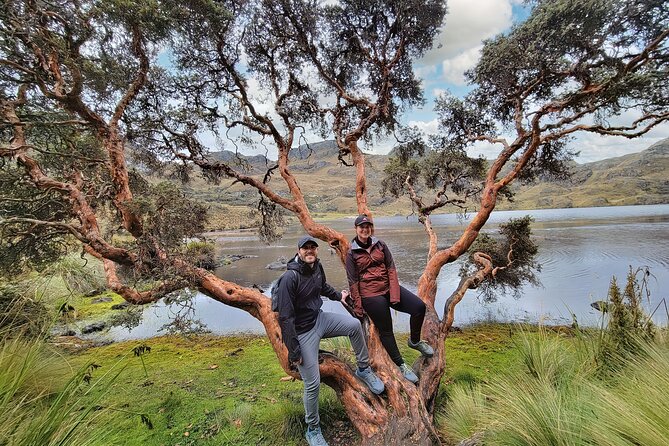
From Cuenca, the road climbs into Cajas National Park and reaches the area around Laguna La Toreadora. The stop lasts about 90 minutes, including time for the optional walk. Cajas is one of southern Ecuador’s key protected areas and supplies much of Cuenca’s water, so this is not just a scenic roadside pause.
The setting is high, cool, and often changeable. You might find mist, strong cloud cover, or clear views across the lakes. One guide had to drive through fog so thick that visibility was almost nonexistent, yet the journey continued calmly and safely. That story is a useful reminder to bring a warm layer and rain protection even if Cuenca begins with good weather.
The walk can include Polylepis forest, moorland, and lakes. Polylepis trees have twisted trunks and peeling bark, giving the forest an unusual appearance. You do not need to treat this as a serious mountain trek, but you should be comfortable walking on uneven ground and in high-altitude conditions.
The optional nature of the hike is helpful for mixed groups. A family with small children and an older relative received adjustments from the guide, and another guide changed the plan because of poor weather. Still, you should not book this expecting a fixed walking route with guaranteed clear views. Cajas is at its best when conditions cooperate, but the weather can be the day’s boss.
The Cajas section is the strongest reason to choose this transfer instead of a direct ride. It gives you time to see the protected high country and, as promoted, hike through a UNESCO World Heritage Site before descending toward Guayaquil.
Crossing the continental divide
After Cajas, you continue across the continental divide and begin the long descent toward the lowlands. The scenery changes gradually, and the road itself becomes part of the experience. Stops may be made for views when weather allows.
This is where a good guide adds real value. Wilson was praised for explaining local plants and history, while Genero pointed out viewpoints and shared facts about vegetation in the park. Javier was also noted for his understanding of plants and wildlife. You are not simply sitting in a van watching the scenery pass. You can ask what grows at different elevations and how the highlands differ from the warmer country below.
The van has air conditioning and provides end-to-end transport. That is a practical advantage if you have luggage, are changing hotels, or need to reach the Guayaquil airport. You do not have to arrange separate buses, taxis, and farm transfers, and you can request drop-off at a Guayaquil hotel, the airport, or another city location.
The trade-off is time. This is not a quick point-to-point shuttle. Stops, the hike, lunch, and the farm visit stretch the trip to roughly six to eight hours. If you need to be at the airport by a firm deadline, allow extra time and confirm your drop-off plan in advance.
Lunch at Mestizo Restaurant
The lunch stop at Mestizo Restaurant lasts about an hour. Trout is the house specialty, but vegetarian and vegan choices are available. You should give the operator your dietary requirements when booking so the guide can advise you during the day.
The restaurant also provides another viewpoint over the Andes. That makes the stop more useful than a quick meal in an ordinary roadside place. You get a break from the van, a chance to eat, and another look at the mountain country before the route drops into the lowlands.
Lunch is included only if you choose the lunch option. The base price is listed at $73.99 per person, so check exactly what your selected package covers. One group skipped lunch, and another found the stop unavailable around Christmas. Opening hours and holiday schedules can affect the plan, so it is wise to ask about the lunch arrangement if your trip falls near a major holiday.
If you are vegetarian or vegan, this stop should still be workable, but do not leave the matter until the day itself. Dietary details are specifically requested at booking.
More Chocolate Tours in the world:
- Lindt Home of Chocolate Museum Entry Ticket
★ 4.7 · 9,329 reviews - Choco-Story Brussels: Chocolate Museum Entrance with Tasting
★ 4.3 · 4,883 reviews - Zurich: City Tour, Cruise, and Lindt Home of Chocolate Visit
★ 4.5 · 4,624 reviews - The Chocolatarium Chocolate Tour Experience in Edinburgh
★ 5.0 · 4,322 reviews
Fruit at the Puente de las Frutas de Tamarindo
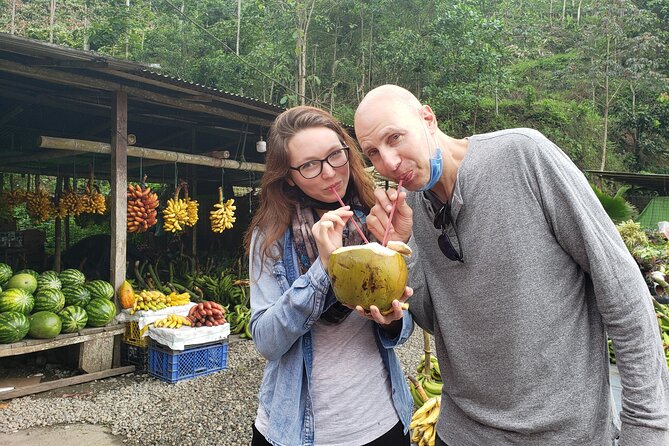
The fruit-market stop is brief, about 15 minutes, but it adds a lively local touch. You can sample fruit if you wish and see produce that forms part of everyday Ecuadorian food.
Expect familiar names in a different form, including bananas, mandarins, coconut, dragon fruit, and passionfruit. The point is not a formal tasting class. It is a quick chance to try fruit close to where it is grown and to see how the warm lowlands differ from the cold high country you visited earlier.
The short timing is both a strength and a limitation. You get a taste of local life without turning the transfer into a shopping excursion, but you will not have much time to browse. If fruit and markets are a major interest for you, ask the guide how much time is available that day.
This stop also helps the route make sense. Cajas shows you high-altitude ecosystems. The market shows what grows at a lower elevation. Together, the two stops make the change from Sierra to Costa easy to see and taste.
Cacao Loma and the making of chocolate
Cacao Loma is the most distinctive stop on the route. You visit a local family farm where cacao is the main crop, along with breadfruit, coffee, passionfruit, pineapple, and other products. The visit lasts about 30 minutes according to the planned schedule, though the exact pace can depend on the family and the group.
You can taste the pulp around fresh cacao beans, learn how cacao is processed, and try handmade chocolate if you wish. This matters because chocolate normally reaches you in a finished bar, far removed from the fruit that produced it. Here, you see the starting point and hear about local customs and the farm family’s way of life.
The cacao visit received some of the warmest praise in the experience. One family said it changed how they experienced chocolate, while another group valued meeting the family and taking part in the chocolate-making process. That is the kind of contact that makes this more than a scenic drive.
Cacao Loma costs an additional $15 per person. That fee is not included in the $73.99 tour price, so include it when comparing this option with a direct bus or private transfer. I think the fee is worthwhile if you care about food production and local family businesses. If you have already visited several cacao farms, the stop may feel less essential.
There is one important practical point: make sure the cacao farm is confirmed for your date. A past booking did not include the farm visit, and the guide did not have it on the working schedule. The operator should explain any change before departure, but you can protect yourself by checking the plan directly.
Guides, vehicles, and the feel of the day
The guides are a major part of the experience. Wilson has been praised for patience, Spanish practice, local history, and plant knowledge. Genero was valued for his calm driving, viewpoint choices, and information about park vegetation. Luis was described as friendly and informative, while Javier was praised for explaining plants and wildlife.
That range of feedback suggests that the guide can shape the day. You get the most from the route if you ask questions rather than treating the vehicle as a silent shuttle. The guides can also adjust the outing for weather, children, older family members, or a group that wants to skip a particular stop.
Transportation is by private air-conditioned van. With one to five people, the bilingual guide also drives, which keeps the group small but means one person is doing two jobs. With more than five passengers, a separate driver and guide are provided. The maximum group size is 15.
The service includes hotel pickup and drop-off. The listed starting point is at Simón Bolívar 832 in Cuenca, and the stated Guayaquil endpoint is on Avenida 9 de Octubre. You can also arrange another hotel within Guayaquil city, the airport, or a different location by contacting the operator.
What the $73.99 price really buys
At $73.99 per person, this is best judged as a combined transfer and sightseeing day, not as a standard guided park visit. You are paying for private van transportation, pickup and drop-off, a bilingual guide if selected, and several stops along a route you already need to travel.
The value is strongest if you want to avoid losing a day to transport. Cajas admission is included at the first stop, while the cacao farm costs $15 extra. Lunch is included only with the relevant option, so compare the final checkout price rather than relying on the headline fare.
A direct bus will likely offer a simpler and cheaper point-to-point journey, but it will not include the Cajas walk, fruit stop, or family farm. A fully private transfer may offer more flexibility, but this tour gives you a structured day without having to plan each stop yourself.
The price works especially well for couples, families, and small groups who value convenience. Solo travelers should note that a minimum of two people per booking is required, even though the experience can be operated for small groups once that minimum is met.
Weather, timing, and small details that matter
The Cajas portion depends on weather. Fog, rain, and poor visibility may change the views or the walking plan. If the experience is canceled because of poor weather or because the minimum number is not met, you can choose another date or receive a full refund.
Most people can take part, but you should be ready for a long day with time in a mountain park and an optional hike. Bring layers and sensible walking shoes. Those suggestions follow directly from the high, cool setting and the changing weather, not from any promise of a particular trail.
Confirmation is provided at booking. You must provide each participant’s passport name, number, and nationality. Free cancellation is available up to 24 hours before the start time. Changes or cancellations inside that 24-hour window are not accepted for a refund.
Who should book this Cuenca to Guayaquil tour?
I would choose this trip if you want to connect Cuenca and Guayaquil while seeing a major natural area along the way. It suits you if you enjoy short walks, local food, plant life, mountain views, and a small family-run farm more than a fast, anonymous transfer.
Families can benefit from the flexible pace, especially when children or older relatives are in the group. Couples and friends get a full day without having to rent a car or manage the route. Solo visitors should first confirm that another person is joining the booking, since two people are required.
I would think twice if you need the fastest possible journey, dislike changing plans because of weather, or have already visited several cacao farms and only want transportation. You should also confirm the lunch and Cacao Loma arrangements before departure.
Should you book it?
Yes, if your transfer date is flexible and you want to see more of Ecuador in one day. The Cajas walk, changing mountain-to-lowland scenery, fruit tasting, and cacao farm give the journey real purpose, while the van and drop-off service keep the logistics simple.
Book it with three checks in mind: confirm whether lunch and the bilingual guide are included in your chosen option, add the $15 cacao entrance fee to your budget, and verify that the farm visit is scheduled. If those details suit you, this is a smart way to travel between Cuenca and Guayaquil without wasting a day on the road.
FAQ
How long does the Cuenca to Guayaquil tour take?
The experience lasts approximately six to eight hours, depending on the route, stops, weather, and group pace.
Is this a one-way tour?
Yes. It operates as a one-way trip between Cuenca and Guayaquil, or in the reverse direction.
Where does the tour start in Cuenca?
The stated meeting point is Simón Bolívar 832 in Cuenca, Ecuador.
Where can I be dropped off in Guayaquil?
Drop-off is available at the stated Avenida 9 de Octubre address, a hotel within Guayaquil city, the airport, or another agreed location in the city.
Is transportation included?
Yes. Transportation is provided in a private air-conditioned van, along with hotel pickup and drop-off.
Is a guide included?
A tour guide and driver are included if that option is selected. For one to five passengers, a bilingual guide also drives. Groups larger than five receive a separate driver and bilingual guide.
Is lunch included?
Lunch is included only if you select the lunch option. Mestizo Restaurant serves trout and also has vegetarian and vegan choices.
Is the cacao farm entrance included?
No. The entrance to Cacao Loma costs $15 per person and is not included in the listed tour price.
Do I need to hike at Cajas National Park?
The hike at Laguna La Toreadora is optional. The planned visit can include Polylepis forest, moorland, and lakes.
How far in advance can I cancel?
You can cancel up to 24 hours before the experience begins for a full refund. Cancellations or changes made less than 24 hours before the start time are not accepted for a refund.
Newest chocolate tours around the world
- Bohol Chocolate Making and Farm Tour★ 5.0 · 2 reviews
- Big Island Hawaii: Craft Chocolate Tasting and Farm Tour★ 5.0 · 14 reviews
- Bogotá: Candelaria Tour with Cacao and Coffee Workshop★ 5.0 · 3 reviews
- Bordeaux: Chocolate and Pastry Food Tasting Tour★ 4.9 · 40 reviews
- Barossa: Enjoy Wine, Lunch, Brewery, Chocolate & Wildlife★ 4.5 · 26 reviews
- Chocolatier for a day: raw bean to bar chocolate in Modica★ 5.0 · 33 reviews
- Bern: Gruyères Cheese and Cailler Chocolate Tasting Tour★ 4.7 · 3 reviews
- Barcelona: Delicious Chocolate walking tour★ 5.0 · 2 reviews
Cacao Farm Tours, compared.
Maui Ku’ia Estate Guided Cacao Farm Tour and Tasting
Read our review →
Award Winning Farm Tour: Coffee, Chocolate and Unique Gifts
Read our review →
Boti Falls, Umbrella Rock, Aburi Gardens & Cocoa Farm Tour
Read our review →
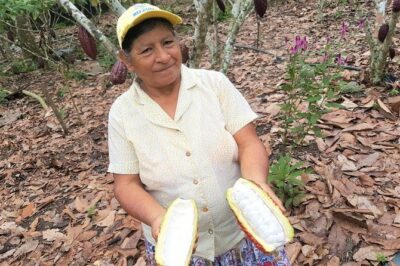
Guayaquil to Cuenca one-way tour with Cajas Park and a Cacao Farm visit
Read our review →
Floating Market, Canal, Cacao Farm & Mekong’ Life
Read our review →
Experience Boti Waterfalls, Aburi Botanical Gardens & Tetteh Quarshie Cocoa Farm
Read our review →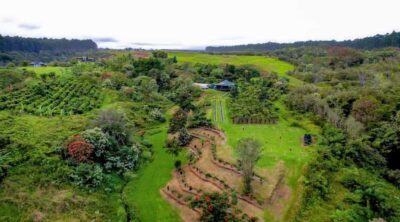
Big Island Hawaii: Craft Chocolate Tasting and Farm Tour
Read our review →Browse the lists this tour appears in