Review · CHOCOLATE TOURS
A Visit To KIBERA The Chocolate City.
Kibera is not a backdrop for sightseeing. It is a home, a workplace, and a community of people making daily life work with limited resources. This three-hour walking tour takes you through the area with a local guide, beginning at Olympic Primary School and ending in Olympic Estate.
I like the direct local perspective, especially the chance to hear about Kibera from someone connected to the community. I also like that public transport is part of the outing, since it shows you a small piece of how people move through Nairobi rather than keeping you inside a tourist bubble. The main consideration is that this is a walking tour through narrow paths and busy living areas, so it is not suited to everyone.
Key points at a glance
- Local guides with personal ties: Guides named Moses and Musa are associated with the tour, and the experience can include personal stories about family and home life.
- A real walk through Kibera: You move through local districts rather than viewing the area from a vehicle.
- Chocolate City visit: The tour includes a stop at Chocolate City, one of the named highlights of the route.
- Public transport included: You use public transport as part of the trip to Kibera.
- Small price, substantial context: At $20 per person, the tour offers three hours of local explanation and access without a separate entry fee.
- Practical limits: The route is not suitable for wheelchair users, visually impaired people, babies under one year, children under five, or people over 95.
Why this Kibera walk matters
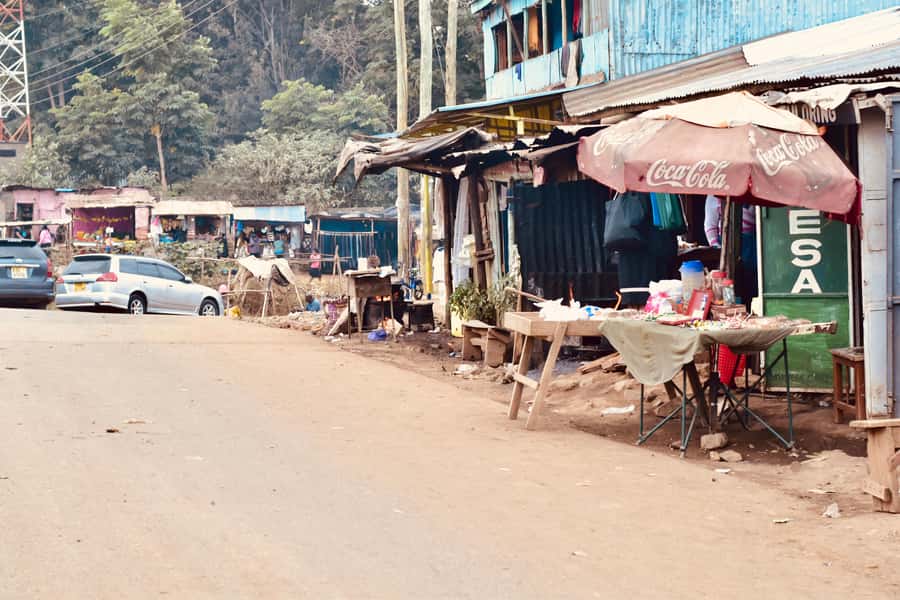
Kibera is often reduced to a single label: slum. That word tells you very little about how people actually live there. This tour gives you a closer look at the streets, homes, workplaces, food stalls, and local institutions that make up daily life in one of Africa’s largest informal settlements.
I value the fact that the tour focuses on people and routines, not just hardship. Your guide explains the problems facing the area, while also pointing to the ways residents respond to them. The aim is to show Kibera as it is, with serious challenges, practical creativity, and plenty of ordinary life.
That balance matters. A short visit can easily turn poverty into a spectacle. A local guide helps provide context and tells you where to look, how to behave, and what a particular place means. You are not simply passing through with a camera. You are being asked to listen and pay attention.
The tour also discusses efforts by local groups and government agencies to improve infrastructure and living conditions. You should not expect a tidy success story. Instead, you get a picture of a place still dealing with major needs while people continue to build lives and support one another.
More Chocolate Tours in the world:
- Lindt Home of Chocolate Museum Entry Ticket
★ 4.7 · 9,329 reviews - Choco-Story Brussels: Chocolate Museum Entrance with Tasting
★ 4.3 · 4,883 reviews - Zurich: City Tour, Cruise, and Lindt Home of Chocolate Visit
★ 4.5 · 4,624 reviews
Starting at Olympic Primary School
The meeting point is the main gate of Olympic Primary School. This is a useful, clear place to begin, but you should plan to arrive ready for a walking tour rather than expecting a formal visitor center or ticket booth.
The route begins with a safety briefing and an introduction to the area. That early explanation is important because Kibera is made up of many sections, paths, and local reference points that may not mean much to you at first. Your guide helps put the surroundings into context before you move farther into the neighborhood.
You may also meet at a mall before using public transport to reach Kibera. The supplied details identify Olympic Primary School as the starting location, while the meeting information says the guide will meet you at the school’s main gate. Confirm the precise arrangement when you book so you know where to go first.
The tour has a personal tone. Guides named Moses and Musa are connected with the experience, and the strongest feedback centers on their friendly manner, clear explanations, and close connection to the neighborhood. One guide has taken visitors to see parts of his home and family life, which gives the tour a personal layer that a standard city excursion cannot easily provide.
Using public transport to Kibera

Public transport is included as part of the experience. That detail may sound minor, but it changes the character of the outing. Instead of arriving in a private vehicle, you get a brief look at the everyday movement involved in reaching Kibera.
For you, this means the tour is not entirely controlled or polished. Public transport can be less predictable than a private transfer, and the route may feel more active and crowded. That is part of the point, but it also means you should allow yourself time, wear practical clothes, and follow the guide’s instructions.
The guide handles the local details, including where to go and how to move through the area safely. You should stay with the group and avoid wandering off to take photographs. The experience is safest and most respectful when you treat it as a guided visit to a living neighborhood, not an open-air attraction.
Walking through Kibera’s local districts

The central part of the tour is on foot. You move through narrow pathways and see sections of Kibera that are not visible from the main roads. The pace allows your guide to stop, explain, and answer questions as you go.
This is where the tour earns its value. You can learn how residents handle limited resources, how local businesses operate, and how homes and public spaces fit into daily routines. The experience may include a visit to a house, a pub, a factory, and other community locations, though the exact stops can vary.
You will also have time for local snacks and a food market visit. These are practical stops, not decorative extras. Food markets show the everyday side of the area, while a snack gives you a simple way to take part without turning the visit into a formal meal.
I like this mix of walking and conversation. A lecture about poverty can leave you with figures but little sense of place. A walk through the community, guided by someone who knows it, gives those issues a human scale.
The drawback is that the setting may feel confronting. Paths can be narrow, conditions can be basic, and you are likely to see the effects of limited infrastructure. If you prefer highly polished sightseeing, this will not be your kind of tour. If you want a more honest look at Nairobi, it can be worthwhile.
Same city, a different tasting:
- The Chocolatarium Chocolate Tour Experience in Edinburgh
★ 5.0 · 4,322 reviews - Award-Winning Geneva Chocolate &Old Town Tour with Boat Ride (3h)
★ 5.0 · 3,721 reviews - Melbourne: Yarra Valley Wine, Gin, Whisky and Chocolate Tour
★ 5.0 · 3,667 reviews - 4×4 Dominican Adventure with Chocolate and Coffee Tasting
★ 5.0 · 2,920 reviews
Chocolate City and Kibera’s identity

Chocolate City is one of the named highlights of the visit. The supplied details do not define it as a museum or a single formal attraction, so you should think of it as a local stop within the wider walk rather than a ticketed sight with a standard visitor display.
Your guide explains its place in Kibera and helps you understand the area beyond the name. The larger purpose is to see the identity of Kibera through its people and streets, not simply to collect a few photographs of a famous neighborhood.
That is an important distinction. The tour is not designed around grand monuments. Its points of interest are the places where people live, work, eat, meet, and try to improve their surroundings. Chocolate City fits into that kind of experience.
You may find the visit especially useful if you have already seen Nairobi’s better-known attractions and want to understand more about the city’s social and economic range. It gives you a different view of Nairobi, one shaped by local routines rather than official landmarks.
Homes, workplaces, and everyday resilience
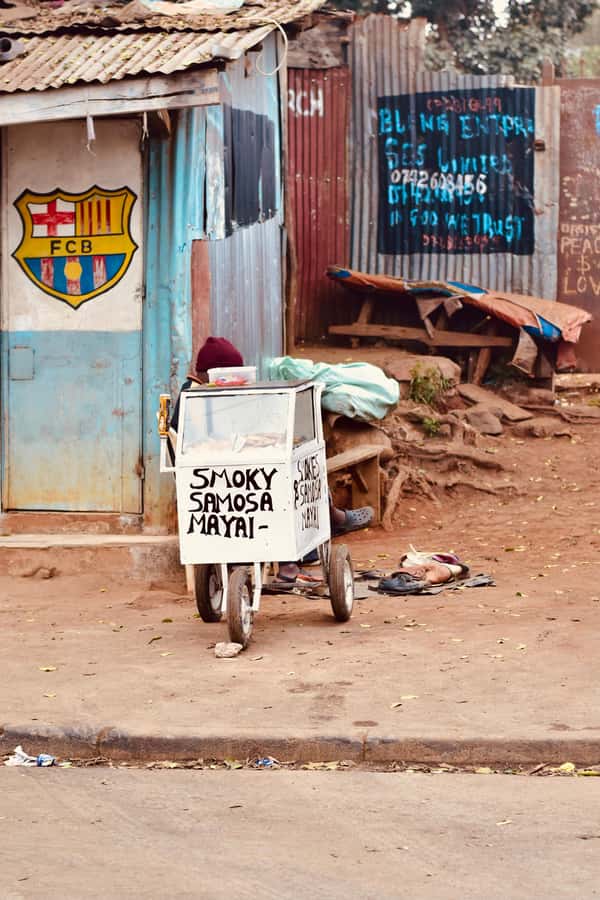
The tour can include a home and a factory, based on the route and the guide’s connections. Seeing these spaces helps you understand how living and working areas overlap in an informal settlement.
A home visit requires good manners. Listen first, ask before taking photographs, and accept that some places may not be appropriate to photograph at all. The guide’s role is especially important here, since a personal connection does not remove the need for respect.
A factory or local workplace gives you another angle. You see that Kibera is not only a residential area or a place of need. People work there, sell goods, provide services, and support their families. The tour’s strongest message is that limited resources do not erase ambition or skill.
The pub stop, when included, adds another ordinary detail. It may seem less important than a community project, but ordinary places are often what make a visit feel grounded. You get a sense of where people relax and socialize, not just where problems are discussed.
Safety, manners, and the right attitude

The experience includes a safety briefing, and you should take it seriously. The guide knows the area and gives instructions about moving through it. Staying close to the guide is the basic rule, especially when using public transport or walking through narrow paths.
Photography needs care. Kibera is a home, not a stage. Ask before photographing people, houses, workplaces, or children. If someone declines, put the camera away without making a fuss.
Dress for walking and choose comfortable shoes. The activity lasts three hours and includes movement through local streets, a market visit, public transport, and breaks. The supplied information does not promise air-conditioned transport, smooth paths, or a private vehicle, so practical clothing is the sensible choice.
The tour is not suitable for wheelchair users or visually impaired people. It is also not suitable for babies under one year, children under five, or people over 95. Those limits reflect the physical setting and the walking-based nature of the visit.
What $20 gets you
At $20 per person, this is a low-cost way to spend three hours with a local guide. There is no separate entry fee for Kibera, and public transport is used as part of the tour. The main value is not an admission ticket. It is the guide’s time, local understanding, and ability to explain what you are seeing.
I consider the price fair if you want context rather than a quick drive-by view. You get a guided walk, transport as part of the route, local snacks, a food market visit, and access to places that would be difficult to understand on your own.
The price does not mean every part of the day is included. The details specifically mention meeting up, public transport, and access to the settlement, but do not promise a full meal, private transport, or fixed visits to every home, pub, and factory. Ask before booking if you need a precise list of stops.
The tour also offers free cancellation up to 24 hours before departure and a reserve-now, pay-later option. Those policies make it easier to fit into a Nairobi schedule, though you should still check available starting times before committing.
Who will enjoy this experience

I would recommend this tour to you if you want to understand Nairobi through local voices and ordinary places. It suits curious adults, photographers who can work respectfully, and anyone willing to listen more than speak.
It is particularly useful as a counterpoint to Nairobi’s formal attractions. You see a side of the city that is often discussed from a distance, then hear about it directly from someone connected to the neighborhood.
You should choose another activity if you need smooth access, predictable transport, or a conventional sightseeing route. The walking conditions and subject matter can be demanding. This is not a light entertainment stop, even though the guide can make it friendly and engaging.
English is the tour language. If you need another language, this experience may not fit your needs.
Should you book the Kibera Chocolate City tour?
Book it if you want a direct, respectful look at Kibera and are comfortable walking through a working community with a local guide. The three-hour format is long enough to move beyond a quick glance, while the $20 price keeps it accessible.
The best reason to go is the personal connection. Moses and Musa are associated with the experience, and the guide’s local ties can turn streets, homes, workplaces, and markets into meaningful parts of Nairobi’s story.
Skip it if you are looking for a polished attraction, private transport, or easy access for a wheelchair or very young child. For the right visitor, though, this is one of the more useful ways to see how Nairobi’s people live, work, and respond to difficult conditions.
FAQ
How long does the Kibera Chocolate City tour last?
The tour lasts three hours.
How much does the tour cost?
The listed price is $20 per person.
Where does the tour start?
The stated starting point is Olympic Primary School in Nairobi. The guide meets you at the main gate of the school.
Where does the tour finish?
The tour finishes at Olympic Estate in Nairobi, Kenya.
Is public transport included?
Yes. Public transport is used as part of the tour to Kibera.
Do I need to pay an entrance fee to enter Kibera?
No separate entry fee is needed to access the settlement.
What language is the tour conducted in?
The live guide speaks English.
Is a safety briefing included?
Yes. The itinerary includes a safety briefing before or during the visit.
Can I cancel the tour for a full refund?
Yes. You can cancel up to 24 hours in advance for a full refund.
Is the tour suitable for children and wheelchair users?
The tour is not suitable for children under five, babies under one year, wheelchair users, visually impaired people, or people over 95.
Newest chocolate tours around the world
- Bohol Chocolate Making and Farm Tour★ 5.0 · 2 reviews
- Bordeaux: Chocolate and Pastry Food Tasting Tour★ 4.9 · 40 reviews
- Big Island Hawaii: Craft Chocolate Tasting and Farm Tour★ 5.0 · 14 reviews
- Bogotá: Candelaria Tour with Cacao and Coffee Workshop★ 5.0 · 3 reviews
- Barossa: Enjoy Wine, Lunch, Brewery, Chocolate & Wildlife★ 4.5 · 26 reviews
- Chocolatier for a day: raw bean to bar chocolate in Modica★ 5.0 · 33 reviews
- Bern: Gruyères Cheese and Cailler Chocolate Tasting Tour★ 4.7 · 3 reviews
- Barcelona: Delicious Chocolate walking tour★ 5.0 · 2 reviews
Chocolate Tours, compared.
Choco-Story Brussels: Chocolate Museum Entrance with Tasting
Read our review →
City Tour, Cruise, and Lindt Home of Chocolate Visit
Read our review →
The Chocolatarium Chocolate Tour Experience in Edinburgh
Read our review →
Award-Winning Geneva Chocolate &Old Town Tour with Boat Ride (3h)
Read our review →
Yarra Valley Wine, Gin, Whisky and Chocolate Tour
Read our review →