
Review · CHOCOLATE MAKING WORKSHOPS
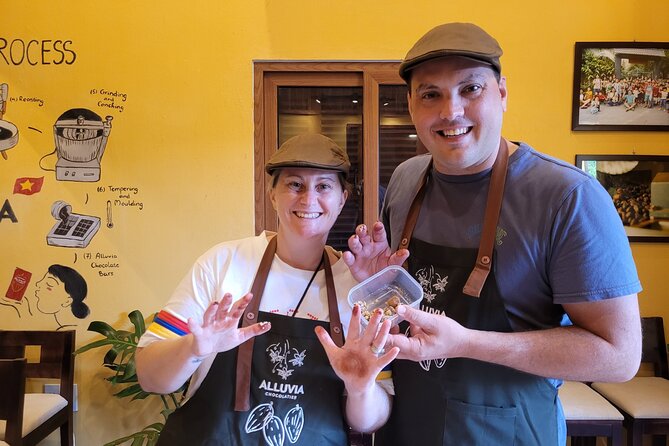
Alluvia Hoi An Chocolate Making Class
Hoi An’s Alluvia chocolate class takes you past the finished candy and into the work behind it. In about two hours, you’ll hear how cacao grows and is produced in Vietnam, then use chocolate yourself to make a bar, pralines, and truffles. The pod-to-bar lesson gives this sweet treat a useful local connection.
I like the small maximum of six people, which leaves room for hands-on instruction rather than a crowded demonstration. I also like the practical finish: you temper dark chocolate, wrap your own 30-gram bar, and pick up techniques you can repeat at home.
The main drawback is the cool classroom, kept at about 16 to 20 degrees Celsius. Bring a light jacket or wear long sleeves. Also note that the class includes one drink, but not lunch, extra desserts, or additional drinks.
Key points before you book
- Vietnamese cacao from pod to bar: Learn about the cacao tree, local production, and the steps that turn beans into chocolate.
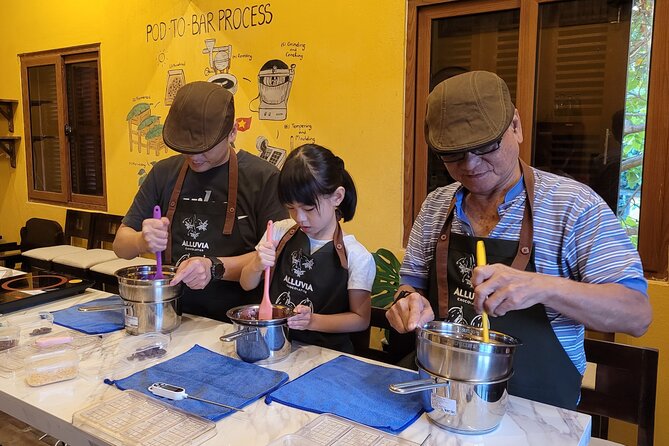
- A genuinely hands-on class: Temper dark chocolate, make a 30-gram bar, wrap it, and prepare pralines and truffles.
- Only six people maximum: The small group suits solo visitors, couples, and small groups who want direct help.
- One free drink included: Choose a coffee or tea from the menu, with water available for refill.
- Two hours at 2 p.m.: The afternoon timing fits neatly around morning sightseeing in Hoi An.
- Plan for a cool room: The classroom sits at roughly 16 to 20 degrees Celsius, so a light layer helps.
Why this Hoi An chocolate class is more than a tasting
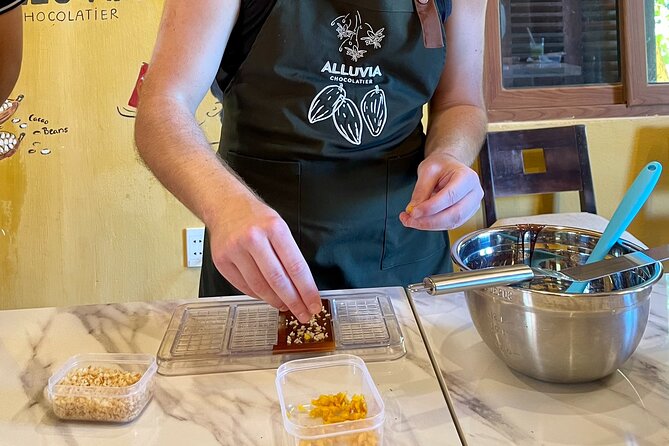
Many chocolate activities stop at sampling. This one asks you to work with the chocolate. That difference matters. You don’t just hear that temperature affects texture, you practice tempering dark chocolate and see how careful handling helps create a finished bar.
The class also gives you a look at Vietnam’s cacao trade. Cacao is not usually the first product people associate with Vietnam, so the introduction to the tree and local production adds useful context to a familiar food. You’ll learn how chocolate begins as a fruit on a cacao tree, not as a glossy bar on a shop shelf.
The format is brief but packed with practical tips. Two hours is enough time to keep the session lively without turning it into an all-day commitment. If you have only a short stay in Hoi An, the class gives you a clear activity with a finished result to take away.
More Chocolate Making Workshops in Vietnam:
- Bean to bar Chocolate Workshop in Ho Chi Minh City
★ 5.0 · 10 reviews - Ho Chi Minh City: Premium Bean-to-Bar Chocolate Workshop
★ 4.8 · 8 reviews - Da Lat: Handmade Chocolate Workshop
★ 5.0 · 4 reviews
Arriving at Alluvia Chocolate House at 2 p.m.
The meeting point is Alluvia Chocolate House, at 36 Đ. Phan Chu Trinh in Minh An, Hoi An. The activity starts at 2 p.m. and ends back at the same location, so you do not need to arrange a separate ride at the end.
The venue is near public transportation, which helps if you are staying outside the old center. The mobile ticket is useful too. Keep the booking confirmation on your phone and arrive ready to begin at the stated time.
There is no hotel pickup described, so plan to make your own way to the chocolate house. Since the session lasts about two hours, you can pair it with a morning in Hoi An and still have the evening free for dinner or a walk.
The classroom is intentionally cool, between about 16 and 20 degrees Celsius. That temperature helps chocolate remain workable, but it may feel chilly after a hot walk through town. I would pack a thin jacket rather than assume you can stay comfortable in short sleeves.
Learning about cacao in Vietnam
The opening part introduces the cacao tree and the production of cacao in Vietnam. You’ll learn about the tree’s characteristics and follow the broad path from cacao pod to chocolate bar.
This is the part that gives the class its local character. You are not simply making a generic dessert in a kitchen. You are learning how the main ingredient is grown and handled in Vietnam, then seeing how local ingredients can be used in chocolate making.
The pod-to-bar explanation also helps you understand why chocolate making takes care. The finished product hides several stages, and the class gives you a basic picture of those stages before asking you to work with chocolate yourself.
You should expect an introduction rather than an advanced agricultural course. The session is designed to be brief and useful, with tips you can remember. If you already make chocolate professionally, the material may feel basic. For most people who want a clear first look at the process, that is a sensible level.
Tempering dark chocolate by hand
The technical center of the class is tempering dark chocolate. You’ll be instructed through the process, rather than simply watching someone else do it.
Tempering is important because it affects the chocolate’s finish and texture. It requires care, and the class gives you a chance to practice that care under guidance. The dark chocolate option is part of the stated course, while milk chocolate requires a small additional payment.
This is a useful point to remember when booking. If you prefer milk chocolate, ask about the extra charge before you begin. If you are happy with dark chocolate, the included option keeps the experience straightforward.
The instructor also provides tips connected to chocolate making. These suggestions are likely to be most useful when you try the process at home, since you can repeat the basic methods with the right ingredients and equipment.
More Chocolate Tours in Vietnam:
- Can Tho: A Real Mekong Tour, Floating Market, Cacao & Life’s
★ 4.9 · 574 reviews - Cai Rang floating market, Cacao & hidden small canal
★ 5.0 · 244 reviews - Can Tho: Floating Market, Canal, Cacao Farm & Mekong’ Life
★ 5.0 · 45 reviews - Cai Rang floating market, see sunrise, CaCao orchard, small canal
★ 5.0 · 44 reviews
Making and wrapping your 30-gram bar
After the tempering lesson, you’ll make a 30-gram chocolate bar. The size is modest, but it gives you a complete project from prepared chocolate to finished piece.
You’ll also learn how to wrap the bar with paper. That small step makes the activity feel more finished. Instead of leaving with loose chocolate in a container, you leave with something presented as a proper bar.
The class supplies the equipment and ingredients for the bar, so you do not need to bring special tools. It also means you can focus on the method instead of worrying about sourcing chocolate, molds, or other materials in Hoi An.
Do not expect to produce a large quantity from the bar alone. The value is in learning the process and handling the chocolate yourself. The additional pralines and truffles add to what you make, so the total result is more generous than one 30-gram bar.
Preparing pralines and truffles
The class also covers chocolate pralines and truffles. These give you a different kind of practice from making a flat bar.
A bar teaches you about shape, wrapping, and tempering. Pralines and truffles introduce filled or formed chocolate pieces, along with the small decisions that affect their appearance and texture. The exact flavor choices are not specified, so you should expect to work with the ingredients provided on the day.
You can also use other ingredients to create your own bars, truffles, or pralines. That gives the session a creative side, although the available choices may depend on the class setup.
This part makes the experience a good fit for couples, friends, and families with an interest in food. You can compare the different shapes and finishes as you work. For solo visitors, the small group size is helpful because you still have a setting where you can ask for assistance without getting lost in a crowd.
What the small group size changes
The maximum group size is six people. That is one of the strongest practical features of the class.
Chocolate work can become frustrating when an instructor demonstrates a technique once and then moves on before you have handled the ingredients. A six-person limit gives the host a better chance to watch what you are doing and offer corrections.
It also keeps the mood more personal. Solo visitors can join without needing to form their own group. Couples can work side by side, while a small group of friends can book the activity without the feel of a large workshop.
The class is not described as private, so you may share it with other people. Still, six is small enough for a hands-on session. If having your own private class is essential, check that point before booking.
The included coffee or tea
One coffee or tea from the menu is included, along with water that you can refill. You can choose the free drink available on the menu, which gives the afternoon a pleasant pause without adding another charge.
The drink is a useful inclusion, but keep your expectations clear. The price does not include lunch, other desserts, or additional drinks beyond the one offered. If you need a full meal, eat before the 2 p.m. start or plan one afterward.
The free drink also helps make the $21.76 price easier to judge. You are paying for instruction, ingredients, equipment, a drink, and the chocolate you prepare, not merely for a tasting flight. For a two-hour activity with a maximum of six people, that is a fair package if you value hands-on learning.
The value is less convincing if you only want to eat chocolate and take photos. A shop visit or dessert stop would cost less time and may suit that purpose better. This class earns its price through participation.
What you take home
You’ll make a 30-gram chocolate bar and learn how to wrap it with paper. You’ll also prepare pralines and truffles, using the chocolate and other ingredients supplied during the session.
The exact amount of finished chocolate beyond the 30-gram bar is not stated, so do not book expecting a fixed large box. Still, you should leave with several pieces and a useful set of techniques. The practical takeaway is part of the appeal: you can try the methods again at home.
The class includes the equipment used for the bar, pralines, and truffles. That makes the activity easy for visitors who are not traveling with cooking tools. You can arrive with nothing more than your phone confirmation and a light layer for the cool room.
Chocolate can soften in Hoi An’s heat after you leave. The information provided does not specify packaging for extended transport or storage, so handle your creations with care and avoid assuming they will remain perfect all day in a hot bag.
Who will enjoy the two-hour format
I would recommend this class to anyone who likes food with a story behind it. The Vietnamese cacao introduction gives the activity more purpose than a simple sweets workshop, while the making session keeps it active.
It is especially suitable for:
- Solo visitors who want a small, structured activity
- Couples looking for a shared afternoon project
- Small groups of friends
- People curious about Vietnamese ingredients and cacao production
- Home cooks who want basic chocolate-making techniques
- Visitors who enjoy making souvenirs instead of only buying them
The class may not suit you if you dislike dark chocolate, though milk chocolate is available for a small extra payment. It may also disappoint if you want a full meal, a long culinary course, or a large amount of chocolate to carry home.
The short duration is a plus for most Hoi An itineraries. You get a focused activity without giving up the whole afternoon. At the same time, the class is not so short that it becomes only a demonstration.
Booking, timing, and cancellation
The experience is commonly booked about 22 days ahead, so reserve early if your Hoi An dates are fixed. The small six-person limit can fill the available places, especially for couples or small groups who want the same session.
Confirmation is received at booking, and the mobile ticket makes check-in simple. The meeting point and return point are the same, which keeps the plan easy.
Free cancellation is available up to 24 hours before the start time for a full refund. Cancellations or changes made within 24 hours are not refunded or accepted. Cut-off times use local time.
The activity requires good weather and a minimum number of people. If poor weather or low enrollment causes cancellation, you will be offered another date or experience, or a full refund.
Is the Alluvia Hoi An chocolate class worth booking?
Book it if you want to make chocolate rather than merely taste it. The small group, Vietnamese cacao lesson, tempering practice, handmade bar, pralines, truffles, and free drink make $21.76 a reasonable price for a two-hour activity.
I would choose it for a relaxed afternoon in Hoi An, especially if you like food, want a souvenir you helped create, or are curious about local cacao production. Wear long sleeves, eat before or after class, and ask about the milk chocolate surcharge if dark chocolate is not your first choice.
Skip it if your priority is a large meal, a long professional course, or a simple chocolate purchase. For everyone else, this is a compact and hands-on way to connect a familiar sweet with Vietnam’s own cacao story.
FAQ
Where does the Alluvia Hoi An chocolate class begin?
The class begins at Alluvia Chocolate House Hội An, 36 Đ. Phan Chu Trinh, Phường Minh An, Hội An, Quảng Nam, Vietnam.
What time does the class start?
The class starts at 2:00 p.m. and lasts approximately two hours.
How many people can join the class?
The activity has a maximum of six people.
Is a drink included?
Yes. You can choose one free coffee or tea available from the menu. Water is also available for refill.
What chocolate will I make?
You’ll be instructed to temper dark chocolate, make and wrap a 30-gram chocolate bar, and prepare chocolate pralines and truffles. Milk chocolate is available for a small extra payment.
Can I cancel for a full refund?
Yes. You must cancel at least 24 hours before the local start time for a full refund. Cancellations or changes made within 24 hours are not refunded or accepted.
Newest chocolate tours around Vietnam
- Full Day Experience to Farm and Chocolate★ 5.0 · 22 reviews
- Bean to bar Chocolate Workshop in Ho Chi Minh City★ 5.0 · 10 reviews
- Phu Quoc: Bittersweet Chocolate Factory Tour & Workshop★ 4.5 · 38 reviews
- Ho Chi Minh City: Premium Bean-to-Bar Chocolate Workshop★ 4.8 · 8 reviews
- Da Lat: Handmade Chocolate Workshop★ 5.0 · 4 reviews
- Can Tho: Explore Mekong, Floating Market, Cacao & Local Life★ 4.9 · 21 reviews
- Can Tho: Floating Market, Cacao & Canals with French Guide★ 5.0 · 37 reviews
- Can Tho: Countryside Cycling Tour with Cocoa Farm Visit★ 5.0 · 2 reviews
Chocolate Making Workshops, compared.
Chocolate Workshop in Chocolate Museum w/ Tasting
Read our review →
Belgian Chocolate Making Workshop with Tastings
Read our review →
Belgian Praline and Mendiants Chocolate Workshop
Read our review →
1.5h Belgian Chocolate Workshop in Brussels (bean to bar)
Read our review →
45-minute Chocolate Making Workshop at Choco-Story
Read our review →
Chocolate Bar Making Workshop at York Cocoa Works
Read our review →
Bean to Bar Chocolate Workshop in Puerto Vallarta
Read our review →Browse the lists this tour appears in