
Review · CACAO FARM TOURS
Cacao Farm Excursion Day Trip from Guayaquil
The best part of this outing is the hands-on chocolate lesson. You do not just look at cacao trees, you open the fruit, toast the seeds, rub away the husks, grind the beans, and turn them into a thick paste. Making chocolate from scratch gives the farm visit a clear purpose, especially for children and curious adults.
I like the warm family welcome and the chance to see a working farm rather than a polished factory. I also like the lunch, made with ingredients grown on or near the property, and the helpful hotel pickup with guides such as Jaime, Eddie, Adrian, and Jamil. The main drawback is the longer-than-expected drive in traffic, and you need bug repellent, sunscreen, and patience with rural conditions.
Key points to know before booking
- Hands-on cacao work: Toast beans, remove the husks, grind the seeds, and make chocolate and hot chocolate.
- A real family farm: The 30-acre property grows cacao, rice, mango, papaya, dragon fruit, avocado, breadfruit, herbs, and vegetables.
- Excellent farm lunch: Expect a traditional Ecuadorian meal made with fresh ingredients, with the menu changing by the day.
- Private four-hour outing: Your group travels with a guide and receives hotel pickup and drop-off in Guayaquil.
- Good for families: The activity is educational without asking young children to sit through a long lecture.
- Plan for heat and insects: Bring repellent, sunscreen, and clothing that covers your arms and legs.
From Guayaquil streets to a working cacao farm
Your guide collects you at a centrally located Guayaquil hotel at 10am. The drive to the farm takes about 40 minutes under normal conditions, though traffic leaving the city can change that. A guide such as Jaime may use the ride to explain Guayaquil, Ecuadorian life, and the countryside ahead.
That transfer matters because this is not a city attraction with a few display cases. You are heading to Naranjal, about 32 miles from Guayaquil, near the Churute hills and the Churute River. The setting shifts from urban streets to open rural property, rice fields, fruit trees, and cacao plants.
The tour is private, so only your group participates. That gives you room to ask questions and lets the guide adjust the pace for children, older adults, or anyone who wants more time with the chocolate-making steps. The listed duration is about four hours, including the trip out, farm visit, lunch, and return transfer.
One caution: the timing can feel tight if traffic is bad. A past excursion that included extra stops at mangrove swamps and a dry forest took much longer, but this cacao-focused outing is described as a four-hour visit. Confirm the exact plan at booking if you have a flight, cruise departure, or other fixed appointment later in the day.
More Cacao Farm Tours in the world:
- Lahaina: Maui Ku’ia Estate Guided Cacao Farm Tour and Tasting
★ 5.0 · 1,103 reviews - Award Winning Farm Tour: Coffee, Chocolate and Unique Gifts
★ 5.0 · 484 reviews - Lahaina: Maui Ku’ia Estate Guided Cacao Farm Tour & Tasting
★ 4.8 · 137 reviews
Seeing cacao grow before you taste it
The farm covers about 30 acres, or 12 hectares. Cacao shares the property with rice and a broad mix of tropical plants, including mango, papaya, dragon fruit, avocado, breadfruit, tomatoes, green peppers, lemongrass, and other crops.
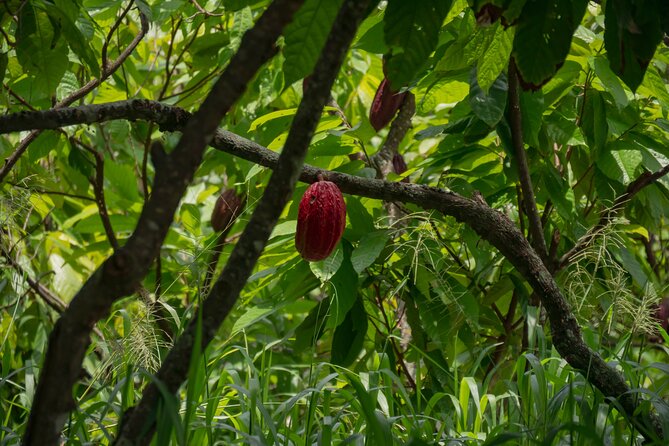
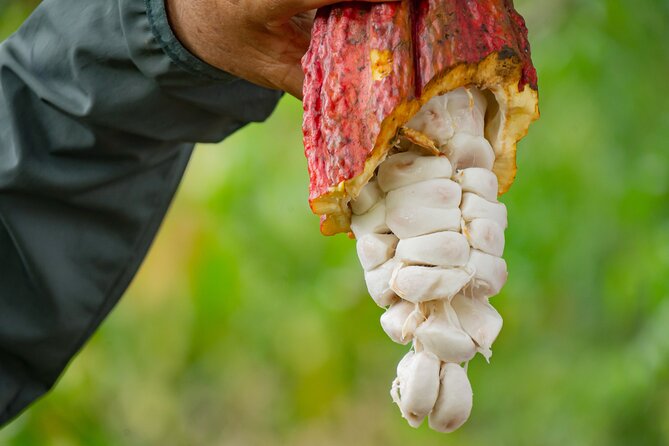
This variety helps you understand that chocolate begins as agriculture. Your guide explains how farmers sow cacao seeds, care for young trees, and harvest the ripe pods. You see the fresh fruit on the tree before it becomes a dry brown bean or a wrapped bar.
That simple sequence is one of the strongest reasons to choose this tour. Many chocolate activities start with finished products. Here, you begin with the plant and follow the work through several stages. The farm’s greenhouse and other crops also give you a look at the wider food system that supplies the kitchen.
The family setting adds something a factory tour cannot. Farm guides such as Jamil, Simon, Alberto, and the owner Shirley have been praised for explaining the work in a personal way and for sharing the family’s connection to cacao. You should expect conversation, demonstrations, and tasting rather than a formal museum presentation.
Turning cacao seeds into chocolate
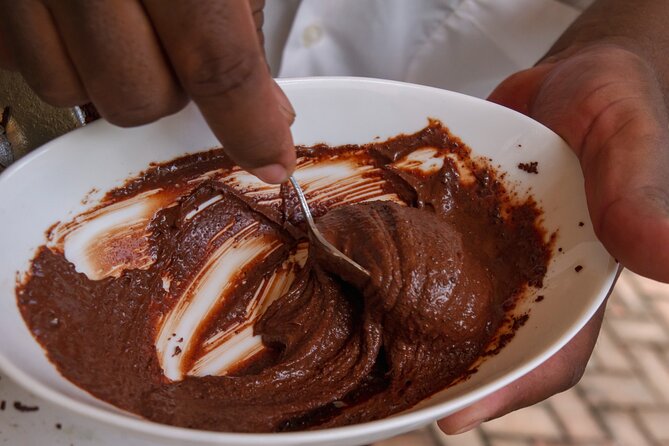
The practical section begins with the harvested cacao fruit and its seeds. You see how the beans are handled, then toast them. After roasting, you help remove the papery husks before grinding the beans into a thick cacao paste.
That paste is the foundation of chocolate. Milk, sugar, and flavorings come later, but the basic flavor starts here. You can taste the cacao in several forms, including raw or ground cacao and a hot chocolate prepared with water and sugar.
The work is simple enough for children, yet it has enough steps to hold an adult’s attention. It also explains why a chocolate bar is not simply a sweet ingredient pulled from a tree. The fruit must be opened, the seeds processed, and the flavor developed before a finished product appears.
Many people especially enjoy making their own chocolate bars to take home. The information provided does not specify the size or packaging of the bars, so do not count on a large souvenir supply. The value is in doing the work yourself and seeing how the farm product changes in your hands.
If you like food experiences with a clear connection to place, this section carries the tour. Ecuadorian cacao is not treated as an abstract export crop. You see the plant, touch the beans, smell the toasted seeds, and taste the result.
A farm lunch with Ecuadorian ingredients
After the farm walk and chocolate activity, you sit down for lunch. The meal uses organic ingredients grown on the property when available, which makes the food part of the farm visit rather than a separate restaurant stop.
The menu changes, but past meals have included crab empanadas, fried fish with rice, and frozen chocolate cake. Other descriptions refer to a traditional Ecuadorian three-course meal and a delicious lunch prepared with farm ingredients. Drinks are not included, so budget for those separately.
I like this arrangement because lunch shows the farm’s wider purpose. The cacao is the star, but the kitchen also draws from rice fields, fruit trees, herbs, and vegetables. You get a sense of how local ingredients move from soil to table, not just from pod to chocolate bar.
The lunch can also be a relaxed chance to speak with the farm family and your guide. Adrian and Simon, for example, have joined diners at the table for informal conversation. That personal exchange is an important part of the day, particularly if you want to ask about farming, Ecuadorian food, or daily life outside Guayaquil.
Food quality is a major strength here, but keep your expectations practical. This is a family farm, not a formal city restaurant. The meal is valued for freshness, generous hospitality, and local character. It is not meant to offer a fixed menu or polished dining-room service.
More One-Day Trips in the world:
- Zurich: Rhine Falls, Chocolate & Cheese Factory Day Trip
★ 4.5 · 212 reviews - Gruyère Cheese and Chocolate Tasting Day Trip from Geneva
★ 5.0 · 99 reviews - Day Trip Churute Howler Monkey Observation and Chocolate Making
★ 5.0 · 55 reviews - From Geneva: Gruyére Chocolate and Cheese Tasting Day Trip
★ 4.8 · 27 reviews
What the drive and setting are really like
The farm is close enough for a half-day outing, but it is not just around the corner. Traffic out of Guayaquil can be heavy, and the overall ride may feel longer than the advertised 40-minute first leg if road conditions are poor.
The rural setting also means heat, insects, and uneven ground are possible concerns. Bring bug repellent, as mosquitoes are a recurring issue, and use sunscreen. Long trousers and sleeves can help, particularly if you are sensitive to bites. One useful tip is to avoid black clothing, which one participant found attracted more mosquitoes.
The supplied information says most people can take part, and children must be accompanied by an adult. A child rate is available only when the child shares with two paying adults. The activity is private, which can make it easier to manage family needs.
Do not confuse this cacao excursion with a wildlife or mangrove trip. One past booking was upgraded to include swamps and a dry forest, with a rough road, a basic canoe, and extra travel time. Those additions are not part of the standard cacao-focused plan described here. If someone offers extra stops, ask about the boat, road conditions, toilets, and total return time before agreeing.
How the guides shape the experience
The guide you meet in Guayaquil is an important part of the outing. Jaime is repeatedly praised for being engaging, funny, and well informed about Ecuador and Guayaquil. Eddie and Adrian have also been described as friendly and attentive during the drive.
At the farm, the teaching comes from the family or local farm guide. Jamil has been singled out for his clear explanations and enthusiasm, while Simon has been praised for guiding visitors through each stage of turning cacao into chocolate. The names may vary, and the tour may use a multilingual guide, so request a preferred language when booking if that matters to you.
The best guide combination gives you two kinds of information: context about the city and country during the drive, followed by close instruction on cacao and farming at the property. That split keeps the trip from feeling like a simple transfer followed by a demonstration.
Communication appears to be a strong point, but the booking terms are firm close to departure. Free cancellation is available up to 24 hours before the start time. Changes or cancellations inside that window are not accepted for a refund, so do not book it casually if your schedule is uncertain.
Price, timing, and who gets good value
At $205.72 per person, this is not a budget farm outing. The price includes taxes and handling charges, food tasting, lunch, and hotel pickup and drop-off. Since the experience is private, the cost may make more sense for a couple, family, or small group that values a personal guide and easy transport.
You are paying for more than a farm walk. The package combines transport from Guayaquil, a guided agricultural visit, hands-on cacao processing, chocolate tasting and making, and a prepared lunch. It also saves you the trouble of arranging a taxi or finding a rural property on your own.
The value is strongest if you enjoy food, farming, and personal contact. It is weaker if you want a long countryside day, a large chocolate factory, or a low-cost sightseeing stop. The four-hour format gives you a useful taste of rural Ecuador without taking an entire day, but it leaves less room for delays or extra activities.
The experience is often booked about 13 days ahead. That does not guarantee availability, but it is a sensible reason to reserve before arriving in Guayaquil, especially if you need a particular language or have limited time in the city.
Should you book this cacao farm visit?
I would choose this tour if you want a family-friendly way to leave Guayaquil, learn how cacao becomes chocolate, and eat a local lunch in a working rural setting. The farm owners and guides are a major part of the appeal, and the hands-on process gives the outing more substance than a quick tasting.
I would hesitate if you dislike heat, mosquitoes, rural roads, or fixed cancellation rules. I would also avoid scheduling it close to a flight or cruise departure because traffic can be unpredictable.
The rating is 4.8 from 31 evaluations, with 94 percent recommending it. That matches the tour’s strongest features: warm hosting, excellent food, clear cacao demonstrations, and guides such as Jaime and Jamil who help the day feel personal. Pack repellent, sunscreen, comfortable clothing, and an appetite, then book it as a half-day food and farm experience rather than a full countryside expedition.
FAQ
How long does the cacao farm excursion take?
The experience lasts approximately four hours. It includes hotel pickup in Guayaquil, the trip to the farm, the cacao and chocolate activities, lunch, and the return transfer.
What time does the tour start?
Pickup is scheduled for 10am from a centrally located Guayaquil hotel.
Is lunch included?
Yes. Lunch and food tasting are included. The meal uses organic ingredients grown on the farm when available, and drinks are not included.
Can children join the tour?
Yes. The activity is family friendly, and children must be accompanied by an adult. The child rate applies only when the child shares with two paying adults.
What should I bring?
Bring bug repellent and sunscreen. Long trousers and sleeves can help with mosquitoes and sun. Comfortable clothing is useful for walking around the farm and taking part in the cacao process.
Can I cancel for a full refund?
Yes, if you cancel at least 24 hours before the experience starts. Cancellations or changes made less than 24 hours before the start time are not accepted for a refund.
Newest chocolate tours around the world
- Zurich: Chocolate Tasting and Walking Tour with a Local★ 4.2 · 13 reviews
- Lindt Chocolate Museum with Cruise Transfer from Zurich★ 4.6 · 7 reviews
- Zurich Open-top Tour and Chocolate and Cheese Countryside★ 3.5 · 11 reviews
- York: Introduction to Chocolate Making Experience★ 4.9 · 10 reviews
- Zagreb: Lake Bled and Ljubljana Day Tour with Chocolate Gift★ 5.0 · 26 reviews
- Zaandijk-Near Zaanse Schans Chocolate making demo & tasting★ 4.8 · 13 reviews
- Private Wine and Chocolate Tasting Experience★ 4.4 · 3 reviews
- Yarra Valley: Wine and Chocolate tasting tour.★ 5.0 · 5 reviews
Cacao Farm Tours, compared.
Maui Ku’ia Estate Guided Cacao Farm Tour and Tasting
Read our review →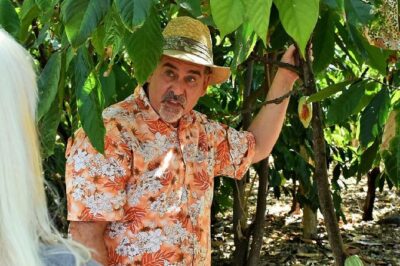
Award Winning Farm Tour: Coffee, Chocolate and Unique Gifts
Read our review →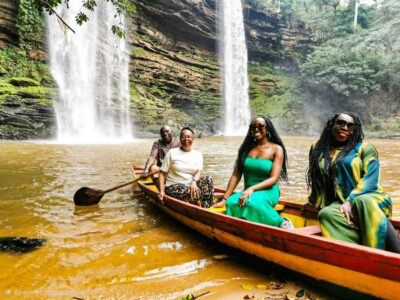
Boti Falls, Umbrella Rock, Aburi Gardens & Cocoa Farm Tour
Read our review →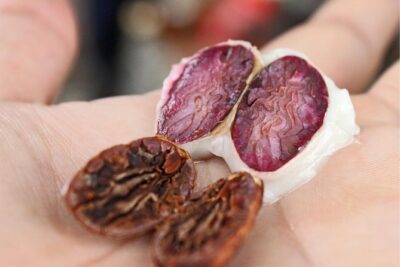
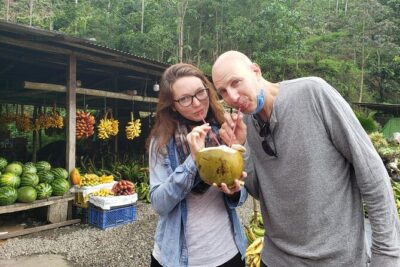
Cuenca to Guayaquil one-way tour with Cajas Park and a Cacao Farm visit
Read our review →
Floating Market, Canal, Cacao Farm & Mekong’ Life
Read our review →
Experience Boti Waterfalls, Aburi Botanical Gardens & Tetteh Quarshie Cocoa Farm
Read our review →
Browse the lists this tour appears in