
Review · BEAN-TO-BAR CHOCOLATE TOURS
KAICAO bean to bar and design your chocolate experience
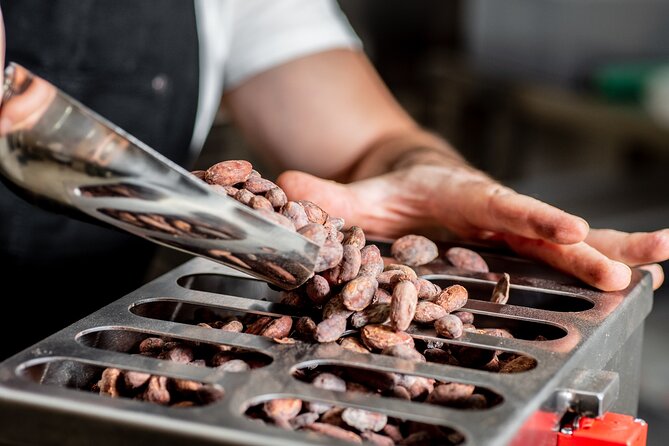
Kaicao takes you past the usual chocolate shop display and into the working stages behind the bar. You begin with the raw cocoa fruit and unroasted beans, then follow the harvest, roasting, shelling, grinding, and final tasting in a small central Madrid factory. Tasting the roasted cocoa beans is a particularly good touch, since it shows how far the finished chocolate has come.
I like the small group of up to 10, which should make it easier to ask questions, and I like the range of products at the end, including vegan and sugar-free choices. The main consideration is the price: at $54.07 for about 90 minutes, this is best for people who want a hands-on food lesson, not simply a quick chocolate sample.
Key points at a glance
- Cocoa from the beginning: Learn about the cocoa fruit, harvesting, post-harvest work, and unroasted beans before tasting the finished product.
- A working Madrid factory: See how Kaicao selects seeds, develops roasting profiles, removes bean shells, and turns cocoa into chocolate.
- Small English-language group: The maximum group size is 10, with a 4:00 pm start and mobile ticket entry.
- Unusual tasting choices: Samples can include artisan, vegan, sugar-free, camel milk, coffee, cardamom, and other fine-cocoa products.
- Central meeting point: The tour starts and ends at C. de la Encomienda, 15, in Madrid’s Centro district.
- Good for families: The tasting and clear production steps make this a practical choice for both children and adults.
What happens inside Kaicao’s small Madrid factory
The Kaicao experience is built around a simple idea: chocolate makes more sense when you see the bean before it becomes chocolate. Instead of beginning with a polished bar, the tour starts with unroasted cocoa and the fruit that holds it.
That opening gives you useful context. Cocoa is not harvested as neat brown beans ready for a confectioner. You learn about the cocoa fruit, the harvest, and the work that follows after the fruit is picked. These early stages matter because the bean’s final flavor depends on what happens long before roasting.
The setting is a small urban chocolate factory rather than a large industrial plant. That makes the experience more personal, but it also means you should expect a compact production space, not a grand museum with many rooms and machines. The factory is air-conditioned, a welcome detail during Madrid’s warmer months.
The tour is offered in English and lasts about one hour and 30 minutes. Since the group limit is 10 people, you get a better chance to hear the explanation and ask about the chocolates in front of you. That small size also suits families, couples, and solo visitors who prefer a direct lesson instead of a crowded demonstration.
More Bean-to-Bar Chocolate Tours in Spain:
- Bean to Bar Chocolate Workshop in Barcelona
★ 5.0 · 172 reviews - KAIACAO Bean to Bar and Design your own chocolate experience
★ 4.5 · 6 reviews - 1.5h Belgian Chocolate Workshop in Brussels (bean to bar)
★ 4.5 · 462 reviews
From cocoa fruit to carefully selected seeds
After the introduction, the focus shifts to the cacao origins used by Kaicao. You learn where the cocoa comes from and how the factory chooses its seeds. This part will appeal to anyone who wants more than a basic explanation of cocoa being turned into candy.
Seed selection is not just a technical detail. Different cacao origins can produce different aromas, bitterness, fruit notes, and levels of intensity. Kaicao explains the choices behind its beans, giving you a clearer idea of why two dark chocolates can taste very different even when both contain a high percentage of cocoa.
The exact regions and flavor profiles are not specified in the available tour details, so you should not expect a fixed list of origins before arrival. The useful point is that the factory focuses on fine cocoa and makes decisions at the bean stage, rather than treating all cocoa as interchangeable.
This is also where the experience begins to show its craft side. Kaicao is not presenting chocolate as a single recipe. It is showing how raw material and production choices shape the final bar.
Roasting profiles and the first surprising taste
The next major step is roasting. Kaicao explains the roasting profiles developed to bring out the best flavor from its selected beans. Roasting is one of the stages where a small change can alter the character of the cocoa, so this is an important part of the visit.
The most memorable moment for many people will likely be tasting the roasted cocoa beans after they have been shelled. A roasted bean does not taste like a finished chocolate bar. It is more direct, dry, and clearly connected to the plant itself.
That comparison is valuable. You can taste the raw material, then understand why later steps are needed to create the smooth, familiar chocolate texture. It also keeps the tour from becoming a simple procession of sweet samples. You are tasting the ingredient at different stages.
The shelling demonstration adds another practical detail. Once the beans are roasted, the outer shells are removed, leaving the inner pieces that can be processed into chocolate. You see and taste the cocoa in a form that is closer to the source than anything on a supermarket shelf.
Grinding, refining, and turning cocoa into a bar
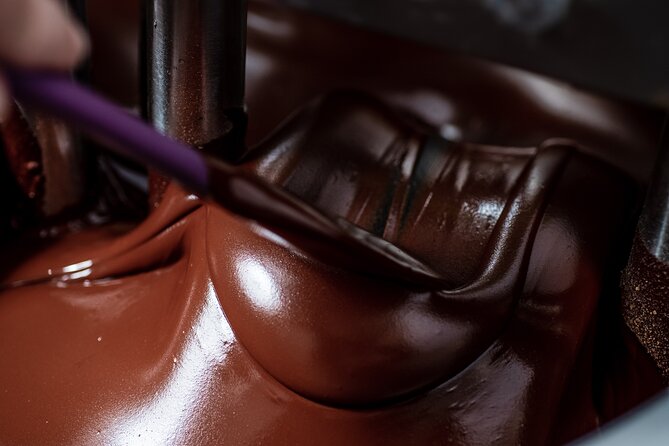
After shelling, the tour follows the remaining steps needed to turn roasted cocoa into chocolate. The supplied details do not list every machine or technical stage, so you should think of this section as a guided overview rather than a full professional chocolate-making course.
The value is in seeing the chain as a whole. Cocoa must be selected, roasted, shelled, and processed before it becomes the smooth product you know. The explanation helps you understand why handmade chocolate can involve careful choices at each stage, even when the final bar looks simple.
This is also a good place to ask questions about ingredients and production methods. Kaicao’s range includes artisan and sugar-free chocolates, and some products are suitable for vegans. Two varieties contain camel milk, so people avoiding animal products need to check each sample rather than assume the entire selection is plant-based.
If you have diabetes or follow a strict diet, treat sugar-free labeling as a reason to ask questions, not as medical advice. The tasting includes options that have appealed to people seeking sugar-free chocolate, but you should confirm ingredients for yourself before eating anything.
More Chocolate Tours in Spain:
- Lanzarote: Vineyard Tour with Wine and Chocolate Tasting
★ 4.7 · 383 reviews - Barcelona: Nougat and Chocolate Museum Tour with Tasting
★ 4.5 · 232 reviews - Barcelona & Chocolate Amatller History and Culture + Activity and Tasting
★ 4.9 · 173 reviews - Tapas and history tour ending with churros with chocolate
★ 5.0 · 119 reviews
The tasting: coffee, cardamom, and more
The tasting is the payoff, but it works better because you have already seen the bean. A sample such as 65% dark Arabica coffee chocolate with cardamom shows how Kaicao combines cocoa with other flavors. Coffee brings a familiar roasted note, while cardamom adds a fragrant, spicy edge.
You should expect several products rather than one small taste. The final selection can include different chocolates and products made with fine cocoa. Exact samples may vary, so do not plan your visit around receiving one particular flavor.
The range is one of the strongest reasons to choose this tour. You may find dark chocolate, coffee combinations, cardamom, sugar-free products, and vegan choices. The camel milk chocolates add an unusual option, though they are not vegan.
The tasting also makes the tour work for mixed groups. One person can prefer dark chocolate, another can look for sugar-free products, and a child can focus on the sweeter samples. The experience is not built only for serious food specialists. It gives children and adults something concrete to taste while the production story unfolds.
Still, the tasting is not a full meal. Have a sensible plan for the rest of your afternoon, especially if you are booking this as a family activity. The 4:00 pm start fits well after sightseeing and before dinner.
The value of a 90-minute chocolate lesson
The price is $54.07 per person. That is not a bargain if you only want to buy a chocolate bar, since the products are also available for purchase at the end. You are paying for the guided explanation, production access, tasting, and the chance to understand the entire bean-to-bar process.
For a specialist chocolate fan, the price is easier to justify. You get more than a sales counter and a few free bites. The tour explains cocoa origins, seed selection, roasting, shelling, and the steps that follow, all in a small group.
For a casual visitor, the decision depends on your interest in food production. If you want a quick snack, spend the money on chocolate in a shop. If you enjoy seeing how local products are made and sampling unusual flavors, the 90 minutes can feel well used.
The group size also affects the value. A maximum of 10 people is much more manageable than a large factory presentation. You are less likely to lose the explanation in a crowd, and the guide or owner can give the tasting a more personal feel.
The tour receives a 4.6 rating from 18 ratings, with especially strong praise for the friendly welcome, the amount of tasting, the quality of the chocolate, and the passion behind the business. Those are the qualities I would use to judge the price: this is a personal small-business visit, not a major attraction with a large production floor.
Who should book this experience?
I would choose Kaicao for several types of visitors:
- Families: Children get a clear sequence to follow and plenty of tasting moments. The tour is short enough to hold attention better than a long museum visit.
- Chocolate fans: The focus on cacao origins, roasting, and bean selection gives more substance than a standard candy tasting.
- Food-minded visitors: You see how a local producer makes decisions from ingredient selection through the finished product.
- People with dietary preferences: Vegan and sugar-free options are part of the range, though you should ask about individual ingredients. Two products contain camel milk.
- Visitors looking for an indoor activity: The air-conditioned factory is useful on a hot Madrid afternoon.
- Couples and solo visitors: The small group size makes it easier to follow the guide and take part without feeling lost.
I would think twice if you dislike dark chocolate, have no interest in production methods, or want a large-scale factory tour with lots of machinery. The setting is small, and the experience depends on explanation and tasting rather than spectacle.
Location, timing, and practical planning
The meeting point is C. de la Encomienda, 15, Centro, 28012 Madrid. The activity ends at the same place, so you do not need to arrange a separate return transfer.
The location is near public transportation, which makes it workable as part of a central Madrid day. The fixed start time is 4:00 pm. Plan to arrive with enough time to find the address, especially if you are coming from another neighborhood or carrying shopping bags.
A mobile ticket is accepted, and confirmation is provided when you book. The experience is offered in English. Most people can participate, but the supplied information does not give detailed accessibility specifications, so contact the provider if you have specific mobility or access needs.
You can cancel for a full refund if you do so at least 24 hours before the 4:00 pm start. Changes or cancellations made inside that period are not accepted for a refund, and the cut-off follows Madrid local time.
Since the tour is booked an average of nine days ahead, I would reserve early if your Madrid dates are fixed. The 10-person limit means a popular afternoon can fill more quickly than a large sightseeing activity.
Buying chocolate at the end
The tour ends with the chance to buy Kaicao products. This is useful because you can taste before choosing, rather than guessing from a label. It also gives you a chance to take home the flavor combinations that worked best for you.
Bring a little room in your luggage if you enjoy the samples. The range includes artisan chocolates and unusual options, and it is easy to leave wishing you had space for one more bar. Just remember that the purchase is optional, so the tour price does not require you to buy anything afterward.
Ask about ingredients before choosing if you avoid dairy, sugar, or animal products. The selection includes vegan choices, but two products contain camel milk, and product recipes can vary by item.
Should you book Kaicao?
Book it if you want a small, friendly chocolate lesson with real attention to cocoa beans, roasting, and flavor. The strongest parts are the chance to taste roasted cocoa itself, the compact group, and the wide range of final products.
Skip it if you want a cheap sample stop or a major industrial factory. At $54.07, Kaicao makes sense when you value the explanation as much as the chocolate. For a family, a food lover, or anyone curious about how a bean becomes a bar, the 90-minute visit is a tasty and practical addition to a Madrid afternoon.
FAQ
Where does the Kaicao chocolate experience begin?
It begins at C. de la Encomienda, 15, Centro, 28012 Madrid, Spain.
Where does the activity end?
The activity ends back at the meeting point on C. de la Encomienda.
What time does the tour start?
The scheduled start time is 4:00 pm.
How long does the experience last?
The experience lasts approximately one hour and 30 minutes.
Is the tour offered in English?
Yes. The experience is offered in English.
How many people can join the tour?
The maximum group size is 10 people.
What will I learn during the experience?
You will learn about the cocoa fruit, harvesting, post-harvest work, cacao origins, seed selection, roasting profiles, shelling, and the steps used to turn roasted cocoa into chocolate.
Will I taste chocolate during the tour?
Yes. You taste roasted cocoa beans and different products made with fine cocoa, including chocolate products developed by Kaicao.
Are vegan or sugar-free products available?
The product range includes vegan and sugar-free chocolates. Two of the products contain camel milk, so check the ingredients of each item before tasting.
Can I cancel for a refund?
Yes. You can receive a full refund if you cancel at least 24 hours before the experience start time. Cancellations or changes made less than 24 hours before the start time are not accepted for a refund.
Newest chocolate tours around Spain
- Alicante; Visit the Chocolate Museum and Villajoyosa, a colorful town★ 4.8 · 4 reviews
- Transformative 2-Hour Sound Healing Journey & Cacao Ceremony★ 4.1 · 8 reviews
- Private French Basque Tour: Biarritz, Bayonne & Chocolate★ 5.0 · 8 reviews
- Madrid Segway Tour with Chocolate and Churros★ 4.5 · 16 reviews
- Private Cacao Ceremony Combined with Creative Craft Class Ibiza★ 5.0 · 2 reviews
- Gaudi’s Casa Batlló and La Pedrera with Chocolate Tasting★ 5.0 · 5 reviews
- Visit with tasting of Vicens nougat and Jolonch chocolates★ 5.0 · 4 reviews
- Exclusive Champagne & Chocolate Getaway – with excellent lunch★ 5.0 · 24 reviews
Bean-to-Bar Chocolate Tours, compared.
1.5h Belgian Chocolate Workshop in Brussels (bean to bar)
Read our review →
Bean to Bar Chocolate Workshop in Puerto Vallarta
Read our review →
Project Chocolat Bean to Bar Experience from Hotel Chocolat
Read our review →
Puerto Viejo hands on chocolate making class. From bean to bar, get chocolatey!
Read our review →
Chocolatier for a day: raw bean to bar chocolate in Modica
Read our review →
Browse the lists this tour appears in