
Review · HOT CHOCOLATE EXPERIENCES
Semi-Private Tour: Old Town & Chocolate and Churros
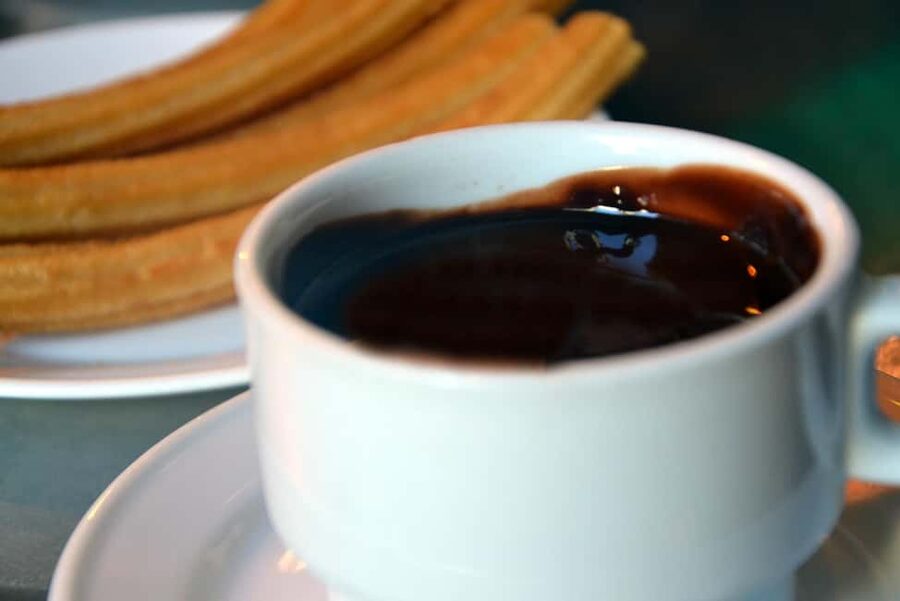
Madrid saves one of its best introductions for the end of the walk: a thick cup of hot chocolate and crisp churros at Chocolatería San Ginés, serving this local favorite since 1894. Before that sweet finish, you trace the city from Puerta del Sol through medieval squares, royal landmarks, and quiet old streets. I like the small group of eight and the way guide Tatiana mixes Spanish history with practical advice about places to eat and drink. The main consideration is that this is a three-hour walk with several stops, so comfortable shoes matter.
I also like the balance between famous sights and less obvious corners, including the Carboneras convent and Plaza de la Villa. The tour can help you get your bearings early in a Madrid visit, but do not expect full interior visits to every major building. The emphasis is on outdoor explanation, city stories, and the feel of the Old Town.
Key points at a glance
- Eight people maximum: The small group leaves room for questions and a more relaxed pace.
- A strong first-day orientation: Puerta del Sol, Plaza Mayor, the Royal Palace, and Plaza de Oriente give you a useful map of central Madrid.
- Medieval Madrid appears at Plaza de la Villa: This is one of the stops that adds depth beyond the standard postcard sights.
- Tatiana brings a personal touch: Her approach combines Spanish history, local customs, humor, and restaurant suggestions.
- Chocolate and churros are included: The tour ends at Chocolatería San Ginés, a Madrid institution dating from 1894.
- Plan for walking: The route lasts three hours and includes cobbled streets, historic squares, and several outdoor stops.
A smart way to meet Madrid in three hours
This is not simply a checklist of monuments. It is a guided walk through the part of Madrid where the city’s royal, religious, commercial, and everyday stories overlap.
You begin at Puerta del Sol, move west through the oldest central streets, and finish near Plaza de Oriente. Along the way, you see the main landmarks that many first-time visitors want, but you also pause at places you might pass without understanding. That combination gives the tour its value.
I would choose it early in a Madrid stay. Once you know where Sol, Plaza Mayor, the palace, and the Royal Theatre sit in relation to one another, the city center becomes easier to explore on your own. You also finish with a short list of local suggestions, which is useful when deciding where to eat after the tour.
The group limit matters. Eight people is small enough for a guide to hear questions without stopping for a long time, and it avoids the impersonal feel of a large flag-following crowd. Several people who toured with Tatiana described the experience as more like walking around with a well-informed friend than sitting through a formal lecture. That is the right expectation here.
More Hot Chocolate Experiences in Spain
- Tapas and history tour ending with churros with chocolate
★ 5.0 · 119 reviews - Family Private Tour: Churros, Hot Chocolate & Games in Barcelona
★ 5.0 · 79 reviews - Barcelona: Churros, Hot Chocolate, and Games Family Tour
★ 4.8 · 66 reviews
Puerta del Sol: Madrid’s natural starting point
The meeting point is at Puerta del Sol by the statue of the bear and the strawberry tree. This square is the city’s lively center and a practical place to begin because so many major streets meet here.
The opening explanation covers Madrid’s origins and its growth into Spain’s capital. You learn how the city changed from its medieval beginnings to the modern capital you see today. The stop lasts about 20 minutes, enough time for the guide to establish the historical thread without using up the whole walk.
Sol is also a useful place to settle into Madrid’s rhythm. It is central, busy, and easy to find, though that can make the meeting point less calm than a side street. The tour information also gives a starting location connected with the public transport card office, while the stated meeting point is the bear and strawberry tree statue. Check your confirmation carefully so you know the exact place to wait.
Plaza Mayor and the market of San Miguel
From Sol, the route continues to Plaza Mayor, one of Madrid’s most recognizable spaces. The square’s grand, enclosed design gives the guide a good setting for explaining royal ceremonies, public life, and the city’s architectural changes.
The formal stop is about 15 minutes. That is long enough to hear the main story and look around, but not long enough for a detailed architectural lesson. If you want extensive information about every building around the square, you may need to return later on your own.
The nearby Market of San Miguel adds a change of mood. The guided stop lasts about 10 minutes, and it helps connect Madrid’s past with its current food culture. You should think of this as an orientation stop rather than a full tasting visit. The included food experience comes later at San Ginés, so the market is mainly part of the walk and the local context.
I like this pairing because it shows two sides of central Madrid. Plaza Mayor carries the weight of public history, while the market helps you see how central spaces continue to serve daily social life. The route does not treat Madrid as a museum frozen in time.
A quieter pause at Las Carboneras
The Monasterio del Corpus Christi, known as Las Carboneras, is one of the more unusual stops. It brings religious history into the walk and gives you a chance to see a building that can be easy to miss while moving between the major sights.
The guide spends about 10 minutes here. That short pause is useful because it breaks up the sequence of large plazas and royal buildings. You get another angle on Madrid, one tied to convent life and the city’s older streets rather than court ceremony.
Do not book this tour expecting a long indoor visit at every stop. The information describes a guided walking tour, and the itinerary lists guided time at the buildings rather than guaranteed interior entry. If you care especially about seeing inside the convent, cathedral, or palace, ask the provider what access is available on your date.
Same city, a different tasting:
- Lanzarote: Vineyard Tour with Wine and Chocolate Tasting
★ 4.7 · 383 reviews - Barcelona: Nougat and Chocolate Museum Tour with Tasting
★ 4.5 · 232 reviews - Barcelona & Chocolate Amatller History and Culture + Activity and Tasting
★ 4.9 · 173 reviews - Bean to Bar Chocolate Workshop in Barcelona
★ 5.0 · 172 reviews
Plaza de la Villa and the older city
Plaza de la Villa is one of the strongest stops on the route. Its medieval buildings and cobbled streets create a sharper sense of old Madrid than the larger, more polished squares.
The guide spends roughly 15 minutes here, sharing stories about the people who shaped the city, from rulers and aristocrats to artists and ordinary residents. This is where the walk’s title makes the most sense. You are not just looking at a landmark. You are seeing a small piece of the street pattern and architecture that survived as Madrid grew around it.
I especially like this stop for people who have already seen the main postcard views online. Plaza de la Villa offers texture and scale. It feels more intimate than Plaza Mayor, and a guide can explain why the square matters instead of leaving you to guess from the buildings alone.
The narrow streets around here are also where a small group helps. The guide can pause without blocking a large section of pavement, and you can ask about details that might otherwise slip past. This part of the walk rewards looking up, slowing down, and letting the stories connect the buildings.
The Almudena Cathedral and the Royal Palace
The Almudena Cathedral and the Royal Palace form the grandest section of the tour. Each receives about 10 to 15 minutes of guided attention.
At the cathedral, the guide explains its place in Madrid and how the building changed over time. The stop is useful even if you plan a separate visit inside, since you get a basic story before deciding how much time to spend there. The cathedral sits beside the palace, so the two landmarks work naturally as a pair.
The Royal Palace brings the monarchy, court life, and national history into the route. The guide explains the importance of the building and its transformations, while keeping the focus on the outdoor walk. A past afternoon group happened to see the changing of the guard, which was an unexpected bonus rather than a guaranteed part of the tour. Treat that possibility as luck, not as an advertised feature.
If you want to tour the palace rooms, plan that separately. This three-hour experience gives you context and a strong exterior introduction, but the listed schedule does not promise a complete palace entry. That distinction matters when you are building a Madrid itinerary around museum and monument interiors.
Teatro Real and the finish at Plaza de Oriente
The final listed stop is Teatro Real, Madrid’s major opera house, followed by the finish at Plaza de Oriente. The theatre stop lasts about 10 minutes.
This gives the walk a fitting ending. You move from medieval streets and royal buildings toward a major cultural institution, then finish in a broad public space near the palace. Plaza de Oriente is a practical place to continue exploring, take photographs, or arrange your next stop in the center.
The full route is carefully paced, with individual stops ranging from 10 to 20 minutes. That structure keeps the tour moving, but it also means you will not linger for long at every sight. I see that as a strength for a first look at Madrid, and a limitation if you prefer one site explored in great depth.
Why Tatiana matters to the experience
The guide can make or break a history walk, and Tatiana is the name most closely associated with this experience. Her style is described as energetic, friendly, and full of local feeling. She explains Spanish history while also talking about customs, everyday life, and the less obvious details of the city.
That mix is important. Dates and royal names are easier to remember when they are tied to a street, a square, or a story about how people lived. Tatiana also answers questions directly and offers recommendations for restaurants, bars, additional sights, and other churros places.
You should not assume Tatiana will lead every departure unless your booking confirms it. But if she is your guide, expect a lively presentation rather than a dry recital of facts. The strongest praise of this tour centers on her enthusiasm, her sense of humor, and her ability to make a small group feel comfortable.
The chocolate and churros finish
The final stop at Chocolatería San Ginés is more than a quick snack. A cup of dense hot chocolate with churros gives the tour a distinctly Madrid ending, and it is included in the $55 price.
San Ginés has been serving chocolate and churros since 1894, making it one of the city’s classic places for this combination. The chocolate is thick rather than like an ordinary drinking cocoa, and the churros are made for dipping. It is sweet, filling, and a welcome reward after three hours on foot.
This is also where the price becomes easier to judge. You are paying for a local English-speaking guide, a carefully planned central route, a small group, and the included food stop. Compared with a basic large-group orientation walk, the limit of eight gives this experience a more personal feel. Compared with a private tour, the price is more moderate because you share the guide with a small group.
The value is strongest if you want history and orientation, not just a snack or a list of photo stops. If chocolate and churros are your main goal, you can visit San Ginés on your own for less than the full tour price. The tour earns its cost through the walking route and interpretation.
Who should book this walk
I would recommend it to first-time visitors, couples, families with older children, and anyone who wants a clear introduction before exploring Madrid alone. It suits people who enjoy stories, local recommendations, and a steady walk through central streets.
It is also a good choice if you have only a short stay. In three hours, you see many of the city center’s key places and finish with a local specialty. You can then return to the cathedral, palace, Plaza Mayor, or market for a longer visit.
You may want another type of tour if you need extensive indoor access, a slow photographic pace, or a route with little walking. The activity is described as wheelchair accessible, but the same information also says it is not suitable for wheelchair users. That conflict should be clarified before booking. It is also listed as unsuitable for pregnant women.
The route includes old streets and cobbled areas, so wear shoes with good support. The group size helps, but it does not change the physical nature of the walk.
Booking details worth knowing
The price is $55 per person, and the duration is three hours. The tour is conducted in English with a live local guide, and the group is limited to eight participants.
You can cancel up to 24 hours before the start for a full refund. The reserve-now, pay-later option lets you hold a place without paying immediately, which is useful when your Madrid schedule is still moving.
The meeting point is listed as the bear and strawberry tree statue at Puerta del Sol. Because another starting location is also shown in the activity details, confirm the precise meeting instructions before setting out.
Should you book it?
Book this tour if you want Madrid’s central sights explained as part of a connected story, with a small group and a genuinely local food finish. The strongest reasons are the compact route, the access to questions, Tatiana’s engaging style when she leads, and the included chocolate and churros at San Ginés.
Skip it if you want a full palace or cathedral visit, dislike three-hour walks, or prefer to explore without a schedule. For most first visits, though, this is a sensible and enjoyable way to get oriented, hear the city’s backstory, and end with one of Madrid’s most satisfying traditions.
FAQ
How long does the Old Town and chocolate tour last?
The tour lasts three hours.
How much does the tour cost?
The price is $55 per person.
What language is the tour conducted in?
The live guided tour is conducted in English.
How many people can join the tour?
The group is limited to a maximum of eight participants.
Where does the tour meet?
The stated meeting point is Puerta del Sol, by the statue of the bear and the strawberry tree.
Is chocolate and churros included?
Yes. The price includes a cup of hot chocolate and churros at Chocolatería San Ginés.
Where does the tour finish?
The walk finishes at Plaza de Oriente, 28013 Madrid, Spain.
Can I cancel the booking?
Yes. You can cancel up to 24 hours in advance for a full refund. You can also reserve now and pay later.
Newest chocolate tours around Spain
- Barcelona: Delicious Chocolate walking tour★ 5.0 · 2 reviews
- Barcelona: Casa Batlló, La Pedrera, & Chocolate Tasting Tour★ 5.0 · 6 reviews
- Alicante: Guadalest Castle and Chocolate Factory★ 4.9 · 26 reviews
- Ancestral Cocoa Tasting in Ronda – Tree to Cup Experience★ 5.0 · 2 reviews
- Alicante: Chocolate and Nougat Tasting★ 4.5 · 12 reviews
- Barcelona: Experience the Best Churros with Hot Chocolate★ 4.6 · 47 reviews
- Chocolate & Churros Cooking Class in Madrid★ 5.0 · 54 reviews
- Barcelona: Casa Amatller Guided Visit with Chocolate Gift★ 4.9 · 60 reviews
Hot Chocolate Experiences, compared.
Chocolate Truffle & Belgian Hot Chocolate Workshop
Read our review →
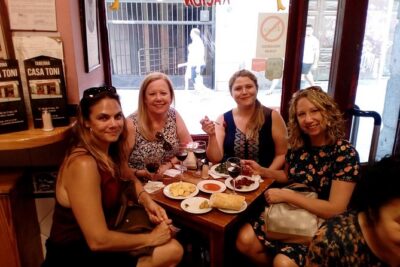
Tapas and history tour ending with churros with chocolate
Read our review →
Orderville: East Zion Stargazing Trip with Hot Chocolate
Read our review →
Ice Skating in the Moonlight with Hot Chocolate
Read our review →
Jackson Hole: Dogsledding Tour with Hot Chocolate
Read our review →
Family Private Tour: Churros, Hot Chocolate & Games in Barcelona
Read our review →
Quebec City: Ice Canoeing with Hot Chocolate & Sauna
Read our review →Browse the lists this tour appears in