
Review · CHOCOLATE MUSEUMS
Colmar: Chocolate creation workshop at Choco-Story
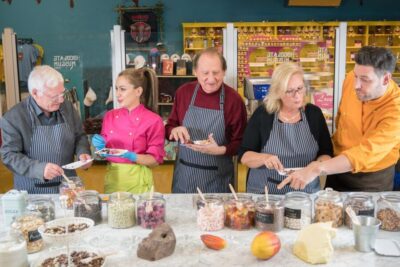
The best part of this Colmar experience is that you do not just look at chocolate, you work with it. A chocolatier shows you how to coat marshmallows, candied orange strips, and praline squares, then helps you make small decorated bars to take home.
I like the clear family appeal and the generous edible souvenir. I also like that the ticket includes a full museum visit with tastings, an audio guide, quizzes, and some wonderfully over-the-top chocolate sculptures. The main consideration is that this is a decorating workshop, not a full course in tempering cacao or making chocolate from raw beans.
Key points to know before booking
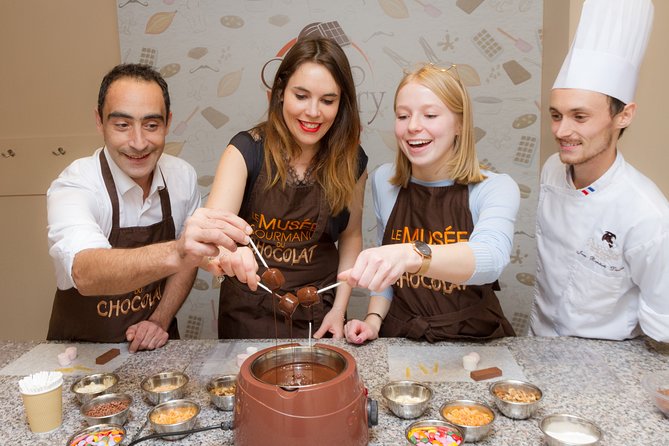
- You make 250 to 300 grams of chocolate: The workshop includes dipped marshmallows, orangettes, praline squares, and four small chocolate bars.
- The hands-on session lasts about 45 minutes: The remaining time is for the Choco-Story museum.
- Three chocolate choices are available: You can work with white, milk, or dark chocolate, then add toppings to your creations.
- The museum takes about 90 minutes: An audio guide, tasting stations, quizzes, a costume photobooth, and large chocolate sculptures fill out the visit.
- Children must be at least 7: Anyone aged 7 to 10 must attend with a participating, paying adult.
- Arrive 15 minutes early: Late arrivals are not accepted, and no refund is offered for missing the start.
Starting at Choco-Story beside Colmar Cathedral
The meeting point is Choco-Story Colmar, at 12 Place de la Cathédrale. That is a handy central location, especially if you are already walking around Colmar’s old town and cathedral area. The activity ends at the same place, so you do not need to arrange transport between the workshop and museum.
The total visit lasts about two and a half hours. The schedule is split into a 45-minute chocolate workshop and a 90-minute museum visit, although you can tour the museum before or after the practical session. Check the exact start time when booking, then arrive at least 15 minutes early. This matters here: late arrivals are not accepted.
The group is limited to 15 people. That is small enough for a chocolatier to demonstrate techniques and give help at the worktable, while still making the session social. The activity is offered in English, which makes it a practical choice for English-speaking families and couples visiting Alsace.
More Chocolate Museums in France
- Paris: Entrance Ticket to the Chocolate Museum
★ 4.1 · 1,105 reviews - Paris: 45-minute Chocolate Making Workshop at Choco-Story
★ 4.4 · 444 reviews - Colmar: Chocolate Museum Entrance Ticket
★ 4.5 · 187 reviews
The 45-minute workshop: coating, decorating, and molding
The workshop begins with the most appealing task: making something you can eat. You work with prepared items rather than starting with cacao beans or producing chocolate from scratch. The focus is on dipping, decorating, and shaping.
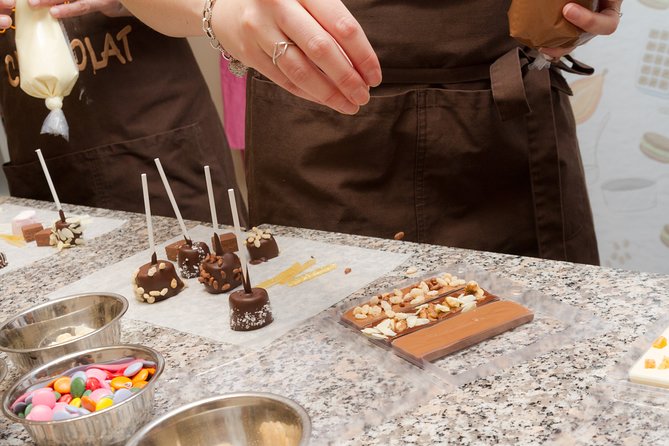
You coat marshmallows, orangettes, and praline squares in your choice of white, milk, or dark chocolate. The candied orange strips are the orangettes, a classic chocolate-shop treat with a pleasant contrast between bitter citrus peel and sweet coating. Pralines give you a nuttier, denser center, while marshmallows keep things soft and simple.
The chocolatier demonstrates the dipping technique and offers pointers on how to make the pieces look cleaner and taste better. This is useful for children, who can get straight to the fun, and for adults who want a little guidance rather than simply dropping sweets into melted chocolate.
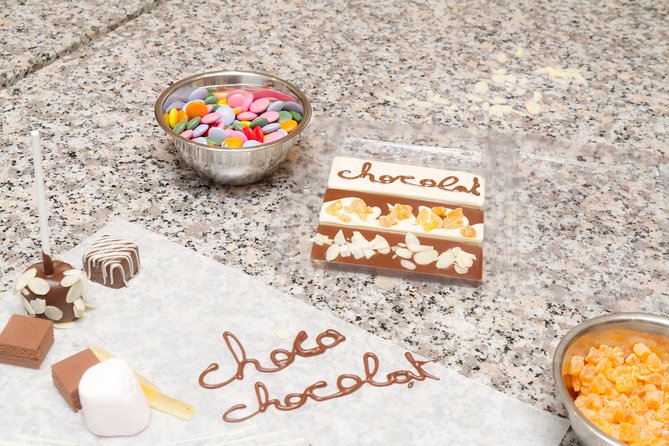
You also receive a mold for making four small chocolate bars. The bars can be made with the same chocolate choices and decorated with toppings. This part gives the workshop a bit more structure than a simple tasting session. You leave with several different types of chocolate rather than one large molded piece.
The activity is hands-on but not technically demanding. You should not book it expecting a professional pastry lesson covering cacao percentages, tempering curves, ganache, or bean-to-bar production. If your goal is to learn advanced chocolate-making technique, you may find the session basic. If your goal is to create attractive sweets with family or friends, the level is about right.
The chocolatier may also show more about how sweets are made in molds if there is extra time. That extra demonstration can help you understand how chocolate makers get consistent shapes and smooth finishes.
What you take home: a sweet souvenir with real value
At the end, you take home about 250 to 300 grams of the chocolates you made. The exact mix depends on your pieces, but the workshop includes three marshmallows, three strips of candied fruit, four praline squares, and four small chocolate bars according to the described session format.
That is a generous souvenir, especially for children. You have made it yourself, and the assortment gives you several textures and flavors to try later. The chocolates are also easier to enjoy in small portions than a single oversized souvenir.
The $53.92 per-person price makes more sense when you count both parts of the experience. You are paying for the workshop, instruction, the chocolate used in your creations, the finished sweets, and entry to a museum with tastings. It is not a low-cost museum visit, but it offers more than a standard admission ticket.
For a family, the value depends on how much you will use the museum. If everyone enjoys chocolate and you plan to spend the full 90 minutes inside, the package is fairly strong. If only one person wants the workshop and the rest of the group is not interested in chocolate displays, the price may feel less attractive.
The museum route: 90 minutes of chocolate history and treats
The museum fills out the experience after or before the workshop. An audio guide leads you through an approximately 90-minute route, giving the visit a clear structure instead of leaving you to wander past display cases without context.
Around 500 collector’s items are on display. These objects help explain how chocolate developed as a product, food, and cultural habit. The route is designed to be accessible rather than academic, so it works well for families and casual visitors who want a light introduction.
The museum also includes fun educational quizzes. These are especially useful if you are visiting with children, since they turn the displays into a task instead of a passive walk through exhibits. You can keep the pace relaxed or move quickly through the sections that interest you less.
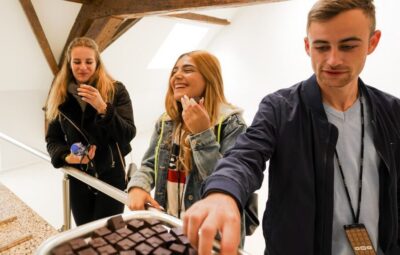
One of the strongest museum features is the tasting area. You can compare different types of chocolate and sample as you go. This gives the museum a practical edge: you are not just hearing about differences between white, milk, and dark chocolate, you are tasting them.
Tastings are unlimited, so take your time rather than rushing through every station. The tasting element also helps explain why the workshop offers several chocolate types. After comparing them in the museum, you may have a better idea of which chocolate you want for your own bars.
Same city, a different tasting:
- Paris French Sweets Tasting Tour with Pastries and Chocolates
★ 4.5 · 947 reviews - A Morning in Paris Food Tour: Croissants, Baguettes & Chocolate
★ 5.0 · 556 reviews - Saint-Germain: Gourmet Chocolate & Pastry Walking Food Tour
★ 4.8 · 495 reviews - Paris Chocolate, Macaron & Pastry Food Tour: 10 Gourmet Tastings
★ 5.0 · 339 reviews
The giant screen and the 500 kilograms of chocolate sculpture
A virtual demonstration on a giant screen features three master chocolatiers. This is useful when you want to see techniques on a larger scale than is possible at a small worktable. It adds a visual break to the audio-guided route and shows how experienced professionals handle chocolate.
The museum’s most playful feature is its collection of chocolate sculptures. There are about 500 kilograms of chocolate used in the displays, including a Statue of Liberty. This is not the kind of exhibit you visit for a quiet, serious art experience. It is big, edible, and intentionally entertaining.
You also have access to a photobooth with costumes. That makes the museum particularly well suited to families and groups of friends. The costume photos give children something active to do, while adults can treat the area as a lighthearted souvenir stop.
The museum is aimed in part at younger visitors. An adult who wants a detailed, specialist account of chocolate production may move through the displays quickly. I would plan on listening to the highlights, enjoying the tastings, and spending more time on the exhibits that hold your interest.
Who will enjoy this most
This is a strong pick for families with children aged 7 and up. Younger children can dip and decorate, while the quizzes, costumes, and sculptures give them reasons to stay engaged during the museum portion. Children aged 7 to 10 must be accompanied by a participating paying adult, and anyone under 7 is not admitted to the workshop.
Couples can enjoy it too, especially if you like trying something hands-on during a city break. The workshop is short enough that it does not consume an entire day, and you finish with a bag of sweets rather than only photographs.
It also suits friends who want a relaxed indoor activity in Colmar. The group size of no more than 15 keeps it from feeling like a large production, and the shared worktable creates an easy social setting.
You may want to skip it if you are looking for a serious pastry class. The workshop teaches the basics of dipping and decorating, not the full process of producing chocolate from cacao or developing advanced confectionery recipes. The museum may also feel young in tone if you prefer technical exhibits and long historical explanations.
Practical timing, language, and access
The experience is offered in English. The museum uses an audio guide, while the chocolatier leads the practical session. No individual guide name is provided, but the workshop is led by the on-site chocolate professional.
The activity is near public transportation, and the central meeting point makes it easy to combine with time around Colmar Cathedral. Since the activity ends back at Choco-Story, you can continue sightseeing in the old town afterward without collecting luggage or changing locations.
Build in at least the full two and a half hours. The museum may be visited before or after the workshop, so your exact order can affect the flow of your day. If you have a firm dinner reservation or train to catch, leave extra time rather than planning the activity down to the minute.
The experience is non-refundable and cannot be changed for any reason. That makes the 15-minute early arrival rule especially important. Book only when your Colmar schedule is settled.
How this compares with a standard museum visit
A regular museum admission would give you the exhibits and tastings, but not the hands-on workshop or the chocolates you make. Here, the practical portion changes the visit from a display-only experience into something you can remember through taste and touch.
The tradeoff is that the workshop takes only about 45 minutes. The museum remains the larger part of the visit, so you should not think of this as a two-hour chocolate class. It is a museum visit with a short, family-friendly confectionery activity attached.
I like that balance for a city break. You get enough instruction to feel involved, but you are not committed to a long class in the middle of sightseeing. The format works particularly well on a rainy afternoon, though no weather condition is required to enjoy an indoor chocolate stop in Colmar.
Tips for getting the most from your visit
Arrive early and wear clothes that you do not mind getting a little messy. The session involves dipping and decorating, so children should be ready to work at the table rather than simply watch.
Use all three chocolate choices if they are available during your session. White, milk, and dark chocolate give the finished pieces different levels of sweetness and bitterness, and the contrast makes the take-home assortment more interesting.
Do not rush the museum tastings. Try a sample, listen to the relevant audio section, then compare another type. The tasting stations are one of the best ways to turn the museum’s information into something you can judge yourself.
If you are visiting with children, let them take the lead on the quizzes and photobooth. Those features help hold their attention during the audio-guided sections. Adults who prefer a quicker visit can listen to selected highlights instead of every minute of commentary.
Remember that the workshop is limited to children aged 7 and older. A child aged 7 to 10 needs a participating paying adult, and children under 7 will be denied access. This is not a drop-off activity.
Should you book the Choco-Story workshop?
Book it if you want a hands-on Colmar activity that works well for families, couples, and small groups. The chocolate you make, unlimited tastings, central location, and museum admission give the $53.92 price reasonable value when you plan to use the entire package.
Choose something else if you want advanced chocolate training or a serious, adult-focused museum. The workshop is short and simple, and the museum’s tone is playful and educational, with children around 10 as a likely sweet spot.
For most visitors who enjoy chocolate, the combination is easy to recommend. Just arrive early, set aside two and a half hours, and think of the experience as a cheerful chocolate workshop followed by a playful museum, not as a professional confectionery course.
FAQ
Where does the chocolate workshop take place?
It takes place at Choco-Story Colmar, 12 Place de la Cathédrale, 68000 Colmar, France. The activity ends at the same meeting point.
How long does the experience last?
The full experience lasts approximately two hours and 30 minutes. About 45 minutes are used for the workshop, followed by about 90 minutes for the museum visit.
What will I make during the workshop?
You will coat marshmallows, orangettes, and praline squares with chocolate. You will also make decorated chocolate bars using a mold.
How much chocolate can I take home?
You take home approximately 250 to 300 grams of the chocolates you make.
Which types of chocolate can I use?
The workshop includes white, milk, and dark chocolate choices for dipping and making the chocolate bars.
Can young children join the activity?
Children must be at least 7 years old. Children from 7 through 10 must be accompanied by a participating paying adult. Anyone under 7 is not allowed to take part.
What happens if I arrive late or need to cancel?
You must arrive 15 minutes before the workshop begins. Late arrivals are not accepted, and there is no refund for arriving late. The experience is non-refundable and cannot be changed for any reason.
Newest chocolate tours around France
- Private Wine and Chocolate Tasting Experience★ 4.4 · 3 reviews
- Wine and chocolat tasting at Chablis.★ 4.9 · 5 reviews
- Wine and Chocolate experience★ 4.6 · 3 reviews
- Trio Chocolaté – Tour en français – Champagne Passy-Grigny★ 5.0 · 5 reviews
- Paris Sweet & Chocolate Family Treasure Hunt★ 5.0 · 37 reviews
- Molded Bonbons Chocolate making class in Paris (collective)★ 4.5 · 20 reviews
- Private Wine and Chocolate Tasting in Paris★ 4.5 · 4 reviews
- Private Family Chocolate Making Class in Paris★ 5.0 · 16 reviews
Chocolate Museums, compared.
Choco-Story Brussels: Chocolate Museum Entrance with Tasting
Read our review →
Chocolate Workshop in Chocolate Museum w/ Tasting
Read our review →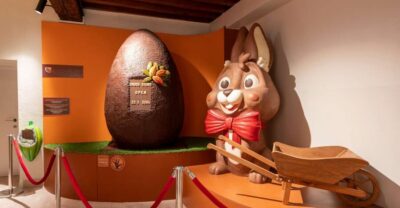
Choco-Story Chocolate Museum Guided Tour w/Tastings
Read our review →
Guided Walking Tour and Chocolate Museum Ticket
Read our review →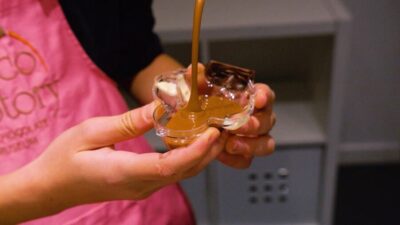
45-minute Chocolate Making Workshop at Choco-Story
Read our review →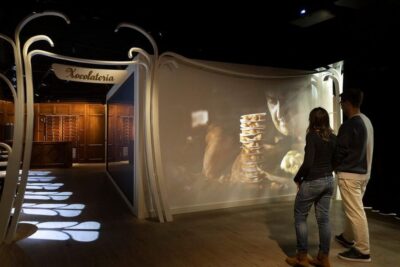
Browse the lists this tour appears in