
Review · CHOCOLATE MUSEUMS
Visit of Choco-story COLMAR, the Chocolate Museum.
Chocolate gets the full stage at Choco-Story Colmar, where cocoa’s journey runs from a forest scene and an Aztec temple to a Spanish ship, royal courts, and modern production. The interactive displays keep this from feeling like a row of glass cases. You move, watch, listen, play, and taste.
I like the strong visual details, especially the moving ship scene and the huge chocolate Statue of Liberty. I also like that the audioguide lets you set your own pace, while the games give children a reason to stay engaged. The possible drawback is that the experience is built around recorded audio and screens, not a live guide, so visitors seeking a quiet, traditional museum may find it busy.
Key points to know
- Chocolate’s story spans continents: Follow cocoa from pre-Hispanic America through Spain, European courts, industrial production, and modern recipes.
- The experience is highly interactive: Expect films, 3D projections, animated panels, body-tracking technology, games, and photo opportunities.
- The tasting is included: You can sample chocolate during the visit, but the separate hot chocolate drink is not included.
- Plan on about 90 minutes: The route is designed for independent pacing rather than a tightly timed guided walk.
- Families have plenty to do: Children can take part in games and interactive sections instead of only reading display text.
- The price is moderate: At $18.02 per person, the value depends on how much you enjoy multimedia exhibits and chocolate tasting.
Starting with cocoa in a pre-Hispanic forest
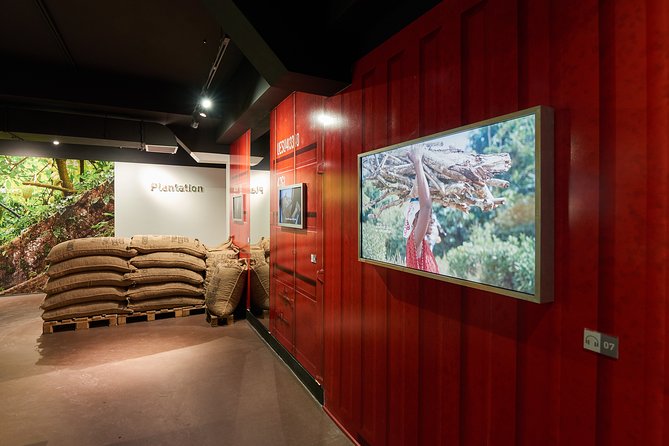
The visit opens far from a European chocolate shop. You begin in a forest setting, where an animated panel shows a small monkey tasting cocoa beans. It is a simple scene, but it gives you an immediate sense of the plant as a natural product rather than a finished sweet.
That starting point matters. Chocolate can seem like a familiar modern treat, yet its story begins with the cocoa tree and the people who first used its fruit. The museum presents that early stage through visual effects, which makes the introduction easier for children and for anyone who does not want to begin with dense historical panels.
Next comes an Aztec temple, complete with Quetzalcoatl, the feathered serpent god linked by legend to the arrival of cocoa on earth. The display connects chocolate with mythology and ceremony, not just farming and trade. You will not get a full academic course in pre-Hispanic cultures here, but you do get a memorable starting framework for the rest of the visit.
I like this opening because it gives the story a clear direction. You are not simply looking at chocolate samples. You are following an ingredient as it changes meaning from one society to the next.
More Chocolate Museums in France
- Paris: Entrance Ticket to the Chocolate Museum
★ 4.1 · 1,105 reviews - Paris: 45-minute Chocolate Making Workshop at Choco-Story
★ 4.4 · 444 reviews - Colmar: Chocolate Museum Entrance Ticket
★ 4.5 · 187 reviews
Crossing the Atlantic on a Spanish ship
The route then shifts to the 16th century and a Spanish ship. The floor creaks, hurricane lamps move, and the windows show the sea. These small effects turn a historical transition into a physical scene you can feel around you.
This is one of the museum’s cleverest sections. The movement from the Americas to Europe is a major turning point in cocoa’s story, and the ship setting makes that change easy to grasp. You see how a product once tied to distant cultures began its long route toward European kitchens and royal tables.
The scene is theatrical, so you should expect atmosphere rather than a detailed maritime exhibit. If you enjoy props, sound, and visual storytelling, this part should hold your attention. If you prefer labels, dates, and objects with little decoration, you may find the effects a bit much.
The audioguide helps link the rooms together. The provided information lists six language options, while the general description refers to four, so check the languages available for your booking before you go if that choice matters to you. Either way, you follow the route independently rather than staying with a named guide.
Meeting chocolate at European courts
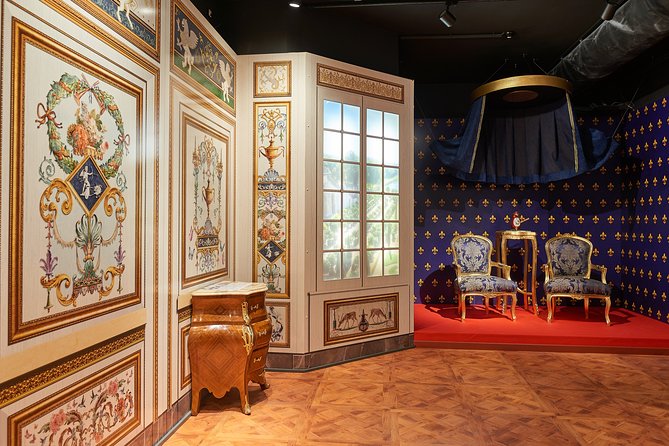
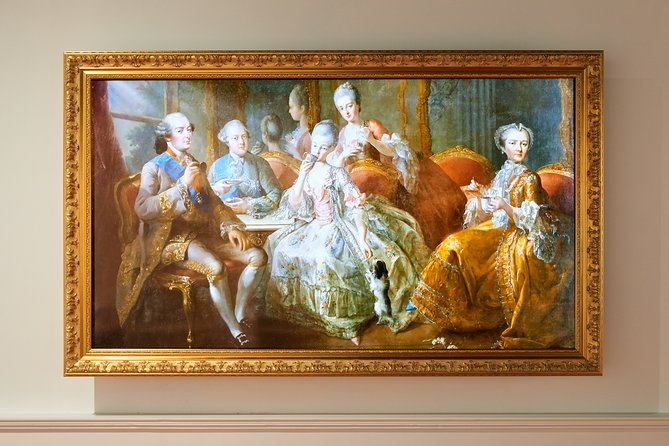
Once cocoa reaches Europe, the presentation moves into the world of royal courts. You can sit for a photo in royal armchairs, adding a light, playful moment to what could otherwise become a serious history lesson.
This section shows how chocolate gained social status. It was no longer only an unusual product arriving from across the ocean. It became connected with wealth, ceremony, and court life. The photo opportunity gives you a physical way to take part in that change.
I see this as one of the better choices for families and groups of friends. Someone who does not want to read every panel can still join in, take a picture, and keep moving. The tradeoff is that the historical detail may feel brief if you want a close study of European court customs.
The museum’s approach is consistent here: explain a point, then give you something to do. That rhythm makes the visit feel less like a lecture and helps keep the 90-minute route moving.
Using the choco scanner
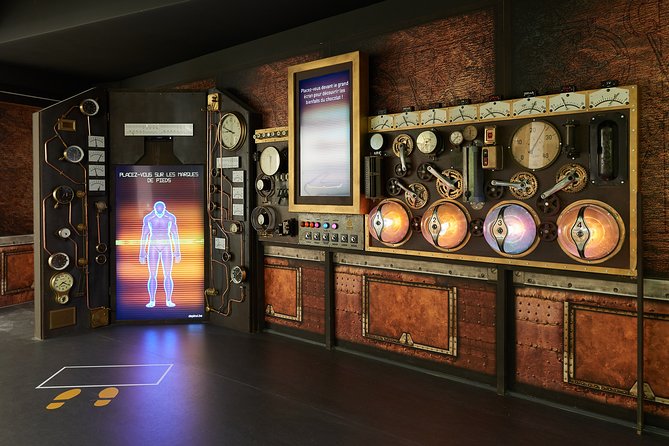
One of the more unusual features is the choco scanner. It reproduces your body movements and presents the supposed benefits of the cocoa tree’s fruit.
This is a playful technology-based stop, and it breaks up the sequence of themed rooms. You are not only hearing about cocoa. You become part of the display for a moment, which can be especially appealing to children and anyone who enjoys interactive exhibits.
Keep the claims in proportion. A museum display about the benefits of cocoa is not a substitute for medical advice, and the experience is designed for general interest. Its real value is engagement. The scanner gives you another way to think about the fruit before the story moves into industrial production.
If you are visiting during a crowded period, this may also be one of the points where people pause longer. The maximum group size for the activity is 200, but the route itself is intended to be taken at your own speed. You may need a little patience at the most popular interactive stops.
Same city, a different tasting:
- Paris French Sweets Tasting Tour with Pastries and Chocolates
★ 4.5 · 947 reviews - A Morning in Paris Food Tour: Croissants, Baguettes & Chocolate
★ 5.0 · 556 reviews - Saint-Germain: Gourmet Chocolate & Pastry Walking Food Tour
★ 4.8 · 495 reviews - Paris Chocolate, Macaron & Pastry Food Tour: 10 Gourmet Tastings
★ 5.0 · 339 reviews
Seeing industrial chocolate on the second floor
The second floor turns to industrialization. This is where the story shifts from cocoa’s cultural journey to the machinery, production methods, and mass appeal that helped make chocolate a global product.
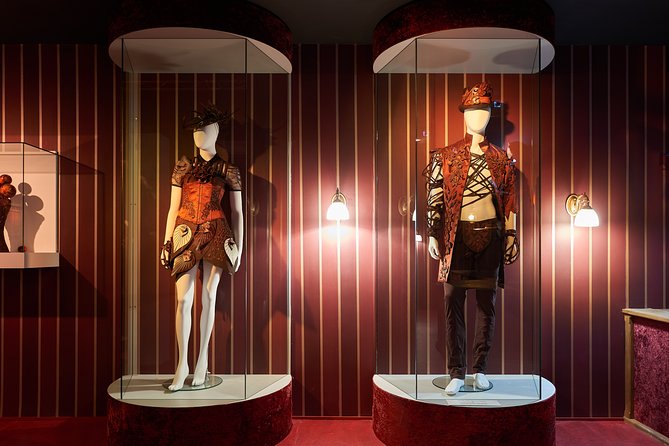
A major visual centerpiece is the cabaret show. A 250-kilogram Statue of Liberty made from chocolate lights up the display, joined by other chocolate sculptures. The scale is the point. It shows what skilled chocolatiers can do with a material most of us associate with small bars, truffles, and desserts.
The sculpture display is also a useful reminder that this museum is part history lesson and part spectacle. You will see objects made to surprise you, not only objects meant to explain a process. I find that balance helpful, but your enjoyment will depend on your taste in museums.
If you want a highly technical explanation of every stage of factory production, this may not go far enough. If you want to see how chocolate can become an art material, the display gives the industrial section a strong visual finish.
Watching three master chocolatiers prepare recipes
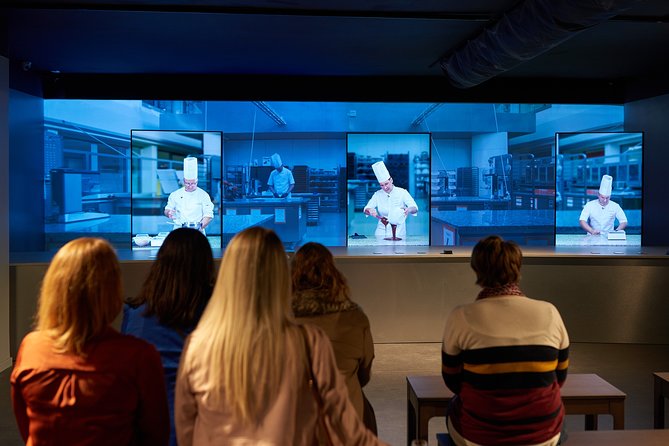
A giant screen presents three master chocolatiers and their recipes. This adds a practical element to the visit. Instead of only learning where chocolate came from, you also see how professionals use it today.
The recipe demonstrations are a good reason to slow down on the second floor. You can watch the techniques, then connect them with the tastings offered during the visit. I would not treat this as a hands-on cooking class, since no such class is included. It is a demonstration on screen.
This section works best for people who enjoy food culture as much as museum displays. You can watch for a few minutes and move on, or stay longer if a particular recipe catches your attention. The independent format gives you that choice.
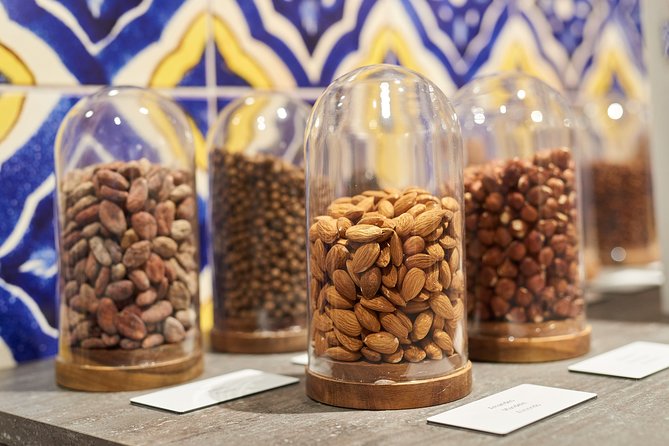
The tasting is included in the admission. That makes the visit feel complete, since you get to sample the product after following its long route from cocoa bean to finished food. A hot chocolate drink is not included, so budget separately if you want one.
What the 90-minute visit feels like
The stated duration is about one hour and 30 minutes. That is a sensible amount of time for the number of sections included, especially if you pause for the films, interactive games, scanner, sculptures, and tastings.
You can move at your own speed. That is useful if you are visiting with children, since some will want to repeat an interactive section while others will be ready to continue. It also helps adults who want to spend more time with the cultural story and less time with the games.
I would allow the full 90 minutes rather than trying to rush through. The visit has several short scenes, and the point is the change of mood from one room to the next. A fast visit would still give you the main story, but it would reduce the value of the interactive features.
The experience is suitable for most people, according to the supplied participation information. It is near public transportation, and the activity begins and ends at 12 Pl. de la Cathédrale, 68000 Colmar, France. That central meeting point makes it easy to fit the museum into a day of exploring Colmar.
Why the interactive format matters
Choco-Story is not simply a collection of chocolate objects. Its main strength is the way it gives each part of the story a different setting.
You hear about cocoa in a forest, see the Aztec legend in a temple, cross the ocean on a Spanish ship, pose in a royal setting, and then reach modern production. Those changes make the chronology easier to remember. Even a child who forgets dates may remember the moving lamps, the creaking floor, or the enormous chocolate Statue of Liberty.
The spontaneous games are another plus. They give the route energy and help prevent the familiar problem of children losing interest halfway through a museum. Adults can enjoy them too, but you should expect a playful presentation rather than a hushed one.
The audio format also gives you control. You are not locked to a guide’s pace, and you can spend more time in the sections that interest you. The limitation is that you miss the chance to ask questions in real time. If you want personal recommendations about chocolate or Colmar, this is not that kind of tour.
Is $18.02 good value?
At $18.02 per person, the admission is reasonable if you plan to use the whole experience. You receive the audioguide, interactive displays, films, 3D projections, chocolate tasting, and access to the themed route. The price becomes easier to justify if you enjoy food museums, visual effects, or family activities.
The value is less clear if you only want to taste chocolate. The tasting is one part of the visit, not the entire purpose, and hot chocolate costs extra. You are paying for the story, the settings, and the technology as much as for the samples.
I would also consider the museum’s place in your Colmar schedule. A 90-minute visit is long enough to feel substantial but short enough to combine with other sights. Since the meeting point is near public transportation and in the city center, you do not need to build a separate day around it.
The experience is booked an average of nine days ahead. That suggests you should not leave it until the final moment if your schedule is fixed, particularly if you are visiting with a family or group.
Who should book Choco-Story Colmar?
I would recommend it most strongly to families, chocolate fans, food-history enthusiasts, and anyone who likes museums with moving parts. The games and interactive sections give children a role, while the cocoa story gives adults enough context to make the visit worthwhile.
It also suits a rainy-day plan. The route is built around interior scenes, screens, projections, and displays, so you can spend roughly an hour and a half away from the weather while still doing something connected to Alsace’s food culture.
You may want to skip it if you are looking for a small artisan workshop, a live chocolate-making demonstration, or a quiet collection of historic objects. The supplied information does not promise a working kitchen or a personal guide. Its focus is the broad story of chocolate, presented through entertainment and technology.
Should you book this chocolate museum?
Book Choco-Story Colmar if you want a family-friendly, self-paced museum with a clear story and plenty to look at. The forest opening, Aztec temple, rocking ship effects, royal chairs, choco scanner, giant recipes screen, and 250-kilogram chocolate Statue of Liberty give the visit more variety than a standard display of chocolate products.
Skip it if you only want a drink or a quick tasting. The separate hot chocolate is not included, and the real value comes from staying for the full route. For $18.02 and about 90 minutes, I think it is a fair choice for a city break, especially when you want an activity that works for different ages.
FAQ
Where does the Choco-Story Colmar experience begin?
It begins at 12 Pl. de la Cathédrale, 68000 Colmar, France.
Where does the experience end?
The activity ends back at the meeting point.
How long does the visit take?
The visit lasts approximately one hour and 30 minutes.
What is included in the admission?
Admission includes a six-language audioguide, the interactive experience, and chocolate tasting.
Is hot chocolate included?
No. The hot chocolate drink is not included in the admission.
How many languages are available for the audioguide?
The included information lists six audioguide languages. The general experience description refers to four, so check the available language choices when booking.
Is the visit suitable for children?
Yes. The experience includes games and interactive sections, and most people can participate.
How many people can join the activity?
The activity has a maximum capacity of 200 people.
Can I cancel or change my booking?
No. The experience is non-refundable and cannot be changed for any reason.
Newest chocolate tours around France
- Bordeaux: Chocolate and Pastry Food Tasting Tour★ 4.9 · 40 reviews
- 2h immersive tasting in Beaujolais – Wine and Chocolate Accord★ 5.0 · 5 reviews
- Paris Marché d’Aligre Walking Tour with Chocolate and Cheese Tasting★ 3.5 · 24 reviews
- Paris Chocolate and Pastry Private Tour With Secret Food Tours★ 5.0 · 44 reviews
- tasting workshop of 6 to 8 wines with charcuterie chocolate cheese★ 5.0 · 48 reviews
- Paris: Choux Pastry and Chocolate Éclair Making Class★ 4.9 · 50 reviews
- Paris : 45 min Chocolate Workshop at Choco-Story Paris★ 4.0 · 51 reviews
- Le Marais: Pastry and Chocolate Food Tour★ 4.5 · 52 reviews
Chocolate Museums, compared.
Choco-Story Brussels: Chocolate Museum Entrance with Tasting
Read our review →
Chocolate Workshop in Chocolate Museum w/ Tasting
Read our review →
Choco-Story Chocolate Museum Guided Tour w/Tastings
Read our review →
Guided Walking Tour and Chocolate Museum Ticket
Read our review →
45-minute Chocolate Making Workshop at Choco-Story
Read our review →
Browse the lists this tour appears in