
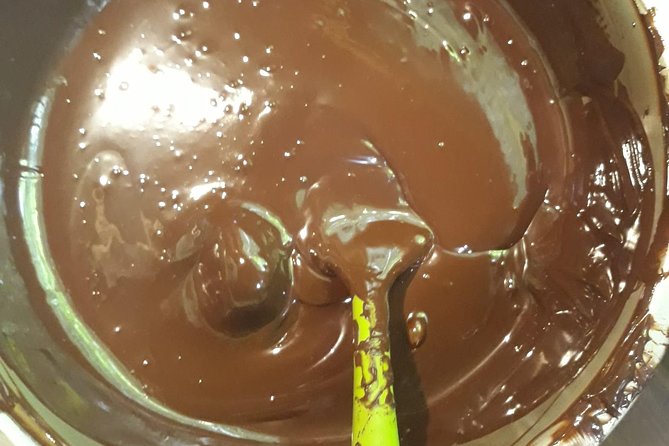
Review · BEAN-TO-BAR CHOCOLATE TOURS
Puerto Viejo hands on chocolate making class. From bean to bar, get chocolatey!
Chocolate here begins with a tree, not a supermarket wrapper. At Talamanca Chocolate near Puerto Viejo, Ansel guides you from cacao pod and seed through fermentation, roasting, grinding, and bar-making. You taste the stages, then make chocolate yourself.
I like the farm-to-bar connection and the relaxed, small-group setting, capped at 18 people. I also like that you leave with roasted beans and handmade chocolate, not just a story and a sample.
The main consideration is the teaching style. Ansel gives a lot of information, and the outdoor introduction can run long. If you want nonstop candy-making, this may feel too lecture-heavy. The class also appears focused on dark chocolate rather than milk chocolate.
Key points to know before you book
- The cacao tree comes first: You visit the tree and learn about its cultural, historical, and medicinal uses.
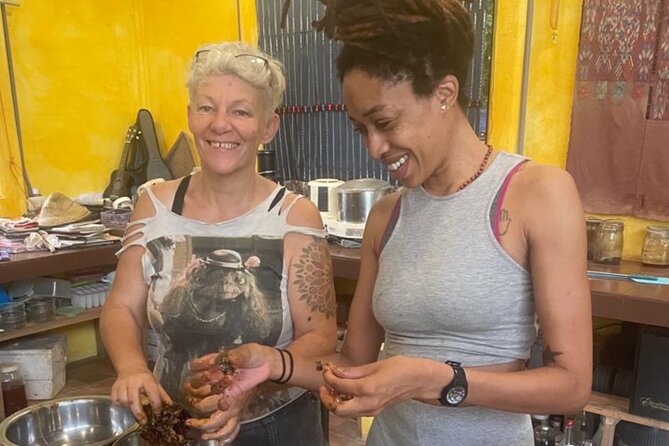
- You make your own chocolate: The class follows the process used at the facility, from cacao bean to finished bar.
- Ansel leads the class: Her warm, humorous teaching style is a major part of the experience.
- Expect plenty of tasting: You may try cacao at several stages, plus chocolate bars, truffles, and traditional hot chocolate.
- Plan for extra time: The advertised duration is about 2 hours 15 minutes, but some sessions run closer to three hours or more.
- The setting is rustic: The activity takes place around a working chocolate facility and farm area, with animals and outdoor conditions part of the scene.
Starting with the cacao tree near Puerto Viejo
The class begins at 10:00 a.m. at M64V+GM6 in Puerto Viejo de Talamanca, in Costa Rica’s Limón Province. The first part takes you to the cacao tree, where Ansel explains how the plant grows and why cacao has mattered to people in the region.
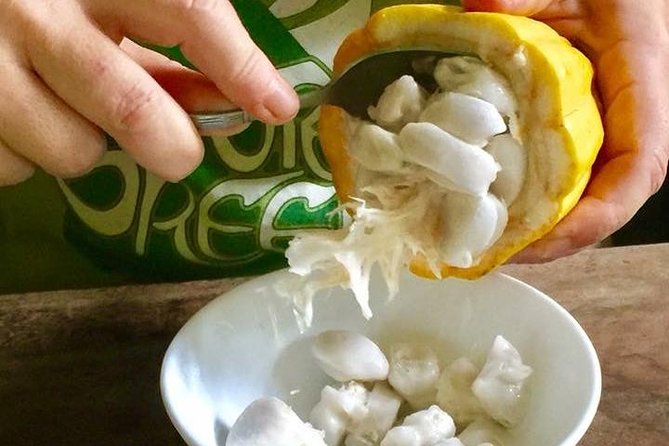
This is not simply a quick photo stop. You learn about the pod, the seeds inside it, and the changing role of cacao over time. The conversation also covers cultural and medicinal uses, along with the way modern chocolate developed from older cacao traditions.
I like this opening because it gives the bar in your hand a proper beginning. Chocolate can feel like a finished product with its origin erased. Seeing the tree and learning how the fruit is used helps restore that connection.
The lesson is also the part most likely to test your patience. One session spent nearly 50 minutes beside the tree, which felt too long to one participant. The guide’s passion is clear, but the amount of information depends heavily on the questions and interests of your group.
If you enjoy stories, plant knowledge, and food history, the extra time may be welcome. If you have children who want to start making chocolate right away, prepare them for a talk before the practical work begins.
More Bean-to-Bar Chocolate Tours in the world:
- 1.5h Belgian Chocolate Workshop in Brussels (bean to bar)
★ 4.5 · 462 reviews - Bean to Bar Chocolate Workshop in Puerto Vallarta
★ 5.0 · 381 reviews - Bean to Bar Chocolate Workshop in Barcelona
★ 5.0 · 172 reviews
From cacao seed to chocolate bar
After the tree lesson, you return to the chocolate-making facility. Here, Ansel explains fermentation and the stages that turn a cacao seed into something recognizable as chocolate.
You get to see and handle the beans as they change. The class can include cracking open cacao beans, working with roasted beans, powdering or grinding cacao, and tasting the material at different points in the process. The goal is to show the full chain rather than skip straight to a prepared mixture.
That matters because each stage affects the final result. A cacao seed is not automatically sweet chocolate. It must be treated, roasted, processed, and combined in the right way. The class makes those steps visible and gives you a better sense of why craft chocolate tastes so different from a mass-produced bar.
The hands-on portion is the strongest reason to book. You are not only watching Ansel demonstrate the process. You take part in making a bar from beans grown on the farm, using the same general method used at the facility.
The precise amount of work can vary. Many people describe the class as genuinely interactive, with opportunities to process beans, grind cacao, taste different stages, and form chocolate. One disappointed participant expected more practical work and felt that much of the time was spent listening. That contrast is useful: this is an educational workshop with hands-on elements, not a nonstop confectionery class.
Tasting cacao at several stages
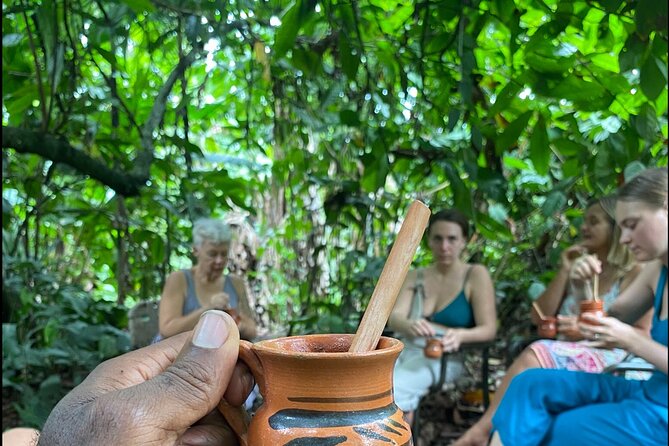
Tasting is woven through the lesson. You may sample cacao beans, roasted cacao, cacao powder, finished chocolate, truffles, bars, and traditional hot chocolate.
This progression is useful because it lets you compare the raw ingredients with the final product. Some stages can be bitter or earthy. That is part of the point, but it may surprise anyone expecting every sample to taste like a sweet candy bar.
The hot chocolate also divides expectations. It is described as traditional, and one person found it bitter and lacking flavor. If you prefer heavily sweetened café-style hot chocolate, this version may seem plain. If you want to understand how cacao tastes before sugar and dairy dominate it, the sample has value.
The class appears to center on dark chocolate. One participant specifically warned that there was no milk chocolate. If milk chocolate is your favorite, ask about the available recipes before booking. If you already enjoy darker, less sugary chocolate, the tasting format should make more sense.
You also get to try finished chocolate, including truffles and bars. The exact selection can vary, but the practical reward is clear: you taste the result and take some home.
Making a bar you can take home
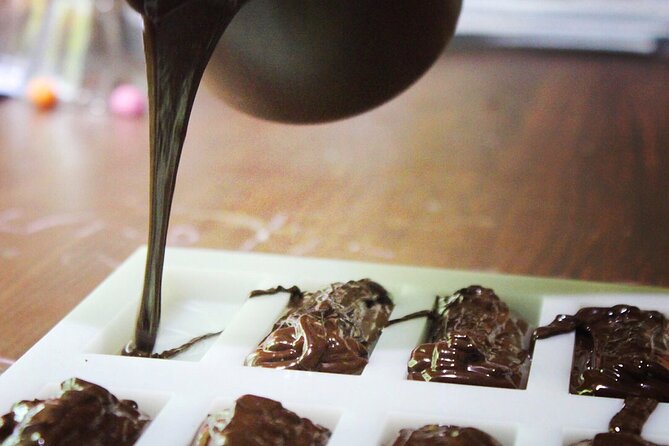
The final stage is the most satisfying part for many people. You make your own chocolate bar and leave with handmade chocolate, along with roasted beans.
This gives the class a useful afterlife. You are not just buying a souvenir. You learn techniques you can try again at home, and the class is designed to give you enough confidence to continue experimenting.
The process is also a good fit for families and friends because everyone can take part at a different level. Children may enjoy handling the ingredients and forming the chocolate, while adults can focus on fermentation, roasting, and the wider story of cacao.
The finished bar may not look perfectly factory-made, and that is part of its charm. This is a personal result from a small workshop, not a polished commercial product. Keep that in mind if you are expecting a professional chocolatier’s finish.
More Chocolate Making Workshops in the world:
- Vienna: Chocolate Workshop in Chocolate Museum w/ Tasting
★ 4.5 · 1,802 reviews - Brussels: Belgian Chocolate Making Workshop with Tastings
★ 4.7 · 1,629 reviews - Brussels: 2.5-Hour Belgian Chocolate Making Workshop
★ 4.8 · 933 reviews - Belgian Chocolate Workshop in Bruges
★ 5.0 · 660 reviews
Ansel’s teaching style and the pace of the class
Ansel is central to the experience. She presents cacao with warmth, humor, and clear personal passion. Her teaching covers more than chocolate mechanics, including Costa Rican cacao, the history of chocolate, and the effects of globalization on the people, animals, and land involved in cacao production.
That wider context gives the class more weight than a simple tasting. You learn why the product matters and how the modern chocolate trade can affect the communities that grow cacao.
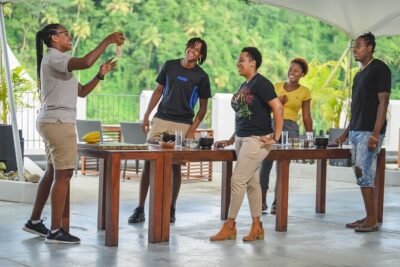
The tone is generally relaxed and intimate. The group limit is 18, though the setting can feel smaller depending on the booking. A small group makes it easier to ask questions and get involved in the practical stages.
Still, Ansel’s enthusiasm means the schedule is flexible. The listed duration is approximately 2 hours 15 minutes, but one class lasted about 3.5 hours, while others ran for roughly three hours. Plan your morning with room to spare. Do not schedule a tight lunch, bus, or excursion immediately afterward.
I would particularly recommend this class to people who enjoy asking questions. If you want a short, tightly timed activity, the open-ended format may frustrate you. If you like following an instructor’s curiosity and learning the background behind a food, the longer pace can be a benefit.
A rustic farm setting with animals
The surroundings are part of the character of the class. You are working near a cacao farm and an outdoor facility, not in a polished urban cooking studio.
Dogs, cats, poultry, and other animals may be moving around the property. Some people find this makes the setting feel friendly and connected to farm life. Others may feel uncomfortable around animals, especially near food preparation areas.
There is also a practical cleanliness concern. One participant reported seeing flies around ingredients and animals near the workstations, and felt that surfaces were not cleaned to their satisfaction. This was a strong negative reaction in an otherwise highly positive set of experiences, so it should not be ignored.
If you are sensitive to outdoor conditions, animals, or rustic food spaces, consider that before booking. The setting may suit you if you value a working farm atmosphere. It may not suit you if you need a highly controlled kitchen environment.
Is $47.37 a fair price?
At $47.37 per person, the value depends on what you want from the morning. You are paying for about 2 hours 15 minutes of instruction, access to a working cacao setting, tastings, practical work, and chocolate to take home.
That compares well with a standard attraction where you only watch a demonstration. Here, you get a lesson, food samples, a personal activity, and a souvenir you helped produce.
The price is easier to justify if you care about the story behind chocolate. Ansel covers the tree, cultural uses, processing, and the effects of modern production. You also gain skills that you can apply later.
It is less compelling if you mainly want a large quantity of sweets or a quick treat. The product you take home is part of the experience, not the entire reason to go. The class asks you to spend time listening and tasting ingredients that may be bitter or unfamiliar.
For families, couples, solo visitors, and small groups of friends, I think the price is reasonable when the teaching and hands-on work are both important to you. A solo visitor can easily join the small group, and the setting gives you something more substantial than another beach morning in Puerto Viejo.
Who will enjoy this chocolate class most?
I would choose this activity if you:
- Like food workshops with background and context
- Want to understand cacao before it becomes chocolate
- Enjoy dark chocolate and less-sweet flavors
- Prefer a personal class to a large commercial tour
- Are traveling with children who enjoy practical activities
- Want a souvenir you made yourself
- Have enough time for the class to run longer than scheduled
I would think twice if you:
- Need a strict two-hour schedule
- Want mostly candy-making with little explanation
- Expect milk chocolate
- Dislike dogs, cats, poultry, flies, or rustic outdoor settings
- Prefer a spotless, enclosed commercial kitchen
- Do not enjoy bitter or earthy cacao flavors
The class is near public transportation, and the meeting point is also described as walkable from Puerto Viejo for people without a scooter or bicycle. The activity returns to the same meeting point. Service animals are allowed.
Booking, weather, and cancellation details
You receive confirmation when you book. The group can include up to 18 people, and the start time is 10:00 a.m.
Free cancellation is available when you cancel at least 24 hours before the local start time. Changes or cancellations inside that window are not accepted for a refund.
The activity depends on good weather. If poor weather causes cancellation, you are offered another date or a full refund. The class also requires a minimum number of participants, so a cancellation for that reason brings the same choice of another date or a full refund.
Should you book Talamanca Chocolate?
Book it if you want to understand chocolate from its source and are happy to spend a good part of the morning listening, tasting, and working with cacao. The best parts are the visit to the tree, Ansel’s personal teaching, and the chance to make a bar from farm-grown beans.
Go in with realistic expectations. This is not a fast candy workshop, and the rustic setting may include animals and outdoor mess. The class can also run well beyond its advertised time.
For most people interested in cacao, the unusual setting and practical work make the $47.37 worthwhile. For the best match, choose it as an educational food experience with chocolate at the center, not as a simple dessert stop.
FAQ
Where does the chocolate-making class start?
The class starts at M64V+GM6 in Puerto Viejo de Talamanca, Limón Province, Costa Rica.
What time does the class begin?
The scheduled start time is 10:00 a.m.
How long does the activity last?
The advertised duration is approximately 2 hours 15 minutes. Some sessions can last three hours or longer, so you should leave extra time in your schedule.
What will I learn during the class?
You learn about the cacao tree, its history, cultural and medicinal uses, fermentation, and the stages that turn cacao seeds into chocolate.
Do I make my own chocolate?
Yes. You make a chocolate bar from beans grown on the farm and follow the process used at the chocolate facility.
What do I take home?
You leave with roasted cacao beans and handmade chocolate, including the bar you make during the class.
Is milk chocolate available?
The experience is focused on dark chocolate. One description specifically notes that there is no milk chocolate, so contact the provider before booking if milk chocolate is important to you.
Can I cancel for a full refund?
Yes, if you cancel at least 24 hours before the local start time. Poor weather or failure to meet the minimum number of participants can also result in another date or a full refund.
Newest chocolate tours around the world
- Bohol Chocolate Making and Farm Tour★ 5.0 · 2 reviews
- Big Island Hawaii: Craft Chocolate Tasting and Farm Tour★ 5.0 · 14 reviews
- Bogotá: Candelaria Tour with Cacao and Coffee Workshop★ 5.0 · 3 reviews
- Bordeaux: Chocolate and Pastry Food Tasting Tour★ 4.9 · 40 reviews
- Barossa: Enjoy Wine, Lunch, Brewery, Chocolate & Wildlife★ 4.5 · 26 reviews
- Chocolatier for a day: raw bean to bar chocolate in Modica★ 5.0 · 33 reviews
- Bern: Gruyères Cheese and Cailler Chocolate Tasting Tour★ 4.7 · 3 reviews
- Barcelona: Delicious Chocolate walking tour★ 5.0 · 2 reviews
Bean-to-Bar Chocolate Tours, compared.
1.5h Belgian Chocolate Workshop in Brussels (bean to bar)
Read our review →
Bean to Bar Chocolate Workshop in Puerto Vallarta
Read our review →
Project Chocolat Bean to Bar Experience from Hotel Chocolat
Read our review →
Chocolatier for a day: raw bean to bar chocolate in Modica
Read our review →
Browse the lists this tour appears in